
Russia Holds the Key to Peace in the US–Israel–Iran Triangle; Now Is the Time for Putin to Act?
Jakarta, CNBC Indonesia - The Middle East is now on the cusp of transforming from limited military operations into an open-ended war. The pattern taking shape suggests that the geography and the region’s intertwined security architecture, bound together economically, are drawing the Gulf Arab monarchies into the blast radius of a conflict among Iran, Israel, and the United States.
Murad Sadygzade, President of the Middle East Studies Center and Visiting Lecturer at HSE University in Moscow, said the widening of this conflict is not a coincidence but follows a strategic logic deemed legitimate by Tehran. According to him, Iran views direct US involvement—whether in the form of strikes, intelligence support, or the provisioning of military bases—as having altered Washington’s status into an active belligerent, and US military infrastructure across the region accordingly becomes legitimate targets.
“Iran argues that once the US becomes a direct party to the operation—through strikes, intelligence support, bases, or force posture—it gains the status of an active participant in war, and US military infrastructure across the region becomes legitimate targets,” Murad Sadygzade wrote in his Russia Today article, on Friday (6 March 2026).
The consequence of this view is the expansion of the battlefield beyond Iran’s airspace or Israeli territory. Murad explained that the targets now include the entire network that supports American power, including logistics hubs, command facilities, as well as transport corridors and ports in neighbouring countries hosting US military assets.
“From that perspective, the ‘battlefield’ is not limited to Iran’s airspace or Israeli territory; the battlefield extends to the regional network that enables American power projection, including bases, logistics nodes, command-and-control facilities, airfields, and a broader supporting ecosystem that keeps them functioning,” Murad said.
This situation poses a serious threat to the global economy given the Gulf’s role as the core of international energy markets. Murad warned that vulnerabilities in oil infrastructure and maritime routes around the Strait of Hormuz would have immediate impacts on world oil prices, shipping insurance, and investor confidence.
“The conflict threatening the Gulf is no longer merely a regional confrontation but a test of the global economy. The Gulf monarchies are the network connecting international energy markets and trade flows,” the analyst said.
This crisis also shattered the old assumption that the US could guarantee the security of its Arab partners under rapid escalation. Murad assessed that modern retaliation strategies today are designed to penetrate even the most sophisticated defence systems by spreading threats to create economic uncertainty, not merely to seize territory.
“If Gulf capitals conclude that Washington’s umbrella is no longer adequate—or no longer automatic—then the entire regional security architecture begins to crack,” Murad Sadygzade said.
Although cracks are occurring, Murad argues that Gulf states will not immediately sever ties with Washington given the deep-seated defence ties. Yet a structural shift is taking place whereby these states are diversifying their diplomatic portfolios with other global powers to create options ahead of the next crisis.
“The Gulf monarchies’ primary interest is de-escalation, not participation in regional war. War will not deliver strategic gains commensurate with its costs,” he explained.
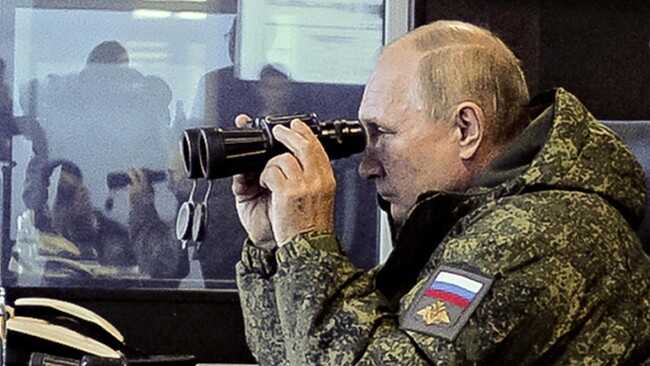
In this vacuum of security guarantees, Russia has emerged as a crucial mediator. Murad highlighted President Vladimir Putin’s intensive outreach to the leaders of the United Arab Emirates, Qatar, Bahrain, and Saudi Arabia as diplomatic intervention to defuse tensions while other channels are closing.
“The significance is not merely that a phone call was made; it is the function intended to be carried out by that call. Moscow occupies a rare position in the region’s geopolitical geometry. Russia has strategic partnerships with Iran and maintains working relationships that are often constructive and cordial with the Gulf monarchies,” he said.
One practical example of this mediation is Russia’s ability to convey the UAE’s complaints to Tehran regarding Iran’s attacks, while emphasising that Abu Dhabi’s territory is not to be used as a launchpad for attacks on Iran. This is important to prevent neutral states from becoming targets due to mistaken perceptions.
A mediator is very valuable in lowering tensions by correcting assumptions, separating rumours from reality, and creating space for non‑combatant states to remain non‑combatant, Murad adds.
Murad further stressed that in talks with Crown Prince Mohammed bin Salman of Saudi Arabia, Putin warned of catastrophic consequences if Gulf security collapses and energy arteries turn into battlefields. Restraint is no longer seen as weakness but as a means of survival.
What makes Russia particularly well suited for this mediator role is its breadth and pragmatism of its regional relationships. Many countries can only talk to one side. Few can credibly speak to all relevant parties, especially when emotions are high and trust is low, he says.
In conclusion, Murad Sadygzade emphasised that Moscow’s diplomatic aim at present is to build an informal information corridor to protect civilian and energy infrastructure in the Gulf. If Russia succeeds in drawing lines to prevent the Gulf monarchies from becoming routine targets, it will save the global economy from shocks.