
Rupiah Weakness Differs Fundamentally from 1998 Crisis, Economist Says
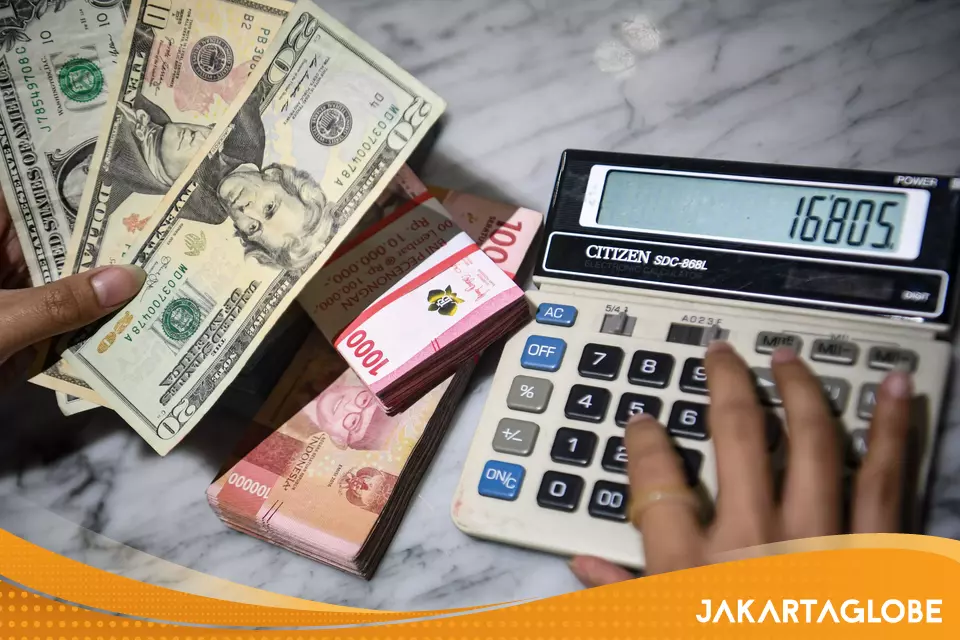
Rupiah Weakness Differs Fundamentally From 1998 Crisis, Economist Says
Jakarta. The continued slide of the rupiah, which has fallen beyond Rp 17,500 against the US dollar for the first time on Tuesday, should not be compared with the country’s 1997-1998 Asian financial crisis because economic fundamentals are now significantly stronger, a senior economist said on Tuesday.
Josua Pardede, chief economist at Bank Permata, said the current depreciation is occurring while Indonesia still maintains adequate foreign exchange reserves and government external debt remains below critical thresholds.
“In real terms, the rupiah is still undervalued, meaning the current nominal weakening is driven more by short-term sentiment than by structural economic problems,” Josua said in Jakarta.
He said the rupiah was being pressured by a combination of global and domestic factors that have made investors increasingly cautious toward rupiah-denominated assets.
One of the main external drivers is escalating geopolitical tensions in the Middle East, which have pushed global oil prices higher and strengthened the US dollar. The situation has placed heavier pressure on emerging economies such as Indonesia, which remain exposed to energy imports and foreign capital flows.
“The impact on our economy tends to be relatively greater compared with some other countries, so the effect on the rupiah is also felt more quickly,” Josua said.
Bad Ratings
According to him, rising oil prices have intensified market concerns because they could increase Indonesia’s import burden and strain fiscal stability. At the same time, a stronger dollar has encouraged capital outflows from emerging markets.
Domestic sentiment has also weighed on the rupiah. Earlier this year, Moody’s Ratings and Fitch Ratings revised Indonesia’s credit outlook, affecting global investors’ appetite for Indonesian stocks and bonds.
“We can see that the series of global risks, combined with assessments from international rating agencies, have significantly affected foreign investors’ risk appetite toward rupiah-denominated assets,” Josua said.
He added that the rupiah’s stability going forward would depend heavily on easing geopolitical tensions and the policy response from the government and Bank Indonesia. The central bank’s room to cut interest rates is now increasingly limited as authorities prioritize exchange-rate stability.
Still, Josua noted that Bank Indonesia retains a range of policy tools beyond benchmark rates, including liquidity support, macroprudential measures, and market intervention programs aimed at stabilizing the rupiah.
Indonesia’s worst rupiah collapse occurred during the 1997-1998 Asian financial crisis, when economic turmoil, political instability, and collapsing investor confidence sent the currency into freefall.
The initial phase of the crisis unfolded between August and October 1997, when the rupiah plunged from around Rp 2,500 per dollar to roughly Rp 3,000. Conditions deteriorated sharply by May and June 1998. Refinitiv data showed the rupiah closed at Rp 15,200 per dollar on June 16, 1998 – then its weakest level on record – while intraday trading briefly touched Rp 16,800.
On May 12, 2026, the rupiah closed above Rp 17,500 per dollar for the first time in spot-market trading, raising questions over whether the currency has entered dangerous territory.
When Low Is Low
Josua said the danger level should not be viewed as a single fixed number, but rather as a risk zone.
According to him, Rp 17,000 already represents a cautionary zone because pressure has begun feeding into market expectations and import prices. The Rp 17,300-Rp 17,500 range marks a zone of serious stress, where markets begin testing Bank Indonesia’s resilience and the government’s fiscal credibility.
“If the rupiah remains above Rp 17,500 for a prolonged period, especially while oil prices stay above $100 per barrel, the risks to inflation, the state budget, import costs, and capital flows will rise sharply,” Josua warned.
Meanwhile, Rp 18,000 represents a psychological danger zone that could trigger expectations of further depreciation, accelerate corporate demand for dollars, and speed up adjustments in import prices.
Under a scenario involving prolonged conflict between the United States, Israel, and Iran, combined with sustained rupiah weakness and elevated oil prices, Josua said Bank Indonesia would likely maintain higher interest rates for longer, strengthen monetary operations, and intensify market intervention measures.
In such a scenario, he added, the government would also need to accelerate fiscal discipline to maintain investor confidence and macroeconomic stability.
Tags: Keywords: