
Rupiah weakens to Rp17,000, BI maximises monetary operations instruments
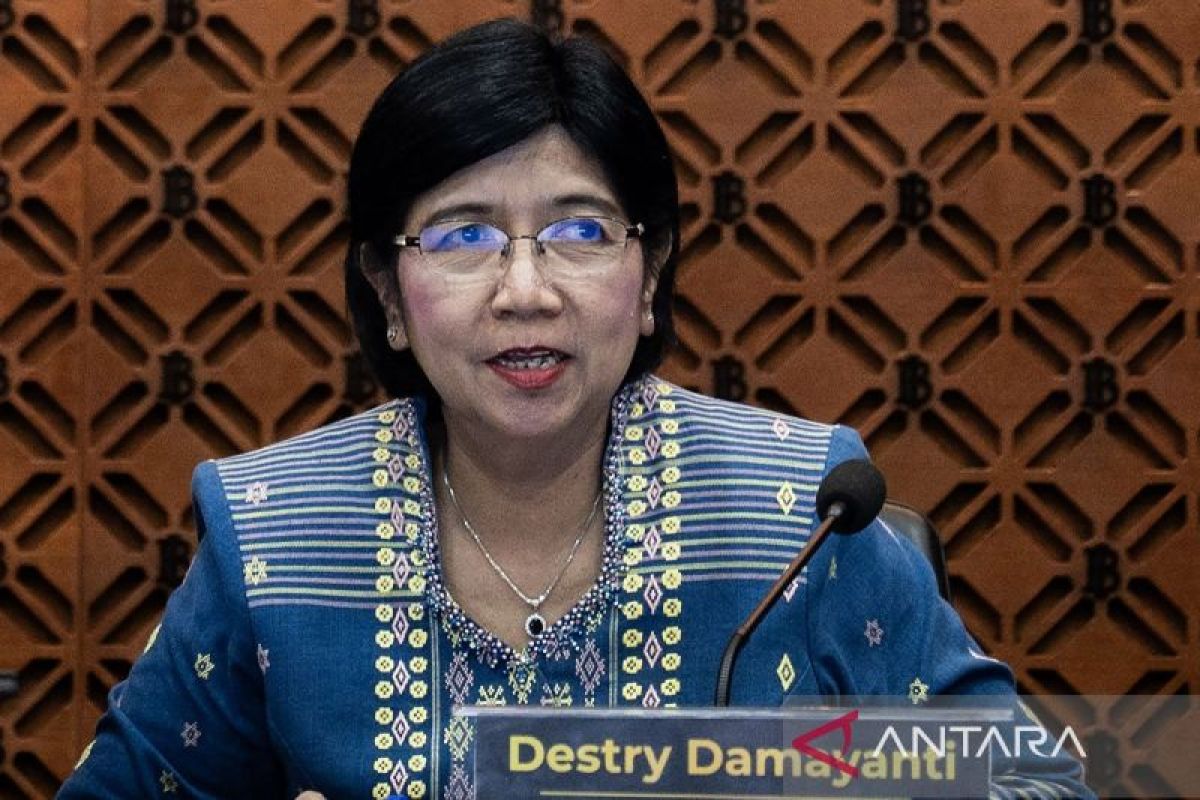
Amid very high global uncertainty, stability is currently a priority for Bank Indonesia. Jakarta (ANTARA) - Bank Indonesia (BI) is optimising the use of all its monetary operations instruments and policies to maintain exchange rate stability, responding to the rupiah’s weakening that has breached Rp17,000 per US dollar. “Amid very high global uncertainty, stability is currently a priority for Bank Indonesia,” said Senior Deputy Governor of BI Destry Damayanti in an official statement in Jakarta on Tuesday. Furthermore, Destry stated that BI consistently and measuredly remains active in the money market, both in the spot market, Domestic Non-Deliverable Forward (DNDF) in the domestic market, and Non-Deliverable Forward (NDF) in the offshore market. She also emphasised that the impact of the Middle East conflict is two-way. Rising commodity prices and Indonesia’s position as an exporting country can provide a positive effect on the economy, thereby able to offset the pressure on the exchange rate due to that escalation. The rupiah exchange rate closed on Tuesday’s trading down 70 points or 0.41 percent to Rp17,105 per US dollar from the previous close at Rp16,980 per US dollar. Meanwhile, Bank Indonesia’s Jakarta Interbank Spot Dollar Rate (JISDOR) today also moved weaker to Rp17,092 per US dollar from the previous Rp17,037 per US dollar. In facing global uncertainty due to the Middle East war, BI previously stated that it would calibrate rupiah intervention instruments by adjusting responses to three war impact scenarios, namely if world oil prices are not too high, medium, and high. BI Governor Perry Warjiyo said that these efforts are also strengthened by maintaining foreign exchange reserves and interest rate policy responses. “We continue to optimise the three monetary intervention instruments with sufficient foreign exchange reserves and strengthened by interest rate policy,” said Perry during the BI RDG results press conference online in Jakarta on Tuesday (17/3). The central bank views that Indonesia’s Balance of Payments (NPI) performance needs to be continuously strengthened so that it can mitigate the impact of the Middle East war. Various efforts to strengthen the balance of payments performance are also expected to support rupiah exchange rate stability. Based on the latest data, Indonesia’s Trade Balance in February 2026 recorded a surplus of US$1.27 billion, an increase compared to the January 2026 surplus of US$0.95 billion. Meanwhile, Indonesia’s foreign exchange reserve position at the end of February 2026 remained stable at US$151.9 billion. This amount is equivalent to financing 6.1 months of imports or 5.9 months of imports and government foreign debt payments, and is above the international adequacy standard.