
Rupiah Weakens to 17,123 Due to Failed Iran-US Negotiations in Pakistan
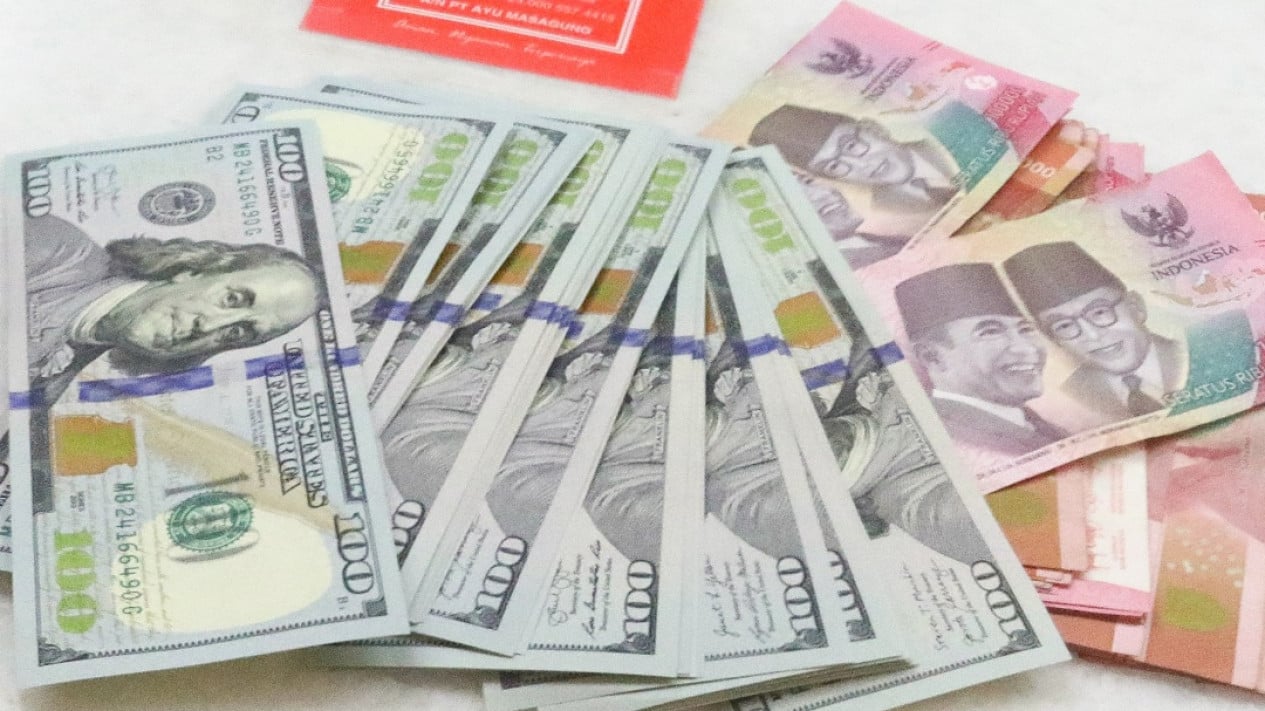
The rupiah’s exchange rate against the US dollar (US) is predicted to remain volatile but closed weaker in trading today.
Based on data from the Jakarta Interbank Spot Dollar Rate or Jisdor BI, the rupiah’s rate against the US dollar stood at Rp17,112 on Friday, 10 April 2026. That position represented a weakening of 30 points from the previous rate of Rp17,082 in Thursday’s trading on 9 April 2026.
Meanwhile, in spot market trading on Monday, 13 April 2026 until 09:00 WIB, the rupiah was transacted at Rp17,123 per US dollar. That position weakened by 19 points or 0.11 percent from the previous position of Rp17,104 per US dollar.
Economic and money market observer Ibrahim Assuaibi said that the failure of the agreement in negotiations held between Iran and the United States (US) in Islamabad, Pakistan, has the potential to cause the rupiah to plummet, oil prices to rise again, and gold prices to surge if a US ground invasion occurs in Iran.
“The agreement failed, the rupiah weakens sharply, oil prices soar because the Strait of Hormuz is closed again. If a ground war occurs (gold prices) are ready to soar,” said Ibrahim in his daily research on Monday, 13 April 2026.
He added that the consumer survey released by Bank Indonesia (BI) shows that public perceptions of the current economic conditions remain strong in March 2026. This is reflected in the Current Economic Conditions Index (IKE) recorded at 115.4, still at an optimistic level (above 100), although slightly lower than February 2026’s figure of 115.9.
The central bank explained that the sustained strength of perceptions of current economic conditions is primarily supported by an increase in the Current Income Index (IPSI), which rose to 129.2, higher than the previous month’s figure of 125.0.
Meanwhile, the other two components remain in the optimistic zone although experiencing a decline. The Job Availability Index (IKLK) was recorded at 107.8, down from 110.7 in the previous month. The Durable Goods Purchase Index (IPDG) stood at 109.2, lower than February 2026’s level of 112.0.
The Asian Development Bank (ADB) forecasts that economic growth in developing countries in Asia and the Pacific will slow to 5.1 percent in 2026 and 2027. That condition is burdened by conflicts in the Middle East and ongoing trade uncertainties. The global environment has become full of challenges and uncertainties.