
Rupiah Weakens, Threatening Food Price Stability
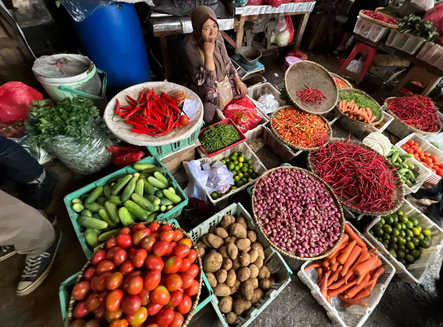
The exchange rate of the rupiah against the US dollar has been weakening recently and is now approaching Rp17,000 per US$. This situation is sparking concerns about domestic food price stability, as currency fluctuations are seen to exert pressure on the national food system. Indonesia’s dependence on imports for several strategic commodities, such as soybeans, wheat, and garlic, means that a weakening rupiah could raise the costs of importing food raw materials and production inputs. When the exchange rate weakens, raw material prices rise and risk pushing up consumer-level prices. This illustrates how global economic turbulence can directly impact domestic food security. Hani Perwitasari, a lecturer in Agricultural Socio-Economics at Gadjah Mada University, believes this condition needs close monitoring as it could strain the national food system. From an agribusiness perspective, exchange rate fluctuations have varying impacts on domestic food prices. According to Hani, the extent of the influence depends on the type of commodity and domestic availability. Commodities with sufficient supply tend to remain stable despite exchange rate pressures, while limited supply can amplify the potential for price increases. “This exchange rate fluctuation will affect food price stability, varying from 2 to 8 percent depending on the type of food,” she said on Wednesday (25/3). She explained that vulnerability to rupiah depreciation also differs among food commodities. Products that are difficult to substitute and have high dependence on specific supplies tend to be more sensitive to exchange rate changes, so cost pressures are quickly passed on to selling prices. “The most vulnerable commodities are meat, followed by eggs and milk, which are indeed hard to substitute, making them more susceptible to the impact of this rupiah weakening,” she clarified. This situation is closely tied to the national food structure that still relies on imports. When domestic production cannot meet needs, imports become a step to maintain supply availability. However, this dependence makes the food system more vulnerable to external shocks, including exchange rate fluctuations. “The higher the imports, the more vulnerable it will be to existing exchange rate volatility,” said Hani. In addition to directly affecting food prices, rupiah weakening also increases agricultural and livestock production costs. Several production inputs are still linked to global markets, making them sensitive to exchange rate changes. Rising input prices ultimately increase total production costs borne by businesses. “The exchange rate will affect production costs, especially when these production goods are tradable, so their prices will rise and total costs will increase,” she revealed. In the short term, price control is considered an important step to dampen the impact of rupiah weakening. The government needs to ensure accurate data on national food production and needs so that policies can be taken appropriately, including import decisions when supplies are short. “If there’s a shortage, then imports are needed; if not, then no imports are needed, so policies can be taken more precisely,” she stated. On the other hand, long-term strategies are required to strengthen domestic food production. Support for farmers through access to financing, subsidies for inputs like fertiliser and seeds, and protection via agricultural insurance are seen as important to sustainably increase production capacity. “The role of all parties, including consumers, is also crucial, because choosing domestic products will encourage the strengthening of national food production,” she concluded.