
Rupiah weakens on supply-risk concerns amid Middle East conflict
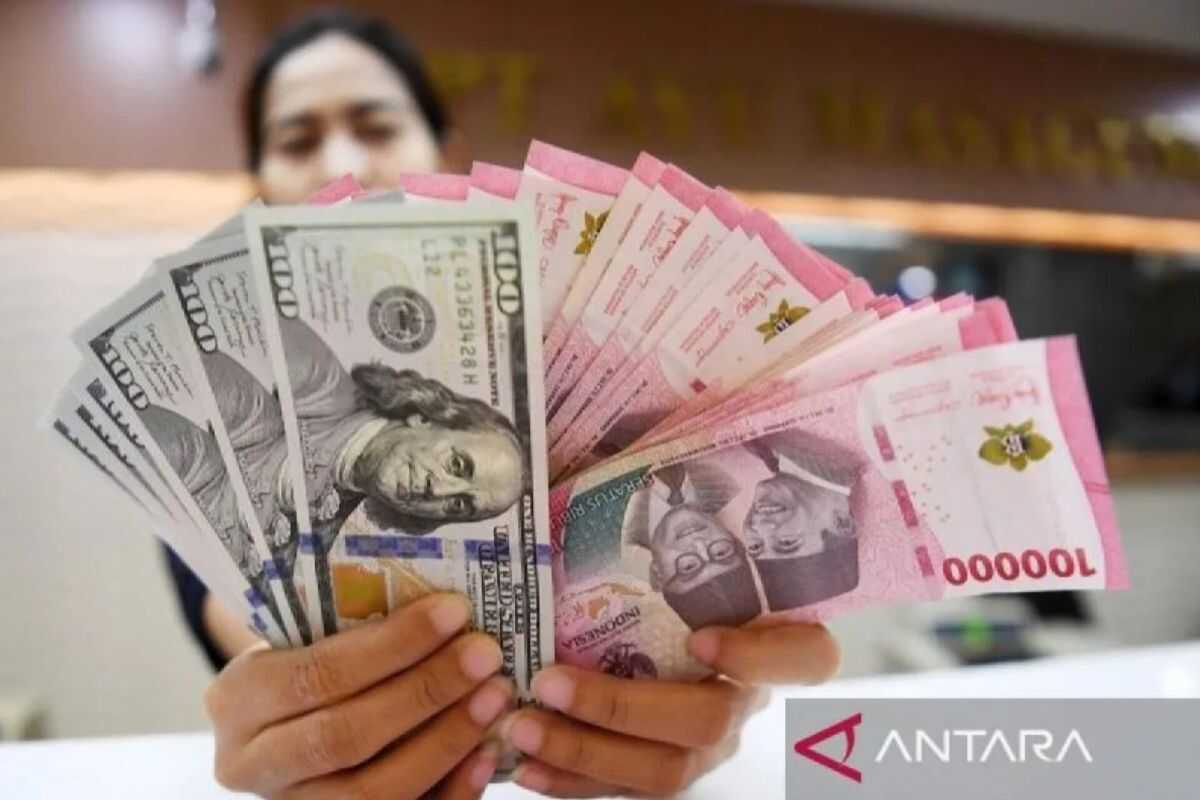
The situation worsened as Israel and the United States conducted additional strikes on facilities linked to Iran on Tuesday (3/3). Jakarta (ANTARA) - The rupiah exchange rate at the close of trading in Jakarta on Wednesday weakened by 20 points or 0.12 percent to Rp16,892 per US dollar from the previous close of Rp16,872 per US dollar.
Foreign exchange market analyst Ibrahim Assuaibi said the weakness was driven by market participants’ stance on supply risks amid the Middle East conflict.
“The situation worsened as Israeli and US forces carried out additional strikes on facilities related to Iran on Tuesday (3/3). Iran responded by increasing its military deployments in the Gulf and issuing warnings to global shipping operators,” he said in a written statement in Jakarta, on Wednesday.
Moreover, Iran also targeted oil tankers passing through the Strait of Hormuz, a narrow waterway that handles about one-fifth of global oil shipments. Iranian authorities have vowed to attack any vessel passing through the strait.
The threat to Hormuz, a key route for crude oil exports from major producers including Saudi Arabia, Iraq and the United Arab Emirates, is seen as injecting a significant geopolitical risk premium into oil prices.
“Iraq has begun halting production at the Rumaila field, the country’s largest, and at West Qurna 2, with 1.2 million barrels per day of production stopped,” Ibrahim said.
Looking at domestic sentiment, the international rating agency Fitch Ratings revised the outlook for Indonesia’s debt rating from stable to negative.
Nevertheless, the long-term foreign currency credit rating (Long-Term Foreign Currency Issuer Default Rating/IDR) remains at BBB.
“The outlook revision reflects rising policy uncertainty and concerns about the consistency and credibility of the Indonesian macroeconomic policy mix amid the increasing centralisation of decision-making power. The condition is seen as potentially weighing on the medium-term fiscal outlook, weakening investor sentiment, and exerting external resilience pressure,” he said.
On the other hand, Fitch kept the BBB rating because Indonesia is considered to have a fairly good track record in maintaining macroeconomic stability.
This is supported by the medium-term growth prospect, a moderate government debt-to-GDP ratio, and adequate external reserves.
Fitch projects Indonesia’s fiscal deficit in 2026 to be around 2.9% of GDP, higher than the government target of 2.7%.
The projection is influenced by more conservative state revenue assumptions and higher social spending, including the Free Nutritious Meals (MBG) programme.
Meanwhile, he added, Bank Indonesia (BI) signalled tight monitoring of inflationary impacts from global energy price increases and to safeguard the rupiah.
“BI remains active in the market by intervening through Non-Deliverable Forward (NDF) transactions in the offshore market, spot transactions, and Domestic Non-Deliverable Forward (DNDF) in the domestic market, coupled with purchases of government securities (SBN) in the secondary market,” Ibrahim said.
The Jakarta Interbank Spot Dollar Rate (JISDOR) of Bank Indonesia on Wednesday also weakened to the level of Rp16,911 per US dollar from Rp16,870 per US dollar.