
Rupiah Weakens Most Deeply in Asia, Analysts Cite Budget Deficit as a Burden
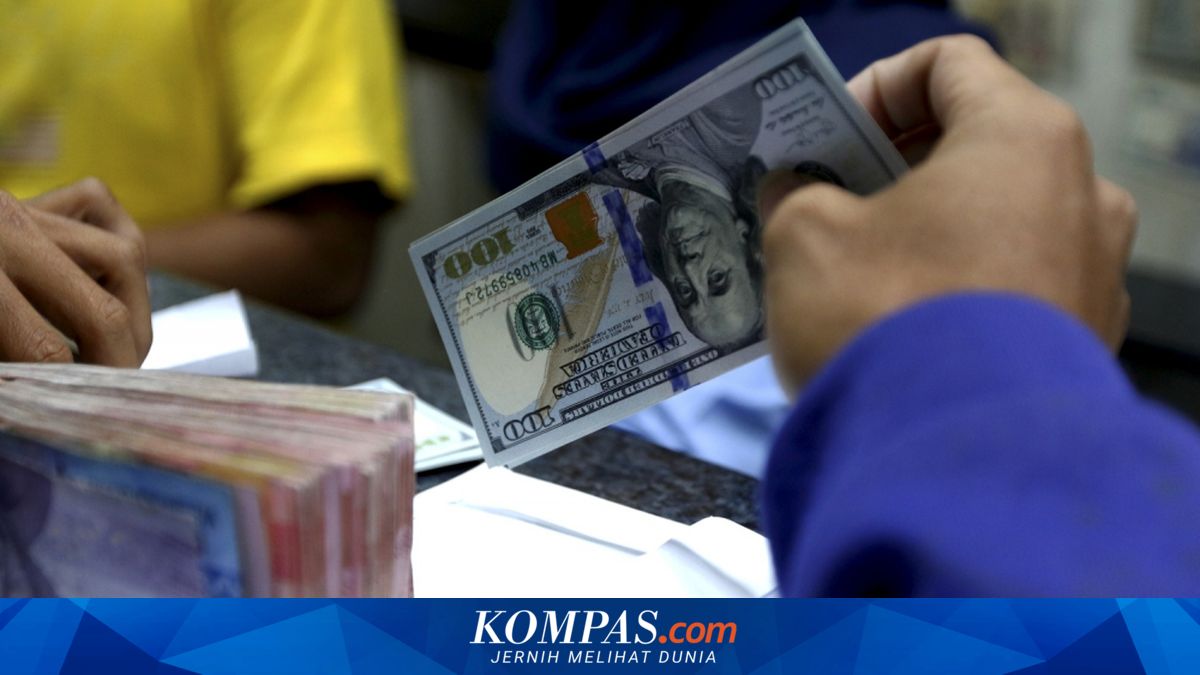
JAKARTA, KOMPAS.com - The rupiah’s exchange rate against the US dollar continues to depreciate or weaken. The pressure on the Garuda currency is not merely triggered by global factors, but also caused by the fiscal deficit or State Revenue and Expenditure Budget (APBN) that is approaching the upper limit. This burdens investor perceptions of Indonesia’s economic stability. The spot market rupiah exchange rate nearly touched Rp17,200 per US dollar at the close of trading on Friday (17/4/2026). Today’s Jisdor rupiah rate closed at Rp17,189 per US dollar, weakening by 47 points or 0.27 per cent from yesterday’s close. Over the week, the Jisdor rupiah rate weakened by 0.45 per cent from Rp17,112 per US dollar on last Friday. Meanwhile, the majority of Asian currencies moved weaker against the US dollar in Thursday’s trading (17/4/2026) New York time. However, the rupiah recorded the deepest depreciation compared to other regional currencies. Based on Reuters data, the movement of Asian currencies shows the majority in the red zone against the US dollar. The rupiah recorded the deepest depreciation of 0.26 per cent, followed by the Philippine peso which weakened by 0.16 per cent and the Japanese yen down 0.14 per cent. The Thai baht corrected by 0.12 per cent, followed by the Malaysian ringgit weakening by 0.08 per cent and the Singapore dollar down slightly by 0.05 per cent. Meanwhile, the Chinese yuan remained relatively stable with a limited weakening of 0.02 per cent. Amid this pressure, the South Korean won was the only currency to strengthen, rising by 0.07 per cent against the US dollar. Currency and commodity analyst Ibrahim Assuaibi assesses that the current rupiah weakening is no longer entirely influenced by global factors.