
Rupiah Weakens Influenced by Volatility in Global Oil Prices
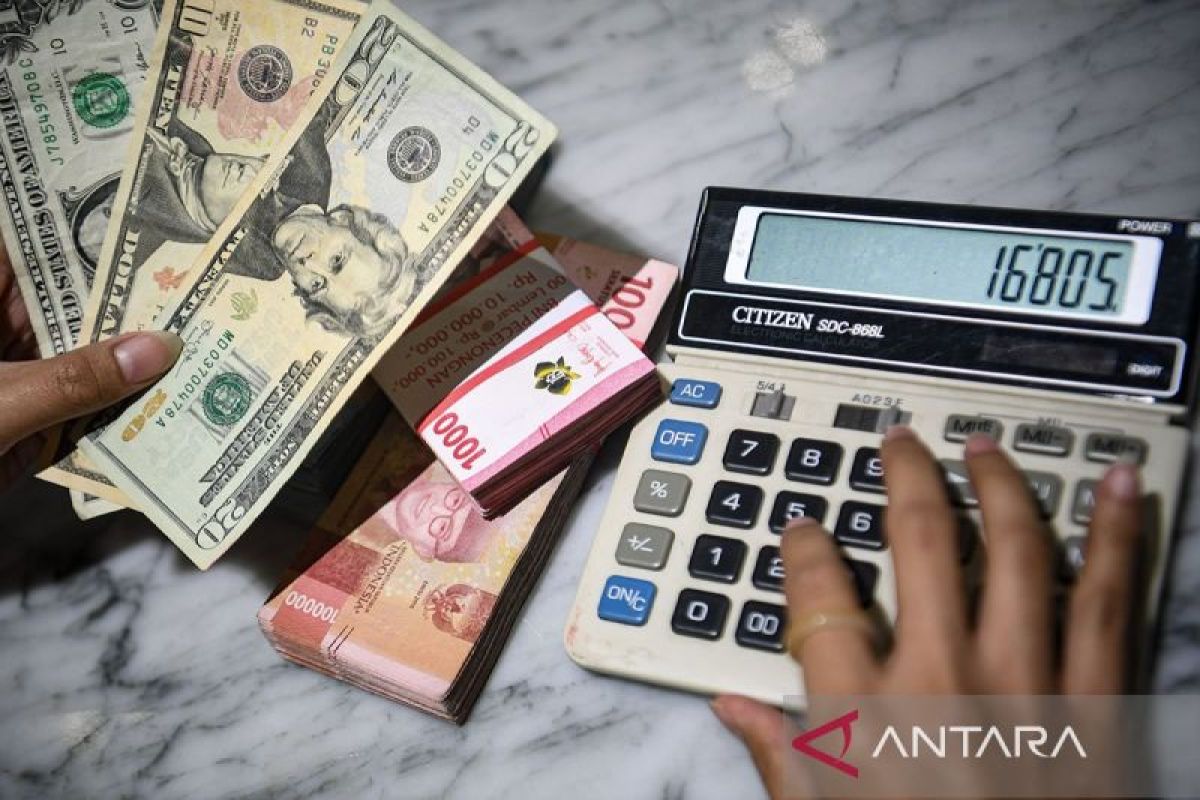
The rupiah’s exchange rate at the opening of trading in Jakarta on Friday morning moved weaker by 14 points or 0.14 percent to Rp16,928 per US dollar from the previous close of Rp16,904 per US dollar. Analyst at Bank Woori Saudara, Rully Nova, stated that the weakening was influenced by volatility in global oil prices. “The rupiah is expected to weaken today in the range of Rp16,870 - Rp16,920, influenced by the high volatility in global oil prices and uncertainty over the end of the US-Israel war with Iran,” he told ANTARA in Jakarta on Friday. Quoting Sputnik, Iranian parliament member Mohammadreza Rezaei Kouchi stated that Iran wants to legalise levies on ships passing through the Strait of Hormuz. On 24 March 2026, Bloomberg reported that Iran has begun imposing fees of up to 2 million US dollars (approximately Rp33.8 billion) on commercial ships crossing the Strait of Hormuz. Escalation around Iran has caused a de facto blockade in the Strait of Hormuz, the main shipping route for oil and liquefied natural gas from Gulf countries to global markets. This situation also affects oil exports and production in the region and drives up world prices. Looking at domestic sentiment, the market is concerned about increasing inflationary pressures due to rising oil prices, accompanied by caution over the potential exceeding of a 3 percent budget deficit from Gross Domestic Product (GDP). “Before the outbreak of the US-Israel and Iran war, inflation trends were already starting to rise, and the increase in oil prices will add to industrial production costs and selling prices of goods,” Rully explained. “Steps that the government can take include maintaining people’s purchasing power through programmes such as cash assistance and electricity incentives, as well as savings in institutions and ministries,” he said.