
Rupiah weakens: impact on fuel and electricity
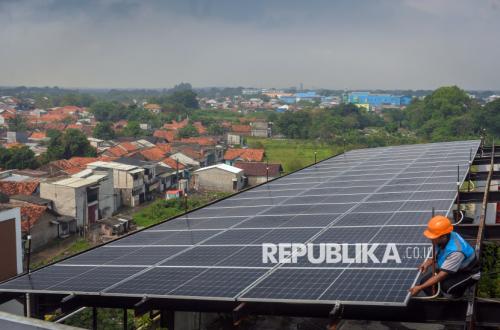
Deputy Energy and Mineral Resources (ESDM) Minister Yuliot Tanjung has assured that the rupiah’s depreciation will not disrupt the national electricity supply or fuel provisions. The government is expediting the drafting of a presidential regulation to accelerate the construction of a 100 gigawatt (GW) solar power plant (PLTS) programme. ESDM is preparing land, transmission infrastructure, and national grid integration to support the project.
‘First, regarding electricity, we are strengthening the national grid system, including executing the President’s directive for a 100 GW solar power plant,’ Tanjung stated in Jakarta on Friday (29 May 2026).
He explained that the accelerated PLTS development aims to increase reliance on domestic renewable energy. ESDM is also working on cross-ministerial regulatory reforms due to the large-scale permits and construction required for the project.
The government has begun initial planning for 17 GW of solar capacity paired with 33 GW of battery storage. ESDM and the Ministry of ATR/BPN have identified 24,000 hectares of land in Java, which will be verified with state-owned power company PLN to support plant and infrastructure development.
‘Regarding infrastructure, transmission and substation availability must be interconnected with the power plants built on the 24,000 hectares,’ Tanjung said.
Dedieselisation is a key part of national energy resilience. The government aims to reduce reliance on diesel generators, especially in remote, border, and outermost (3T) regions, by replacing them with gas and renewable energy.
Tanjung added that President Prabowo Subianto’s directive targets the acceleration of PLTS and dedieselisation within three years. The government is consolidating these programmes to reduce diesel use for power generation.
ESDM is also fast-tracking several hydroelectric projects, including the 500 MW Batang Toru plant. The project has been affected by disasters in Sumatra, requiring eight transmission towers to be relocated to a productive forest area.
Tanjung stated ESDM has requested expedited permits from the Ministry of Forestry to allow immediate tower relocation. Strengthening renewable energy infrastructure ensures a more reliable electricity system less vulnerable to rupiah fluctuations.
‘Despite rupiah fluctuations, this will not disrupt electricity supply,’ he concluded.