
Rupiah Weakens Further as US Dollar Breaches Rp17,180
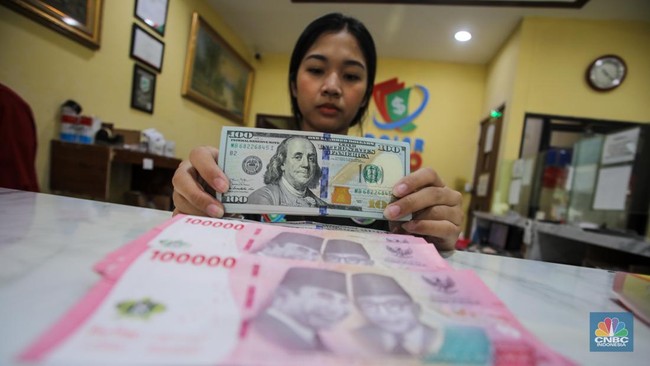
Jakarta, CNBC Indonesia - The rupiah exchange rate closed under pressure against the US dollar on the final trading day of the week, Friday (17/4/2026). According to Refinitiv data, the rupiah ended trading ahead of the weekend in the red zone with a 0.32% correction to the level of Rp17,180/US.Thislevelmarkstheweakestclosingpositionfortherupiahonrecord.ThissituationalsobringstherupiahclosertothepsychologicallevelofRp17, 200/US. Meanwhile, the US dollar index (DXY) at 15:00 WIB was observed to strengthen slightly by 0.03% to 98.240. The rupiah’s weakening today was mainly influenced by external factors, particularly the strengthening of the US dollar in global markets, which is once again pressuring other countries’ currencies, including the rupiah. This pressure is also reflected in the movements of the majority of Asian currencies, which were observed to weaken against the greenback. This condition indicates that the US dollar is once again being sought by global market players. Previously, market sentiment had improved following the ceasefire between Israel and Lebanon and prospects for new talks between the US and Iran, which had prompted investors to sell off safe-haven assets. The 10-day ceasefire between Lebanon and Israel took effect on Thursday. US President Donald Trump also stated that a follow-up meeting between the US and Iran could be held at the end of this week. However, US and Iranian negotiators are reportedly lowering their ambitions to achieve a comprehensive peace agreement. Now, both parties are said to be more focused on pursuing a temporary memorandum of understanding to prevent conflict from breaking out again, while the nuclear issue remains the main obstacle. Market players are now also monitoring how central banks will respond to inflation pressures triggered by the war, particularly from the surge in energy prices. So far, the majority of monetary authorities are still taking a cautious stance. Market expectations indicate that the US Central Bank (The Federal Reserve/The Fed) is expected to keep interest rates stable this year. This represents a significant change compared to before the war broke out, when markets still anticipated two interest rate cuts.