
Rupiah Weakens Further: Are Structural Issues Beyond Bank Indonesia's Control?
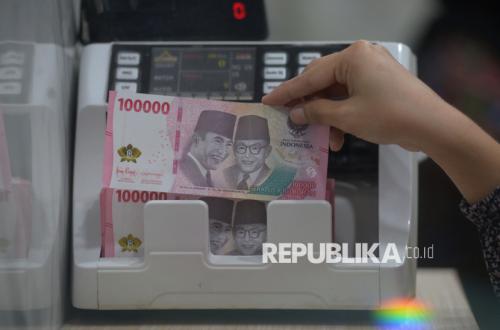
The rupiah’s movement remains concerning, continuing to weaken towards the Rp 18,000 per US dollar level. Despite ongoing intervention efforts by Bank Indonesia (BI) to stabilise the currency, why is the depreciation persisting?
According to Bloomberg, the rupiah closed at Rp 17,845.5 per US dollar on Thursday (28 May 2026). The weakness continued into Friday (29 May 2026), with the currency trading at Rp 17,886 per US dollar by 11:47 WIB.
Currency and commodities analyst Ibrahim Assuaibi noted that this round of rupiah depreciation is unusual as it coincides with a correction in the US dollar index. Typically, when the US dollar index strengthens, the rupiah weakens, and vice versa. Thus, Ibrahim questioned and analysed the underlying causes of this situation.
He stated that the central bank has undertaken various measures to stabilise the rupiah’s exchange rate, including strategic steps instructed by President Prabowo Subianto in early May 2026 and hawkish interest rate policies.
“Despite BI implementing seven strategies and raising interest rates, the rupiah continues to weaken. What is the main issue? It is crucial to note that the primary cause of the rupiah’s depreciation is not a technical or monetary error by BI, but a structural issue beyond the central bank’s control,” Ibrahim told reporters in a voice statement on Friday (29 May 2026).
According to his observations, the structural issues began with the change in Finance Minister. Purbaya Yudhi Sadewa was appointed as Finance Minister on 8 September 2025. Since then, the treasury minister’s statements have drawn serious market reactions, Ibrahim noted.
“When the President replaced Sri Mulyani with Purbaya as Finance Minister, there were numerous statements that contradicted market expectations,” he said.
He cited BI’s transfer of Rp 200 trillion to banks, followed by Rp 76 trillion, but then a withdrawal of Rp 75 trillion from the state-owned bank group (Himbara). Ibrahim noted that the initial liquidity injections had a positive effect, weakening the US dollar index and strengthening the rupiah.
However, shortly after, MSCI’s rebalancing announcement shook the financial markets around January-February 2026, causing chaos.
“But what happened? MSCI immediately froze stocks in the capital market. One notable issue was free float: companies listed on the exchange were supposed to have 15%, but actually had only 3% to 7.5%. The Financial Services Authority (OJK) is still working on improvements,” he added.
Ibrahim then addressed the OJK’s role as the financial sector regulator. The controversy following the MSCI announcement led to the resignation of five top OJK officials, including Chairman Mahendra Siregar and Capital Market Supervision Chief Inarno Djajadi, as well as Indonesia Stock Exchange (BEI) head Iman Rachman. The OJK is now led by Friderica Widyasari Dewi, previously the Executive Chief of Financial Services Behaviour, Education, and Consumer Protection.
Ibrahim continued, citing ongoing controversies. Indonesia’s Q1 2026 economic growth of 5.61%, reported by Statistics Indonesia (BPS), indicated solid economic fundamentals. However, this growth failed to stabilise or strengthen the rupiah.
“Purbaya says our economic fundamentals are strong, yet the rupiah keeps weakening. The issue I mentioned is structural, not monetary. The current account deficit is structural, not temporary, making it difficult for foreign investors to enter Indonesian stocks or bonds,” he said.
“The government has had to seek new loans. It’s the only option,” he added.
Ibrahim highlighted the current account deficit. Data shows it widened from $150 million in Q1 2025 to $4.01 billion in Q1 2026.
This widening occurred alongside a decline in Indonesia’s trade surplus from $13.07 billion in Q1 2025 to $7.98 billion in Q1 2026.
“Why is this happening? Because geopolitical tensions in the Middle East continue to escalate, particularly after Iran’s blockade of the Strait of Hormuz,” he said.
The Strait of Hormuz blockade, which handles 20% of global oil supplies, disrupted oil and gas supply chains. Consequently, crude oil prices, including Brent and WTI, rose. Higher oil prices increased transportation costs, contributing to inflation.
Indonesia imports around 1.5 million barrels of crude oil daily, 85% of which subsidises households. This situation has increased demand for US dollars.
High dollar demand is needed to address the deficit. The 2026 state budget assumed a rupiah rate of Rp 16,500 per dollar, but it has now surpassed Rp 17,800. The budgeted oil price was $70 per barrel, but current prices exceed $92.
Additionally, dollar demand is high due to dividend payments. Between March and June, listed companies must pay dividends and