
Rupiah Weakens Following Announcement of Indonesia's February 2026 Trade Surplus
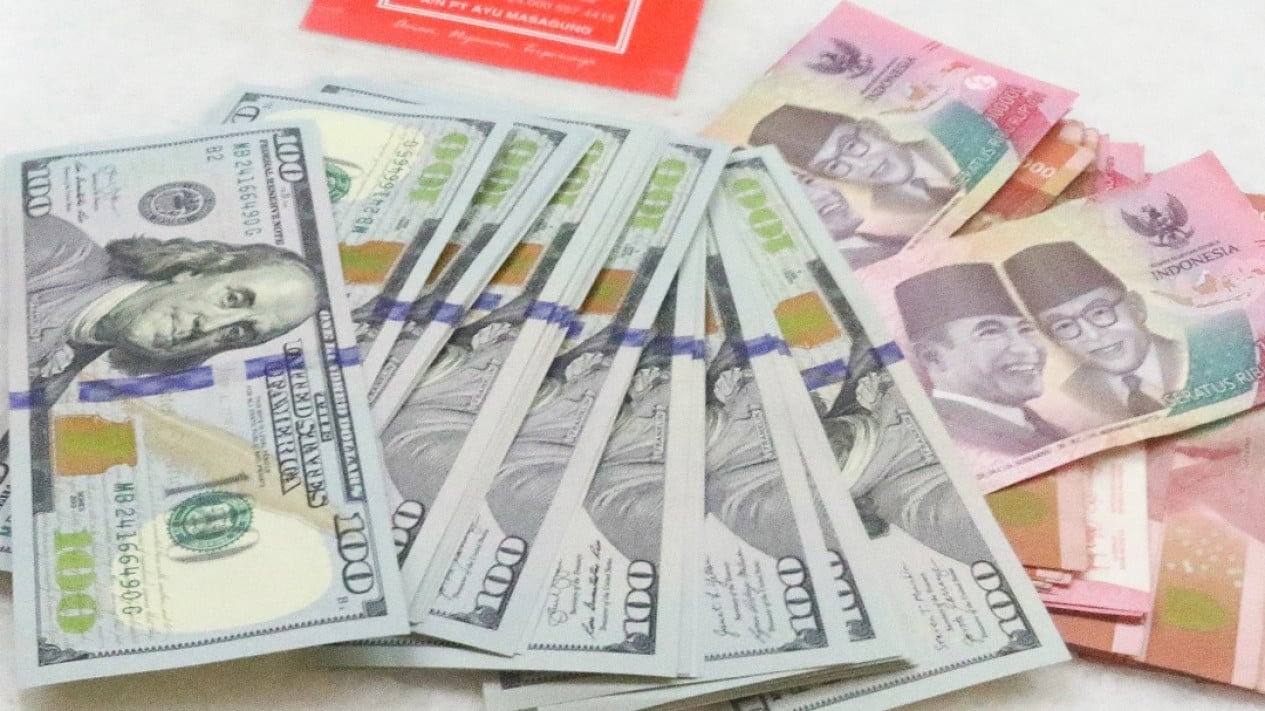
The exchange rate of the rupiah against the US dollar is expected to remain volatile but closed weaker in trading today.
According to data from the Jakarta Interbank Spot Dollar Rate (Jisdor) from Bank Indonesia, the rupiah exchange rate against the US dollar stood at Rp17,002 on Wednesday, 1 April 2026. This position represents a weakening of 3 points from the previous rate of Rp16,999 on Tuesday’s trading, 31 March 2026.
Meanwhile, trading in the spot market on Thursday, 2 April 2026, until 09:06 WIB, saw the rupiah transacted at Rp16,984 per US dollar. This position weakened by 1 point or 0.01 percent from the previous level of Rp16,983 per US dollar.
Economic and money market observer, Ibrahim Assuaibi, stated that the Central Statistics Agency (BPS) announced that Indonesia’s trade balance recorded a surplus of US$1.27 billion in February 2026, marking a trade surplus for 70 consecutive months since May 2020. This realisation is higher than the January trade balance, which was worth US$0.95 billion.
The February 2026 surplus was primarily supported by a non-oil and gas commodity surplus of US$2.19 billion, with the main contributors being animal and vegetable fats and oils, followed by mineral fuels, and iron and steel.
Indonesia recorded exports for February 2026 reaching US$22.17 billion, up 1.01 percent compared to February 2025 (year-on-year). Meanwhile, the value of imports for February 2026 reached US$20.89 billion, up 10.85 percent compared to February 2025 (year-on-year).
In addition, data from the Purchasing Managers’ Index (PMI) for Indonesian manufacturing fell to 50.1 in March 2026, from the previous month’s figure of 53.8. However, this figure remains in the expansion zone. S&P Global reported that the index, which reflects national manufacturing activity, shows no significant changes in operational conditions.
March survey data indicates a moderate but sharp decline in output or production over 9 months or since June 2025. Panellists reported that the decline generally reflects shortages of raw material supplies and rising material prices, partly influenced by the war in the Middle East and global economic turmoil.
“The rupiah is volatile but closed weaker in the range of Rp16,980-Rp17,020,” he said.