
Rupiah Weakens as Ukraine Attacks Oil Refineries in Russia
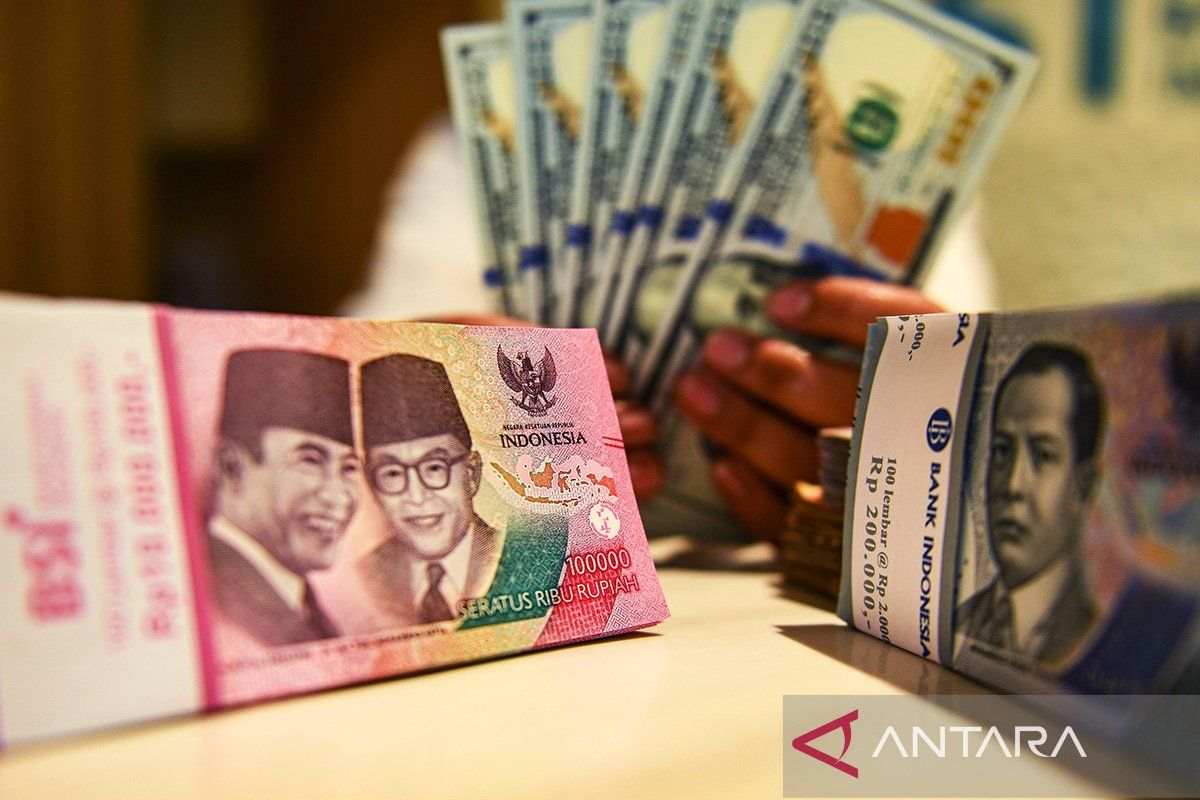
Jakarta (ANTARA) - The rupiah exchange rate closed weaker on Monday, declining by 57 points or 0.33% to Rp17,394 per US dollar from the previous close at Rp17,337 per US dollar.
Currency and commodity analyst Ibrahim Assuaibi stated that the rupiah’s weakening was triggered by Ukraine’s attacks on oil refineries in Russia.
“The cause of the rupiah’s weakening remains external, where in Eastern Europe, Ukraine continues to launch attacks on oil regions in Russia, and we see that many Russian oil refineries have been hit by Ukrainian drones,” he said in a written statement in Jakarta on Monday.
Citing Xinhua, Kremlin spokesman Dmitry Peskov said that Kyiv’s attacks on Russian oil infrastructure could lead to further increases in oil prices.
A reduction in Russian oil supplies to the global market is said to trigger even sharper price rises.
Russia’s Ministry of Defence stated that its air defence systems had shot down 740 Ukrainian drones on the front line in the past 24 hours as of Sunday (3/5).
“So, Ukraine has apparently sent even more long-range drones, resulting in severe fires in Russian regions, particularly at oil refineries. This is what is causing oil prices to rise,” Ibrahim explained.
Another sentiment stems from geopolitical issues in the Middle East, related to US President Donald Trump’s statement that the US will begin escorting neutral foreign ships out of the Strait of Hormuz, described as a humanitarian gesture towards countries trapped in conflicts they did not join.
Although Trump intends to free the Strait of Hormuz from Iran, Iran is prepared for a prolonged war, thus creating significant tensions.
“On the other hand, this rise in crude oil prices also impacts high inflation, so central banks in their May meetings are likely, if oil prices remain above $100, to raise interest rates. This is what is strengthening the dollar again,” he said.
Reviewing domestic sentiment, the Central Statistics Agency (BPS) recorded that Indonesia’s trade balance for March 2026 achieved a surplus of $3.32 billion, with exports of $22.53 billion and imports of $19.21 billion. This means Indonesia has experienced a trade surplus for 19 consecutive months, which is considered to have a positive impact on the rupiah exchange rate.
However, the latest S&P Global data showing that Indonesia’s manufacturing activity entered a contraction phase, with the PMI falling from 50.1 in March to 49.1 in April, has a negative effect on the rupiah exchange rate.
“This contraction indicates that the rise in oil prices has made imports of goods more expensive, thus impacting manufacturing,” said Ibrahim.
Meanwhile, the Jakarta Interbank Spot Dollar Rate (JISDOR) from Bank Indonesia on Monday actually strengthened to Rp17,368 per US dollar from the previous Rp17,378 per US dollar.