
Rupiah Weakens as Debt Burden Increases and Budget Performance Deemed "Robbing Peter to Pay Paul"
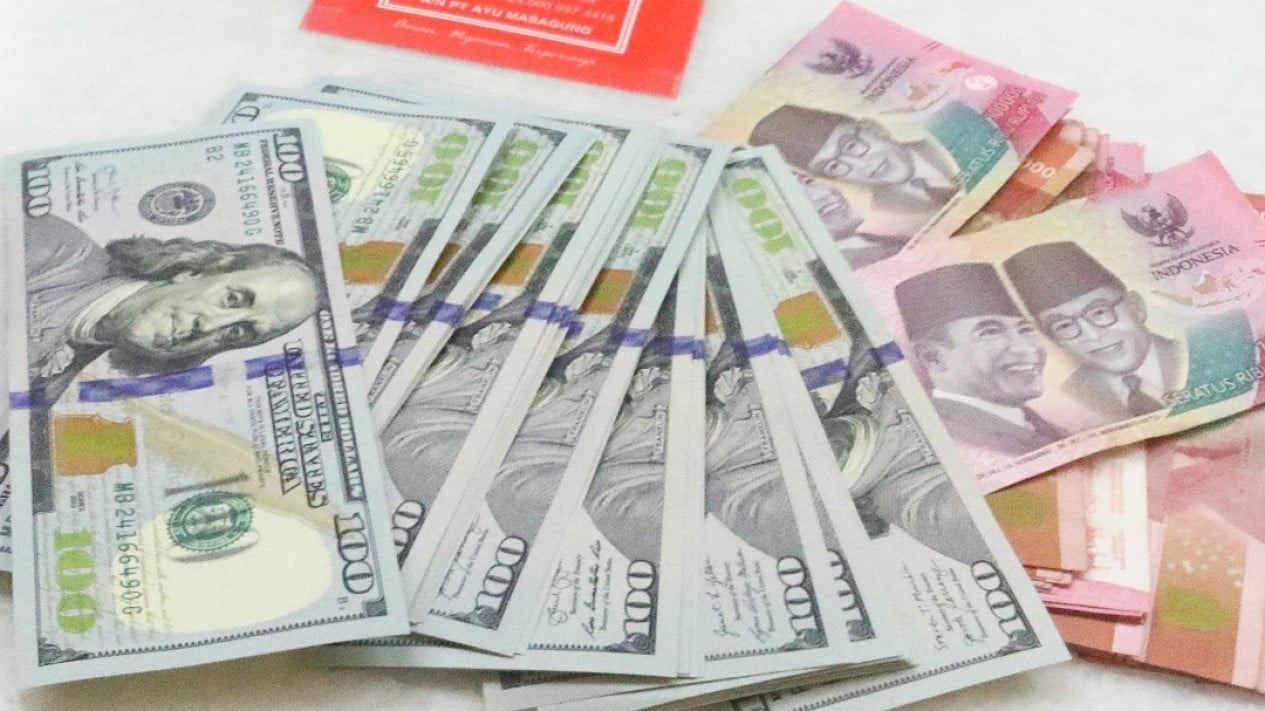
The exchange rate of the rupiah against the US dollar is predicted to remain volatile, though it closed weaker in today’s trading. Based on Bank Indonesia’s Jakarta Interbank Spot Dollar Rate (Jisdor), the rupiah traded at 16,899 per dollar on Thursday, 12 March 2026, weakening by 99 points from the previous day’s close of 16,867 on Wednesday, 11 March 2026. By Friday, 13 March 2026 at 09:01 WM, the rupiah was trading at 16,912 per dollar in the spot market, down 19 points or 0.11 per cent from 16,893.
Economist and money market observer Ibrahim Assuaibi noted that budget management through February 2026 showed positive performance on both tax revenue and government spending fronts. Tax revenues grew over 30 per cent, whilst budget absorption reached 41.9 per cent. However, looking at the overall budget position, Indonesia’s 2026 budget through February demonstrates what could be described as a “robbing Peter to pay Paul” approach, evidenced by a primary balance deficit of 35.9 trillion rupiah.
Debt servicing costs continue to rise significantly. The primary deficit confirms that the government is drawing new loans to cover principal payments on existing debt. Estimated debt interest payments last month reached 99.8 trillion rupiah, calculated as the difference between the overall budget deficit and the primary balance deficit. With a total budget deficit of 135.7 trillion rupiah and a primary balance deficit of 35.9 trillion rupiah, the difference yields the debt interest payment figure of 99.8 trillion rupiah. This represents 16.64 per cent of the 2026 debt payment allocation of 599.4 trillion rupiah.
The estimated debt interest payments have increased by 25.8 per cent compared to February 2025, when interest payments were estimated at 79.3 trillion rupiah. Notably, debt interest payments equal 28.8 per cent of total central government spending realised in February 2026, which amounted to 346.1 trillion rupiah. This figure is substantially higher than budget absorption for the Free Nutritious Meal Programme (MBG) at 44 trillion rupiah as of 9 March 2026, or subsidies and compensation spending of only 51.5 trillion rupiah through February 2026.