
Rupiah weakens amid Iran's continued closure of the Strait of Hormuz
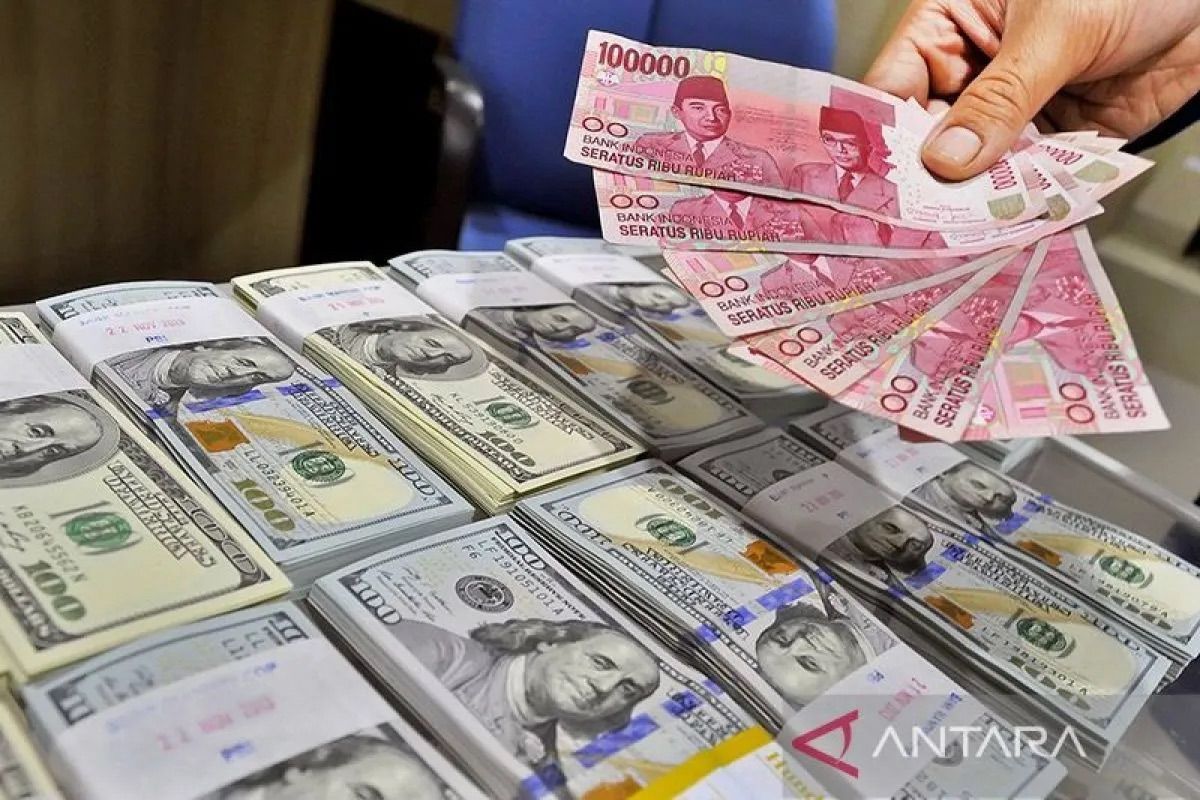
Jakarta — The rupiah exchange rate at market close on Friday morning weakened by 65 points, or 0.38%, to Rp16,958 per US dollar, compared to the previous close of Rp16,893 per US dollar.
Money market analyst Ibrahim Assuaibi attributed the rupiah’s weakness to directives from Iran’s new leader, Ayatollah Mojtaba Khamenei, that the Strait of Hormuz will remain closed.
“This narrow waterway is a critical chokepoint through which one-fifth of the world’s oil and gas supplies pass. The closure of the strait has caused the largest supply disruption in the history of the global oil market,” he said in a written statement in Jakarta on Friday.
He noted that market participants and analysts are concerned that a significant oil price surge will trigger inflationary shocks worldwide. Brent crude futures, the global benchmark, were last trading around US$100 per barrel.
Central banks such as the Federal Reserve may be forced to reconsider cutting short-term interest rates if inflation rises. Higher borrowing costs could attract more foreign investment, thereby increasing the appeal of the dollar.
Regarding domestic sentiment, the market continues to scrutinise the burden of debt interest payments, which constrains the government’s fiscal space to stimulate the economy through accelerated government spending.
Based on estimates using the budget deficit scheme minus primary balance, the realisation of debt interest payments has surpassed Rp99.8 trillion in February 2026. This figure is equivalent to 27.8% of total state revenue of Rp358 trillion, or 28.8% when compared with the realisation of central government spending of Rp346.1 trillion last month, Assuaibi said.
Furthermore, the risk of a burgeoning debt interest burden has grown in the wake of the debt switching policy between Bank Indonesia and the government, alongside heated global geopolitical tensions that could push yields on government securities higher.
Based on data from the Finance Ministry as of 10 March 2026, the yield on 10-year government securities stood at 6.52%, whilst the 10-year US Treasury yield was at 4.09%. Year-to-date, government securities yields have risen by 55 basis points. This rise in yields poses a risk of increasing the debt interest burden within the State Budget.
Nevertheless, the government remains optimistic about managing debt, both in terms of portfolio composition and annual issuance, with extreme caution to ensure risks remain under control, including the management of the debt interest payment ratio and Debt Service Ratio.
“A concrete example: tax revenue growth of 30.4% in February 2026 will have a direct impact on improving the debt interest payment ratio and Debt Service Ratio,” he said.
Bank Indonesia’s Jakarta Interbank Spot Dollar Rate also weakened to Rp16,934 per US dollar from the previous Rp16,899 per US dollar.