
Rupiah weakens amid escalating tensions between the United States and Iran
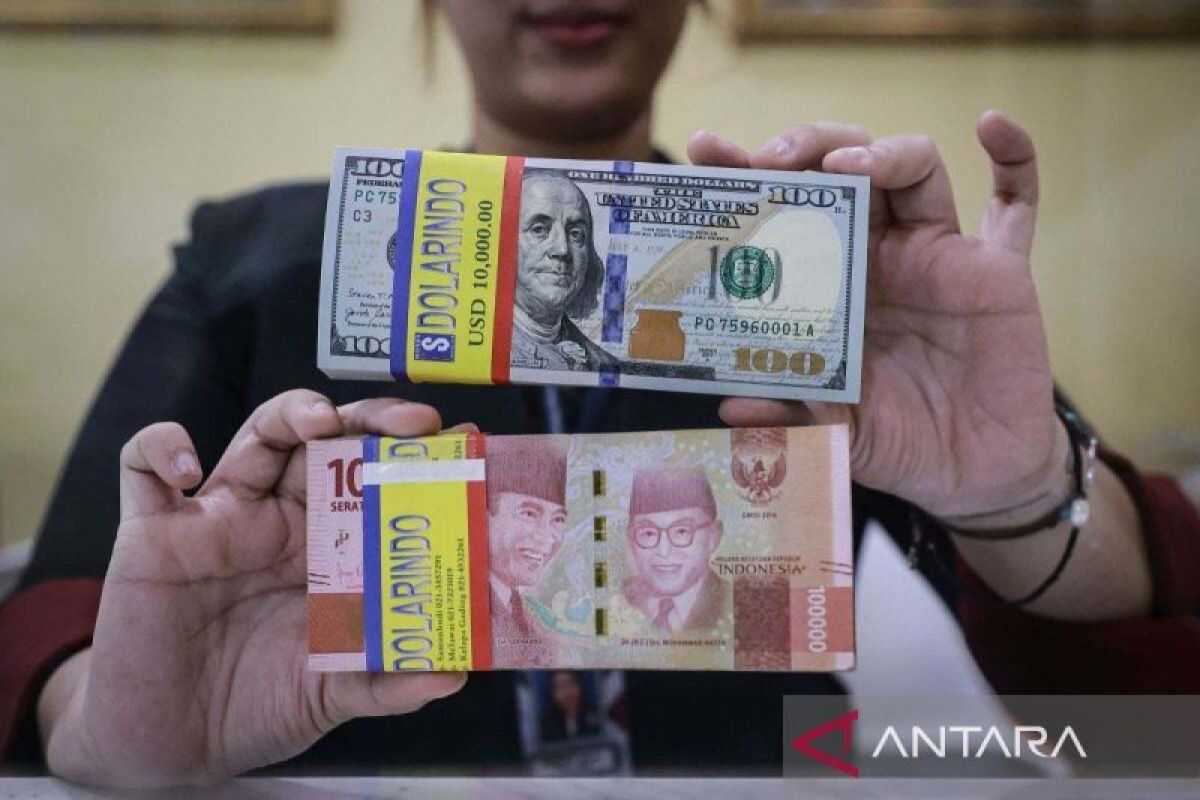
Jakarta — The rupiah exchange rate closed weaker on Friday in Jakarta, declining by 28 points, or approximately 0.17 per cent, to Rp16,787 per US dollar from the previous close of Rp16,759 per US dollar.
Money market analyst Ibrahim Assuaibi attributed the rupiah’s weakness to geopolitical tensions between Iran and the United States.
“Geopolitical tensions related to Iran have been the primary driver this week, as Washington has deployed additional naval vessels to the Middle East and threatened military action if Tehran does not accept a nuclear agreement,” he stated in a written statement in Jakarta on Friday.
He noted that US-Iran talks regarding Tehran’s nuclear ambitions concluded on Thursday (26 February) without a clear agreement. However, both parties signalled they would soon resume negotiations, with technical-level discussions also scheduled for next week in Vienna, according to Omani mediators.
Rising uncertainty over the US economy also weighed on sentiment, particularly following the US Supreme Court’s decision to invalidate much of President Donald Trump’s trade tariffs. Trump responded by announcing new tariffs under a different legal framework and threatening further duties, keeping markets cautious about potential economic disruption from such levies.
Additionally, markets reassessed the Federal Reserve’s monetary policy path as policymakers remained concerned about elevated inflation.
“Markets broadly expect the central bank to maintain unchanged interest rates at meetings in March and April,” he said.
Whereas interest rate cuts in June had previously been considered the most likely timeframe for the Fed to proceed with monetary easing, this now appears less certain. According to the CME FedWatch Tool, markets now view the July meeting as the more probable time for the next rate cut, with approximately 66 per cent probability.
On the domestic front, the United States formally announced the imposition of countervailing duties on solar cells and panels imported by companies in several countries, including Indonesia. Specifically, the US imposed a general subsidy tariff of 104.38 per cent on imports from Indonesia.
The Jakarta Interbank Spot Dollar Rate (JISDOR) set by Bank Indonesia also weakened to Rp16,779 per US dollar from the previous level of Rp16,758 per US dollar.