
Rupiah Weakens Against US Dollar: Here's Why
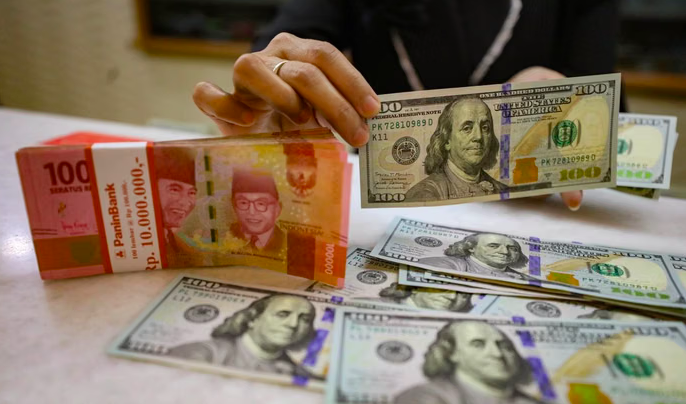
The rupiah exchange rate closed weaker by 39 points or 0.23% at Rp17,041 per US dollar on Tuesday, down from the previous close of Rp17,002 per US dollar.
Currency and commodity analyst Ibrahim Assuaibi attributed the rupiah’s weakening to the rise in global oil prices for Brent and West Texas Intermediate (WTI) types, exceeding 57% following the effective closure of the Strait of Hormuz.
“The effective closure of the Strait of Hormuz by Iran, through which around one-fifth of global oil supplies and a large number of liquefied natural gas tankers usually pass, has driven Brent futures prices up 59% so far this March, the highest monthly increase on record. Meanwhile, WTI has risen 58% this month, the highest since May 2020,” he stated in a written comment in Jakarta on Tuesday.
US President Donald Trump warned that the US would destroy Iran’s energy facilities and oil wells if Tehran does not reopen the Strait of Hormuz.
This follows Iran’s rejection of a US peace proposal deemed “unrealistic” and recent missile attacks against the Zionist Israeli regime.
On the other hand, Yemen’s Ansar Allah Movement, known as the Houthis, is still considering blocking the Bab al-Mandeb Strait, which could cause oil prices to spike sharply, according to Sputnik reports.
The Houthis emphasised that Europe must also understand that if they continue to be enemies of the Resistance Axis, they will raise oil prices to US$200 (around Rp3.4 million) per barrel and choke Europe’s economy.
The Bab al-Mandeb Strait is a narrow strategic route connecting the Red Sea and the Indian Ocean.
In relation to the Iran conflict, the area is important because it could be disrupted by Iranian-allied groups, threatening global oil trade and distribution routes.
Indonesia’s Jakarta Interbank Spot Dollar Rate (JISDOR) also moved weaker to Rp16,999 per US dollar from the previous Rp16,993 per US dollar. (Ant/P-3)