
Rupiah Touches Rp 17,000, Economists Warn of Significant Rise in Import Price Inflation
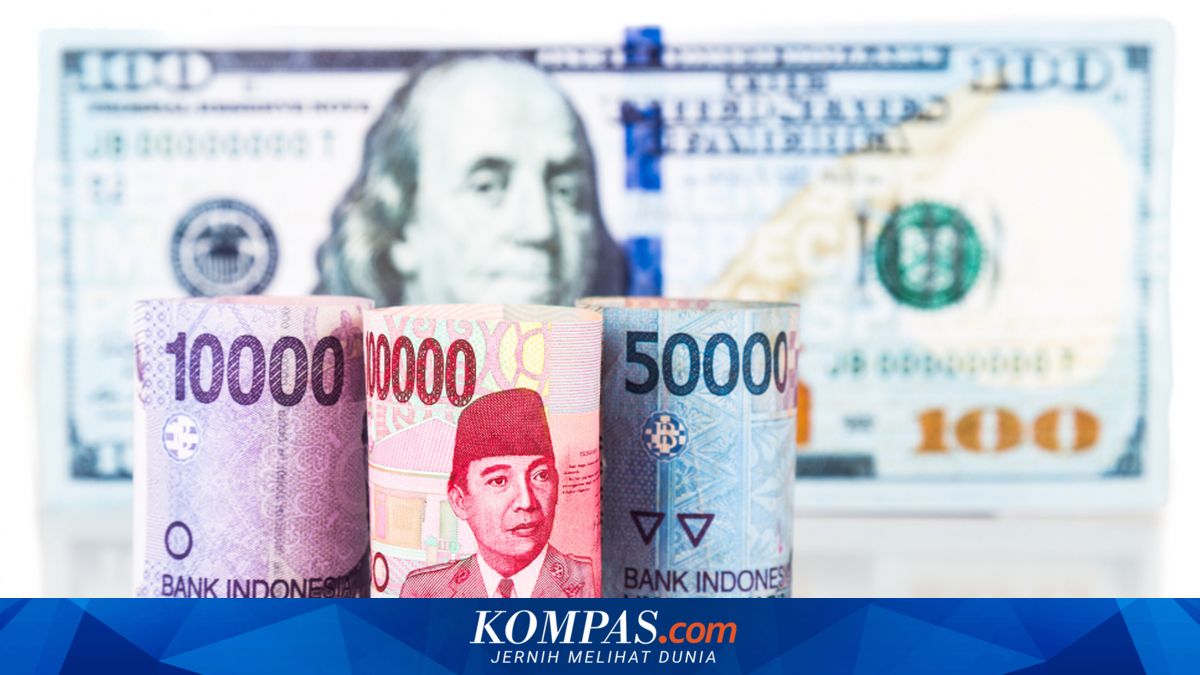
JAKARTA — The exchange rate of the rupiah against the US dollar has weakened and is approaching the level of Rp 17,000 per dollar at the beginning of this week.
This has the potential to cause domestic prices to surge, particularly those sourced from imports.
Abdul Manap Pulungan, researcher at the Centre for Macroeconomic and Finance Studies at the Institute for Development of Economics and Finance, stated that the impact of rupiah depreciation could result in rising domestic prices.
“Rupiah depreciation results in import price inflation rising quite significantly,” he said during a Public Discussion on Lebaran Economics in the Midst of War Turbulence on Monday, 9 March 2026.
As an example, based on data from the Central Bureau of Statistics (BPS), import price inflation in the first quarter of 2025, or during Ramadan, reached 7.82 per cent.
“Whereas our overall inflation at that time did not reach that level,” he added.
Overall throughout 2025, import inflation figures were above other inflation measures.
This means that rupiah depreciation has a very severe impact on the national economy.
Abdul explained that rupiah depreciation also significantly affects import prices, particularly for industrial raw material imports.
“If import prices rise, of course domestic goods prices will increase,” he said.
Conversely, rupiah depreciation has failed to push Indonesian exports to higher values.
This is because of the high import component content in Indonesian export products.
For reference, this morning the rupiah exchange rate in the spot market opened under pressure by 69 points or 0.41 per cent to the level of Rp 16,994 per dollar.
Currency analyst Doo Financial Future, Lukman Leong, stated that the rupiah exchange rate is expected to remain under pressure against the dollar, as risk-off sentiment worsens in global financial markets.
This condition is triggered by a surge in global crude oil prices that has breached the psychological level of $100 per barrel.
The increase in energy prices has heightened investor concerns about potential global economic slowdown and simultaneously driven renewed inflationary pressure across various countries.
“The rupiah is expected to weaken against the dollar due to deteriorating risk-off sentiment triggered by crude oil price increases exceeding $100 per barrel, which is feared to have a major impact on the global economy and inflation,” said Lukman.