
Rupiah Strengthens After Moody's Predicts Indonesia's Real Economic Growth at 5 Percent
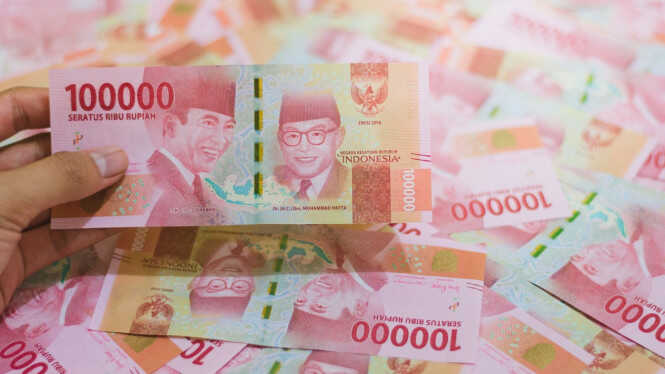
The Rupiah’s exchange rate against the US dollar is predicted to remain volatile but closed lower in today’s trading. Based on data from the Jakarta Interbank Spot Dollar Rate (Jisdor) of Bank Indonesia, the Rupiah’s exchange rate against the US dollar was at IDR 16,813 on Wednesday, February 25, 2026. This position strengthened by 17 points from the previous rate of IDR 16,830 on Tuesday, February 24, 2026. In spot market trading on Thursday, February 26, 2026, until 09.08 WIB, the Rupiah was traded at IDR 16,753 per US dollar. This position strengthened by 47 points or 0.28 percent from the previous position of IDR 16,800 per US dollar. Economic and money market observer, Ibrahim Assuaibi, said that Moody’s Ratings (Moody’s) has given a Baa2 rating to Chinese offshore Yuan-denominated bonds and Euro bonds, issued by the Indonesian government through a shelf registration mechanism worth US$10 billion. Fundamentally, Moody’s still assesses that Indonesia has adequate economic resilience. Support from abundant natural resources and a relatively favorable demographic structure are buffers for medium-term growth. Moody’s predicts that Indonesia’s real economic growth will remain in the range of 5 percent in the next few years, with the fiscal deficit remaining below the threshold of 3 percent of Gross Domestic Product (GDP). Within a conventional macroeconomic framework, this is an indicator of stability that has supported investor confidence in Indonesian government bonds over the past two decades. However, this stability is currently being overshadowed by increasing uncertainty in the policy formulation process. Moody’s explicitly notes that policy predictability and coherence have weakened in the past year, and are exacerbated by less effective policy communication. This combination contributes to increased volatility in the equity and foreign exchange markets. The fundamental problem lies in Indonesia’s classic fiscal dilemma, namely the need to encourage growth through expansion of public spending amid a narrow base of state revenue. The government is expected to increasingly rely on fiscal spending to support development agendas, including food security and affordable housing programs.