
Rupiah Remains Under Pressure, Analyst Predicts It Could Breach Rp 17,300 per US Dollar
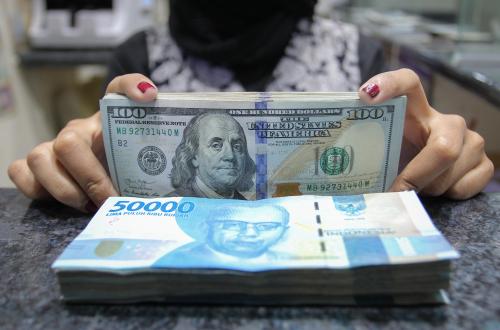
REPUBLIKA.CO.ID, JAKARTA – The rupiah exchange rate against the US dollar continued to weaken in this weekend’s trading due to the impact of escalating geopolitics in the Middle East. Analysts predict the rupiah could breach up to Rp 17,300 per US dollar in the near term.
“In this afternoon’s trading, the rupiah closed weaker by 50 points at Rp 17,188 per US dollar, from the previous close at Rp 17,138 per US dollar. For subsequent trading, the rupiah is predicted to be volatile but close weaker in the range of Rp 17,180-Rp 17,220 per US dollar. Meanwhile, the weekly weakening range is at Rp 17,150-Rp 17,300 per US dollar,” said Currency and Commodities Analyst Ibrahim Assuaibi in his statement on Friday (17/4/2026).
Ibrahim explained that Indonesia’s economy appears to have started 2026 quite convincingly. Inflation is controlled and close to Bank Indonesia’s (BI) target, household consumption is also relatively solid, even strongly supported by the Ramadan and Eid momentum. The trade balance continues to record sustainable surpluses, while the commodities sector from coal to palm oil still provides a buffer against global pressures.
“However, entering the end of the first quarter of 2026, external pressures occurred. The escalation of the US-Iran war as quick as lightning has brought oil prices above the macro assumptions that form the basis for calculating the State Revenue and Expenditure Budget (APBN),” said Ibrahim.
Brent oil prices were recorded to have breached 118 US dollars per barrel in the early weeks of the war. Now, the war has been ongoing for seven weeks and there are no signs of it abating in the near term.
Although crude oil prices have risen, the government is committed to not adjusting subsidised Fuel Oil (BBM) prices. The government is safeguarding that transmission so that people’s purchasing power remains maintained. Because if not, inflation would become even more uncontrollable.
Previously, the government met with global rating agency Standard & Poor’s (S&P) in the US and emphasised Indonesia’s commitment to keeping the APBN deficit below 3 percent of Gross Domestic Product (GDP).
The 2026 APBN deficit, which was previously estimated to widen to around 2.9 percent due to rising oil prices, is estimated to be able to fall slightly to around 2.8 percent of GDP, although that figure is still higher than the initial plan of 2.68 percent.