
Rupiah Opens Weaker, US Dollar Touches Rp18,100 This Morning
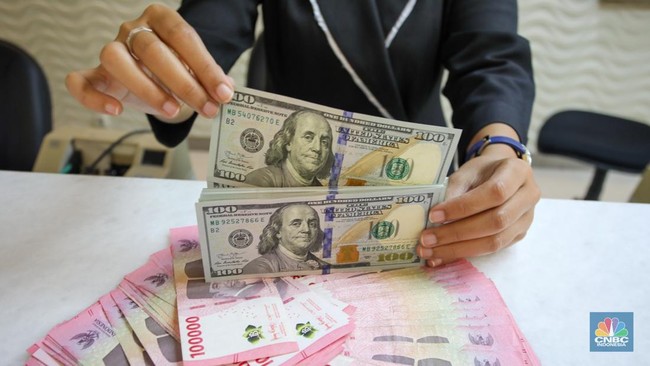
The Indonesian rupiah opened weaker against the United States dollar in trading on Wednesday. According to Refinitiv data, as of 09:02 WIB, the rupiah had depreciated by 0.25% to Rp18,100 per US dollar, bringing the currency back to a psychological threshold. In the previous session on Tuesday, the rupiah closed 0.31% weaker at Rp18,055 per US dollar, having touched a daily low of Rp18,095. Meanwhile, the US Dollar Index, which measures the greenback against six major world currencies, was observed to have edged down 0.01% to 101.40 at 09:00 WIB, extending a 0.12% correction from the prior session. The rupiah’s movement today is expected to be influenced by developments in the Middle East conflict, anticipation of the Federal Reserve’s interest rate decision, and stabilisation measures undertaken by Bank Indonesia. Although the greenback has generally weakened, it continues to find support from safe-haven demand following renewed tensions in the Middle East. Global currency movements were limited at the start of Asian trading, as market participants held back ahead of the Federal Open Market Committee meeting announcement. Markets are pricing in a 33% chance that the Fed will raise interest rates by 25 basis points. Bank Indonesia has reaffirmed its commitment to maintaining rupiah stability amid global uncertainty and the central bank’s leadership transition. Senior Executive Director and Head of the Monetary and Securities Asset Management Department, Erwin Gunawan Hutapea, stated that stability is a key prerequisite for supporting sustainable economic growth. He explained that rupiah stabilisation efforts are being strengthened to consistently support inflation targets and encourage economic activity, utilising not only the policy rate but also other monetary instruments. These include triple intervention in the foreign exchange market and the optimisation of instruments such as SRBI, supported by swap incentive facilities and DNDF hedging, to maintain exchange rate stability while supporting foreign capital inflows. Bank Indonesia is also maintaining sufficient liquidity in the money market and banking sector, with the issuance of Bank Indonesia Rupiah Securities adjusted to liquidity management needs and directed to support foreign capital inflows.