
Rupiah Lags Behind Baht and Ringgit, Analysts Highlight Indonesia's Industrial Structure
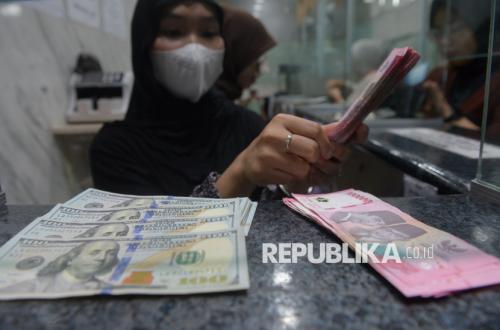
REPUBLIKA.CO.ID, JAKARTA – The trend in the rupiah’s movement against the US dollar over the past five years appears different from other major ASEAN currencies. While the Thai baht and Malaysian ringgit began strengthening from early 2025, the rupiah continues to weaken.
Economic observer Muhammad Syarkawi Rauf assesses that this situation is not merely influenced by short-term market sentiment but is related to Indonesia’s economic structure.
“From 2022 to 2026, the rupiah’s trend has consistently weakened against the US dollar. In contrast, since January 2025, the baht and ringgit have shifted to a strengthening trend,” said Syarkawi, a lecturer at the Faculty of Economics and Business at Hasanuddin University, in a brief message to reporters on Friday (8/5/2026).
According to him, Thailand and Malaysia have a stronger export manufacturing base, resulting in more stable foreign exchange inflows. Meanwhile, Indonesia still relies on commodity exports and low-technology manufacturing.
Syarkawi stated that the contribution of Indonesia’s manufacturing sector to gross domestic product (GDP) is now around 19%. This figure is lower than in Malaysia and Thailand, which remain in the 23-24% range.
Vietnam is also seen as surging as a new manufacturing base in Southeast Asia. Vietnam’s manufacturing sector contribution is said to reach around 24.48% of GDP, supported by export-oriented industries, particularly electronics.
“Vietnam has successfully built export-oriented manufacturing. Meanwhile, Indonesia remains dominant in commodities and low-technology manufacturing,” he said.
He also highlighted that Indonesia’s exports are still dominated by mineral and agricultural products. This differs from Malaysia, Thailand, and Vietnam, which are increasingly relying on electronics and machinery exports.
According to Syarkawi, Indonesia’s industrial transformation towards high-tech products has not progressed optimally. In fact, the high-tech content in Indonesia’s manufacturing exports is said to be continuously declining.
“The transformation to high-tech products is not happening. We are still trapped in low-technology manufacturing exports,” he said.