
Rupiah Hits Rp17,000, Stock Market Plunges, but Purbaya Insists Economy Still Expanding
JAKARTA — The rupiah’s exchange rate against the US dollar pierced the Rp17,000 mark during trading on Monday, 9 March 2026. Simultaneously, the Composite Stock Index (IHSG) declined sharply as global oil prices surged past $100 per barrel.
Turbulence in the financial markets has triggered concerns about Indonesia’s economic conditions. However, Finance Minister Purbaya Yudhi Sadewa assessed that the domestic economy remains robust and shows no signs of deceleration.
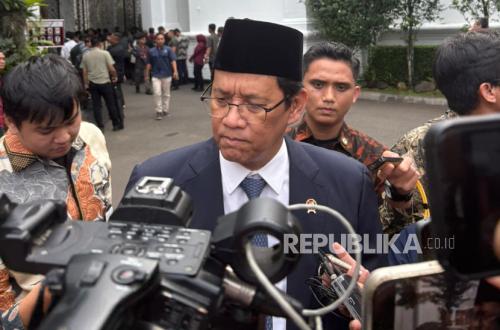
“The economy is expanding. There is no recession yet, and there is no slowdown either,” Purbaya said when met at Block A Tanah Abang Market, Central Jakarta, on Monday, 9 March 2026.
According to him, the rupiah’s weakness and pressure on the stock market are largely driven by market sentiment, including concerns over global geopolitical conflict and rising energy prices.
Purbaya said the government will continue monitoring developments in global oil prices because surging energy costs could affect fiscal conditions, particularly regarding energy subsidies. However, he stressed that the government would not make hasty decisions.
“Let us first see what the situation looks like this month. Then we will conduct a comprehensive evaluation,” he said.
He explained that the State Budget (APBN) calculations use average oil prices over one year. Therefore, short-term price increases do not automatically affect fiscal policy.
“Even if it is $100 now, it is not certain the annual average will be $100. It could fall again later,” he said.
Purbaya also assured that the government has no plans to raise subsidised fuel prices. According to him, fiscal space remains sufficient to absorb the impact of rising oil prices in the short term.
“Until now, there is no policy to change fuel subsidies or increase fuel prices,” he said.
He urged market participants and the public not to jump to conclusions that the economy is heading towards crisis. The government, he said, has experience managing various global economic shocks.
“There is no need to be afraid. We have experience dealing with various crises and know how to manage them,” said Purbaya.
Meanwhile, currency and commodity analyst Ibrahim Assuaibi attributed pressure on the rupiah and IHSG to heightened geopolitical tensions in the Middle East. According to him, conflict in the region could drive up global oil prices due to disruptions in energy supply.
“Tensions in the Middle East are causing oil prices to surge, currently even reaching around $117 per barrel,” Ibrahim said.
Such oil price increases, he said, could affect domestic fiscal conditions if they persist over time.
Nevertheless, the government maintains that domestic economic conditions remain sound. Public consumption activities are also assessed to be continuing normally.
Purbaya even disclosed that he recently visited Tanah Abang Market directly to monitor trading activity and gauge public purchasing power.
“People say purchasing power has collapsed and the market is quiet. It turns out people are still shopping and the market is still bustling,” he said.
Accordingly, he stressed that the government will continue safeguarding economic growth momentum amid global market volatility.
“We are taking good care of the foundation of our economy,” Purbaya said.