
Rupiah Expected to Weaken Amid Geopolitical Risks and Inflation Trends
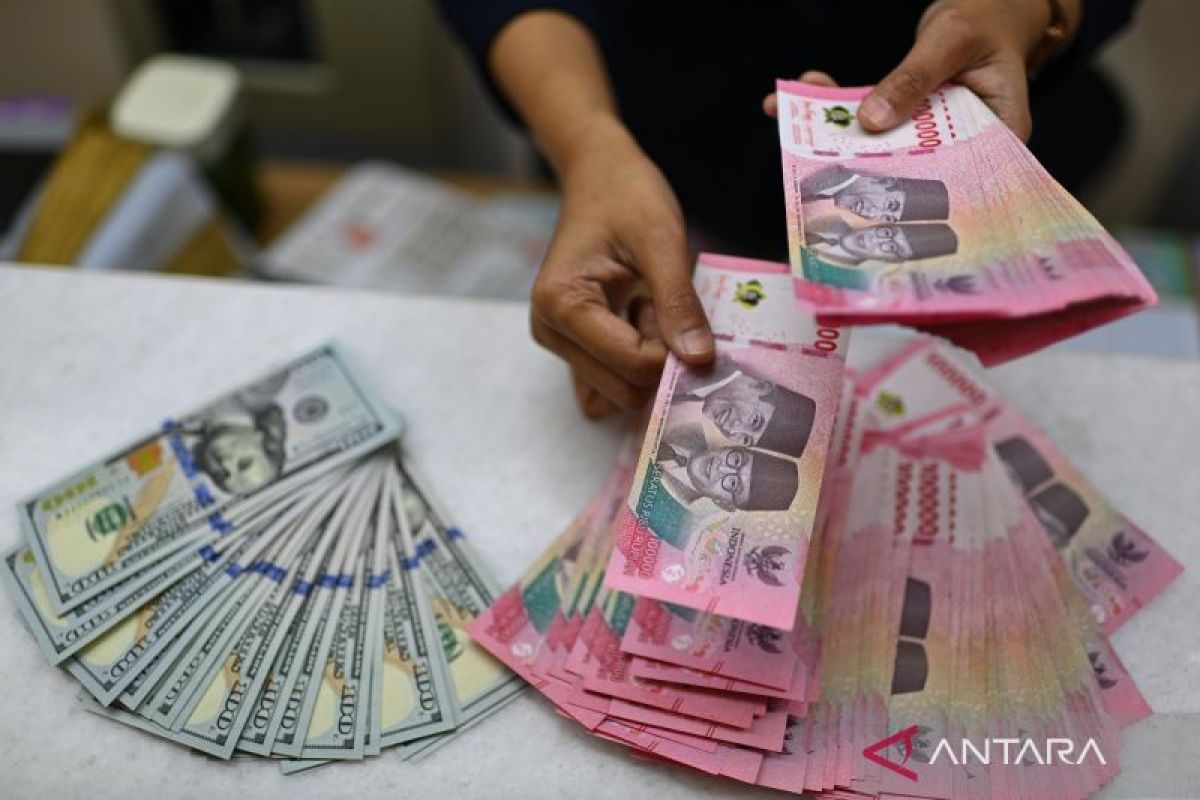
The rupiah exchange rate against the US dollar strengthened by 14 points or 0.08 percent to Rp17,515 per US dollar on Wednesday morning, compared to the previous close at Rp17,529 per US dollar.
However, Bank Woori Saudara analyst Rully Nova predicts that the rupiah will likely weaken during today’s trading, influenced by geopolitical risks and the trend of rising global inflation.
“The rupiah is expected to weaken today within the range of Rp17,525 - Rp17,575, affected by the renewed rise in global oil prices, the dollar index, and US government bond yields due to geopolitical risks and the trend of increasing inflation,” he told ANTARA in Jakarta on Wednesday.
Citing Sputnik, US President Donald Trump is seriously considering continuing military action in the Middle East.
Fox News reported that the White House is considering resuming Operation Project Freedom to restore shipping lanes in the Strait of Hormuz, with an expanded military role.
Trump is increasingly frustrated with Iran’s stance in negotiations to resolve the conflict and is now more seriously considering restarting large-scale military operations than in recent weeks. Sources say Trump is losing patience because the Strait of Hormuz remains closed.
According to those sources, there are now several groups within the US administration. Some support a hardline approach by proposing sustained targeted bombings against Iran to weaken Tehran’s position, while others continue to advocate for diplomatic means to resolve the conflict.
Regarding inflation, the International Monetary Fund (IMF) has projected that global growth in 2026 will slow to 2.5 percent, while inflation will rise to 5.4 percent, assuming the ongoing conflict persists.
Looking at domestic sentiment, the narrowing fiscal space is forcing the government to decide whether to reduce the scale of priorities or relax the deficit beyond 3 percent.