
Rupiah Exchange Rate Movement Influenced by Potential US-Iran Ceasefire
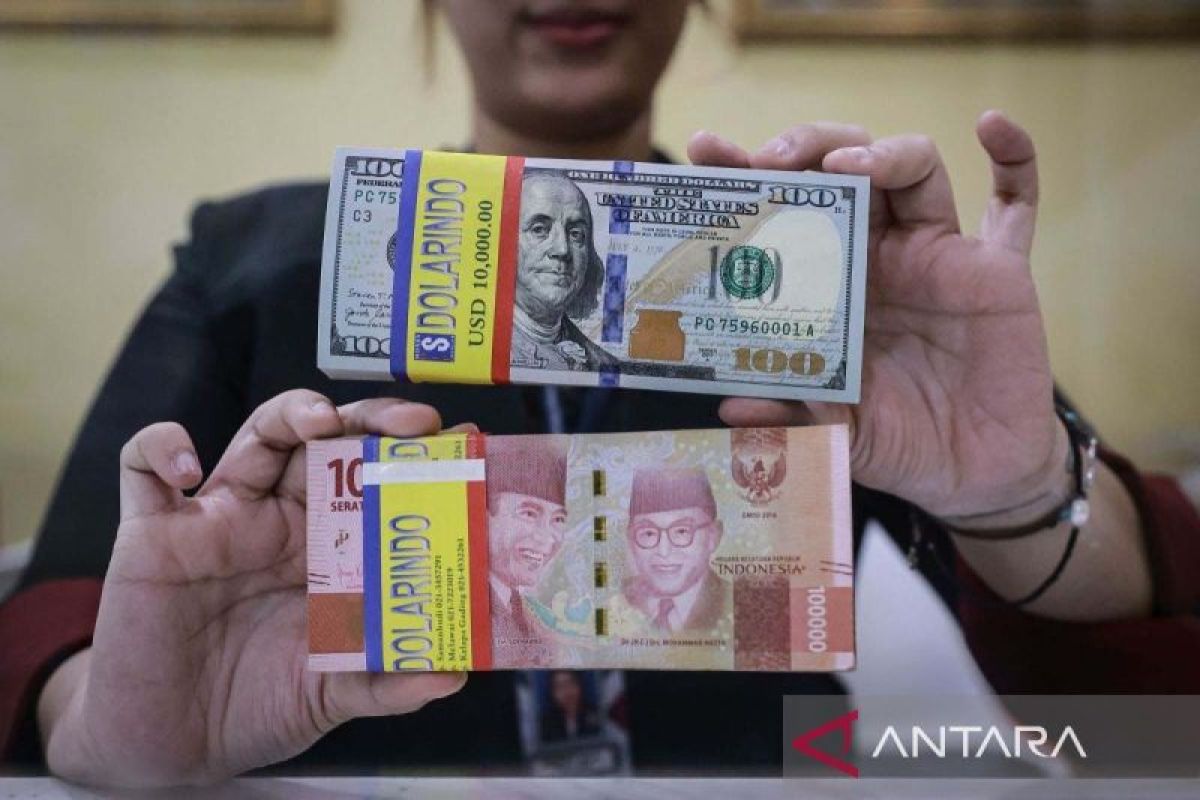
Jakarta (ANTARA) - Permata Bank’s Chief Economist Josua Pardede in Jakarta on Friday stated that he anticipates the rupiah will gain positive sentiment in line with the potential ceasefire between the US and Iran. This forecast considers that the end of the ceasefire could be accompanied by the reopening of the Strait of Hormuz. “US President Donald Trump stated that the conflict, which has lasted seven weeks, is nearly over, while the White House expressed confidence in reaching an agreement and opened the possibility of further direct meetings in Pakistan,” he told ANTARA. The rupiah exchange rate weakened by 18 points or 0.10 percent to Rp17,157 per US dollar on Friday morning from the previous close at Rp17,139 per US dollar. Quoting Anadolu, Pakistan’s Foreign Ministry said that the US and Iran remain willing to engage in ongoing dialogue and urged against speculation regarding plans for talks in Islamabad. Pakistan’s Foreign Ministry spokesperson Tahir Andrabi stated that detailed matters regarding the US and Iranian delegations are internal affairs of the respective parties. Speaking at a press conference in Islamabad, Andrabi noted that Iran’s nuclear programme is among the serious and constructive issues being discussed in the ongoing negotiations. These comments come as Pakistan intensifies mediation efforts following 16-hour talks between the US and Iran last weekend that ended without agreement. Pakistan’s Prime Minister Shehbaz Sharif is on a regional visit to Saudi Arabia, Qatar, and Turkey, while Army Chief of Staff General Asim Munir is in Iran for talks with Iranian leaders. Positive sentiment also stems from solid first-quarter 2026 Gross Domestic Product (GDP) data from China. This is seen as strengthening investor confidence that the Chinese government can mitigate the impact of the Iran conflict with limited disruption, supported by adequate oil reserves and various mitigation measures. China’s economy grew by 5 percent year-on-year (yoy), up from 4.5 percent yoy in the fourth quarter of 2025 and surpassing market expectations of 4.8 percent yoy, marking the fastest growth rate in the last three quarters. Looking at domestic sentiment, Josua added, Bank Indonesia (BI) is also bolstering market confidence, as Governor Perry Warjiyo reaffirmed the central bank’s commitment to policy stability during meetings with investors in New York and Boston. The government has also highlighted external recognition of Indonesia’s economic resilience from the Asian Development Bank (ADB) and FTSE Russell. One projection from the ADB estimates Indonesia’s economy will grow steadily at 5.2 percent in 2026 and 2027, up from the 5.1 percent realisation in 2025. This projection is included in the ADB’s April 2026 report titled The Middle East Conflict Challenges Resilience in Asia and the Pacific. Around the same period, global index provider FTSE Russell on 7 April 2026 maintained Indonesia’s capital market status as a Secondary Emerging Market and did not place Indonesia on the watch list for potential downgrade. Finance Minister Purbaya Yudhi Sadewa also stated that S&P Global Ratings has maintained Indonesia’s credit rating at BBB (investment grade) with a stable outlook following a review in Washington, D.C. Nevertheless, the rupiah’s strengthening is said to be relatively limited compared to other regional currencies. This is influenced, among other things, by investor perceptions that still view Indonesia’s economic fundamentals as relatively more vulnerable, as well as increasing demand for the US dollar amid the coupon and dividend payment period for domestic financial instruments to non-resident investors. “For today, the rupiah is expected to move in the range of Rp17,075–Rp17,200 per US dollar,” said Josua.