
Rupiah Ends 0.18% Weaker as US Dollar Stands at Rp16,880
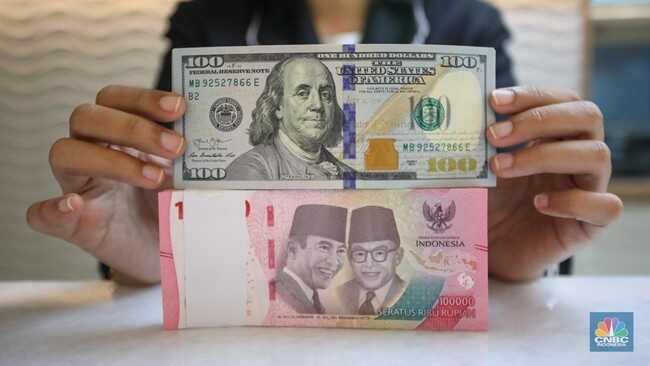
Jakarta, CNBC Indonesia — The rupiah again weakened against the United States dollar at the close of trading today, Wednesday (4 March 2026).
According to Refinitiv data, the Garuda rupiah closed in the red, down 0.18% or depreciated to Rp16,880 per US.Duringthesession, therupiaheventouchedRp16, 930perUS before ultimately trimming some of its losses ahead of the close.
This marks the rupiah’s weakest closing level since late January 2026, and the worst in more than a month.
Meanwhile, the US dollar index (DXY), which measures the greenback against six major currencies, around 3:00 pm WIB was seen in the red, down 0.13% to 98.923.
Rupiah weakness today remains largely influenced by external sentiment, particularly rising geopolitical tensions in the Middle East involving Iran, the United States and Israel. The situation heightens global market uncertainty and prompts market participants to avoid risk assets.
Senior Deputy Governor of Bank Indonesia, Destry Damayanti, stated that BI would continue to be present in the market to maintain rupiah stability and dampen the impact of the widening Middle East conflict. Destry said that firm and consistent intervention would continue through BI, via Non-Deliverable Forward (NDF) transactions in the offshore market, spot and Domestic Non-Deliverable Forward (DNDF) in the domestic market, and purchases of government securities (Surat Berharga Negara, SBN) in the secondary market.
‘The rupiah’s weakness is still aligned with the region, on a month-to-date basis down 0.51%, relatively better than regional peers. Foreign exchange reserves remain at US$154.6 billion at end-January 2026 and foreign inflows into the domestic financial markets in 2026 amounted to Rp25.7 trillion,’ Destry said in a formal statement on Wednesday (4 March 2026).
Separately, Deputy Finance Minister Juda Agung revealed that every rupiah weakening against the US dollar has a direct impact on the pressure on the Budget Deficit and State Expenditure (APBN). He explained that every Rp100 depreciation against the US dollar could widen the deficit by about Rp0.8 trillion. Meanwhile, a US$1 rise in the Indonesian Crude Price (ICP) could add around Rp6.8 trillion to the deficit, and a 0.1% rise in government bond yields could raise the APBN burden by about Rp1.9 trillion.
Nevertheless, Juda emphasised that, based on simulations by the Ministry of Finance, with scenarios still considered plausible for exchange-rate pressure, oil prices, and rising yields on government securities, this year’s APBN deficit is expected to remain around 3% and not exceed the safe limit as stipulated in the State Finance Law.