
Rupiah Edges Up Slightly, US Dollar Exchange Rate Falls to Rp16,895
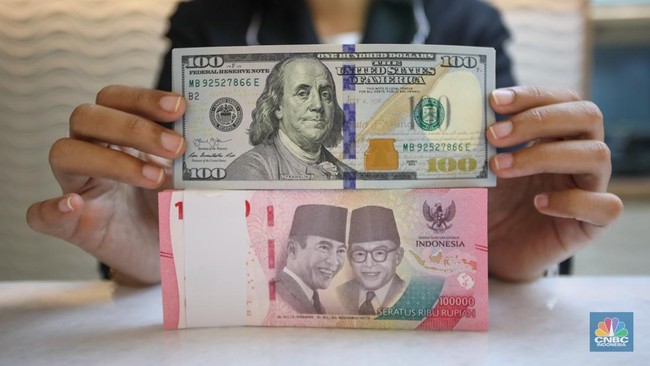
Jakarta, CNBC Indonesia — The rupiah exchange rate closed stronger against the US dollar on Thursday’s trading (26/3/2026). According to Refinitiv data, the Garuda currency closed at Rp16,895/US, strengtheningby0.06. Although slight, this strengthening extends the rupiah’s positive trend after it closed up 0.41% at Rp16,905/US$ in the previous trading session on Wednesday (25/3/2026). Meanwhile, the US dollar index (DXY), which measures the dollar’s strength against six major world currencies, was observed rising 0.09% to 99.693 at 3:00 PM WIB. The rupiah’s movement today is noteworthy as it managed to strengthen even as the US dollar index also rose. Typically, when the DXY strengthens, other countries’ currencies, including the rupiah, tend to come under pressure. From domestic factors, positive sentiment came from the government’s announced budget efficiency plans as a precautionary measure against the spillover effects of the war in the Middle East. Finance Minister Purbaya Yudhi Sadewa stated that the efficiency scheme would be implemented in stages. “It’s stage one, stage two, stage three that we’ll carry out later,” said Purbaya. He also emphasised that the measures would still be directed towards maintaining fiscal stability. “Clearly, the budget is already clear. So, I can control the state budget, it won’t exceed 3%,” he asserted. For information, State Secretary Minister Prasetyo Hadi previously revealed that the total budget efficiency planned for the 2026 state budget amounts to Rp81 trillion, excluding budget relocations that have already been reviewed at Rp800 trillion. From external factors, market participants are still awaiting clarity on whether the US-Israel war against Iran will truly subside or continue. This uncertainty has made market movements tend to be cautious, while the US dollar index remains at a relatively high level. On the other hand, the market is also beginning to adjust expectations regarding the direction of US interest rates after the surge in energy prices due to the closure of the Strait of Hormuz temporarily triggered inflation concerns. Market participants now increasingly believe that the US central bank (The Federal Reserve/The Fed) will hold interest rates longer. This situation limits the room for strengthening in emerging market currencies, including the rupiah.