
Rupiah Depreciation Triggers High Economic Cost Risks
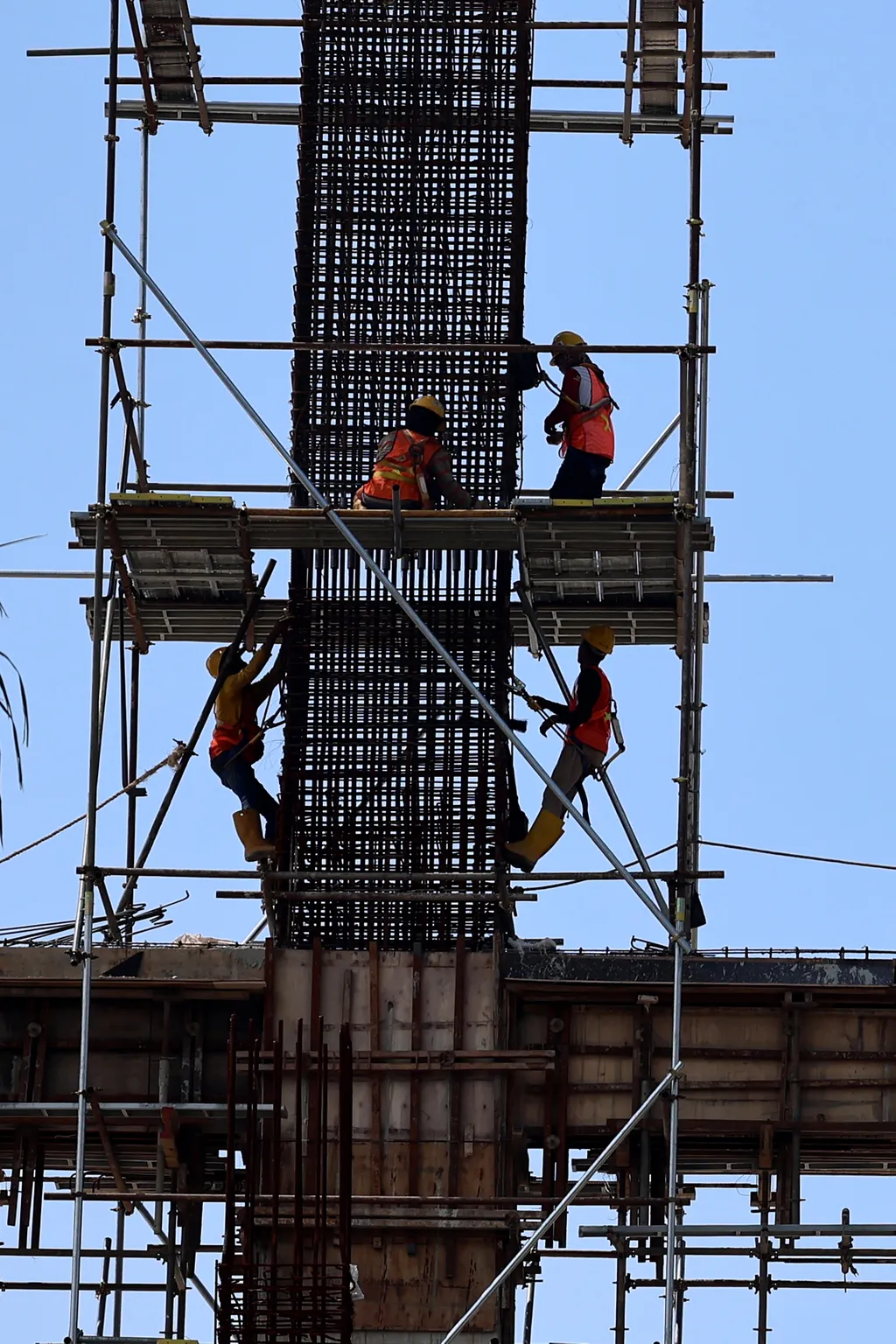
The combination of the depreciation of the rupiah and conflicts in the Middle East has triggered inflation in imported materials and an increase in prices that are directly felt by business actors.
By Agustinus Yoga Primantoro
12 Mei 2026 20:32 WIB · English
JAKARTA, KOMPAS – The depreciation of the rupiah poses a risk of triggering a high-cost economy, particularly for businesses that still rely on imports, external financing, and foreign capital flows. On the other hand, conflicts in the Middle East are also putting pressure on production costs and market demand.
Citing data from the Jakarta Interbank Spot Dollar Rate (Jisdor), the exchange rate of the rupiah in trading on Tuesday (12/5/2026) closed at Rp 17,514 per US dollar, weakening by 99 points compared to the previous day’s closing. This figure marks the deepest depreciation in history.
The trend of the rupiah’s weakening exchange rate, which continues to set new records, has been ongoing since the rupiah broke through the Rp 17,000 level in early April 2026. The rupiah has now weakened by 5 percent year-to-date.
Data from Trading Economics indicates that the rupiah is the currency in Southeast Asia that has experienced the deepest depreciation in the current calendar year. Other currencies that have also depreciated include the Vietnamese dong (0.15 percent), the Thai baht (2.89 percent), and the Philippine peso (3.04 percent).
Conversely, there are several currencies that have actually recorded appreciation during the current calendar year, namely the Singapore dollar (1.03 percent), the Brunei dollar (1.01 percent), and the Malaysian ringgit (3.06 percent).
The Vice Chairman of the Indonesian Chamber of Commerce and Industry (Kadin), Sarman Simanjorang, stated that the continuously weakening exchange rate of the rupiah, which has recorded the deepest level of depreciation in history, significantly pressures the psychology of business actors and serves as an alarm that needs to be heeded.
“The weakening of the rupiah will affect cash flow and operational or production costs because this increase will drive up the cost of imported raw materials and logistics,” he said when contacted from Jakarta.
Furthermore, if this depreciation of the exchange rate continues, the resilience of business actors will become increasingly limited, raising concerns about price adjustments reaching consumer levels. This condition could affect the purchasing power of the public and inflation.
If this exchange rate depreciation continues, it is feared that business turnover will be further depressed and they will ultimately resort to workforce rationalization.
According to Sarman, the micro, small, and medium enterprises (UMKM) segment is at risk of becoming increasingly pressured due to rising prices of raw materials, logistics, and distribution. At the same time, the decision to raise prices risks putting pressure on sales performance.
Various risks have been reflected in the Retail Sales Survey results released by Bank Indonesia (BI). Although the Real Sales Price Index (IPR) in March 2026 grew by 3.4 percent year-on-year, retail sales are expected to decline by 1.91 percent year-on-year in April 2026.
This decline is primarily observed in the Cultural and Recreational Goods, Food, Beverages, and Tobacco, as well as Motor Vehicle Fuel categories. In fact, respondents, who are predominantly from the business sector, estimate that retail sales in the next 3-6 months will continue to trend downward.
Referring to the survey from BI, inflationary pressures in the next 3-6 months (June and September 2026) are expected to increase. This increase is primarily driven by expectations of general prices in line with the rise in raw material costs.
As a mitigation measure, Sarman continued, the business world is taking innovative steps through operational or production cost savings, seeking locally sourced raw materials, and reducing product sizes without increasing prices.
“If this depreciation of the exchange rate persists, it is feared that the turnover of business actors will be increasingly pressured, ultimately leading to workforce rationalization. This is certainly something we want to avoid. We fully support various government efforts to ensure that the strengthening of the rupiah exchange rate occurs promptly,” he stated.
Contacted separately, the Chairperson of the Trade Sector of the Indonesian Employers Association (Apindo), Anne Patricia Sutanto, stated that the depreciation of the rupiah has a tangible impact on the business world. This pressure is particularly felt by the manufacturing industry and labor-intensive industries.
Both industries are experiencing the greatest pressure due to their high dependence on imported raw materials, energy, and dollar-based production components. The manufacturing sector is one of the most affected by this pressure.
“For the textile, plastics, chemical, electronics, and automotive industries, the exchange rate increase has a direct impact on the cost of goods sold and operating margins,” he said.
He added that the depreciation of the rupiah exchange rate from around Rp 16,800 to approximately Rp 17,400 per US dollar has generally increased production costs across various sectors, particularly in industries that rely on imported raw materials.
On the other hand, the business world is also facing pressure from soaring global energy and raw material prices due to geopolitical conflicts in the Middle East. This combination has triggered imported inflation and cost-push pressure, which are directly felt by businesses.
Anne added that the Indonesian business world is not standing still. Many companies are moving quickly to improve efficiency, strengthen local sourcing, implement foreign exchange hedging, increase productivity, and diversify export markets to maintain competitiveness.
Indonesia needs to ensure that every domestic policy is able to maintain a conducive business climate and support the competitiveness of