
Rupiah Closes Weakly, US Dollar Exchange Rate Rises to Rp 17,210
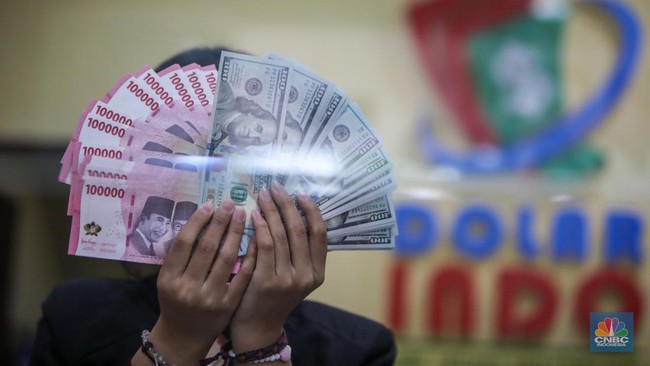
The rupiah closed weaker against the US dollar on Tuesday (28/4/2026) trading, amid the strengthening of the US dollar in the global market.
According to Refinitiv data, the Garuda’s currency ended trading in the red zone with a 0.15% depreciation to the level of Rp 17,210/US$. This weakening also breaks the rupiah’s strengthening in the previous two trading days.
Throughout the trading session, the rupiah moved in the range of Rp 17,185-Rp 17,245/US$.
On the other hand, the US dollar index or DXY, which measures the strength of the greenback against six major world currencies, was observed strengthening 0.20% to 98.689 at 15:00 WIB.
The rupiah’s weakening in today’s trading is not unrelated to external factors. Market participants are once again hunting for the US dollar as a safe haven asset amid uncertainties in negotiations between the United States and Iran.
The US dollar strengthened after US officials said President Donald Trump is sceptical towards Iran’s latest proposal to reopen the Strait of Hormuz and end the war. Trump assessed that Iran has not shown good faith in the negotiations, especially regarding the main US demands for Tehran to stop nuclear enrichment and commit not to make nuclear weapons.
This uncertainty also drove an increase in global energy prices. Brent oil prices moved back above the US$108 per barrel level, in line with market concerns over supply disruptions from the Middle East region.
In such conditions, the room for rupiah strengthening becomes more limited. When the US dollar is once again sought as a safe haven asset, emerging market currencies, including the rupiah, tend to face greater pressure.
In addition, the rise in oil prices is also a concern for the domestic market. Indonesia is still a net oil importer, so the surge in global energy prices has the potential to add pressure to the trade balance, inflation, and exchange rate stability.