
Rupiah Closes Weak, US Dollar Exchange Rate Parks at Rp16,935
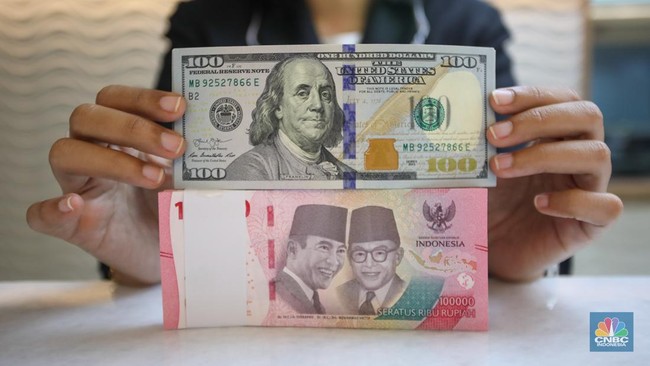
The rupiah closed weaker against the US dollar on Monday, 9 March 2026, according to Refinitiv data. The currency fell 0.21% to close at Rp16,935/USD, marking its weakest closing level in seven weeks since 20 January 2026.
The rupiah faced pressure throughout the trading session, opening 0.47% weaker at Rp16,980/USD, nearly approaching the psychological level of Rp17,000/USD. Although the currency retreated slightly from its intraday lows, weakness prevailed through the close.
Meanwhile, the US Dollar Index (DXY) gained 0.42% to reach 99.412 by 15:00 WIB.
The rupiah’s depreciation was primarily driven by US dollar strength in global markets. The greenback strengthened as investors increased demand for safe-haven assets amid renewed global uncertainty stemming from Middle Eastern conflict. Investors have been shifting funds into dollar-denominated assets, placing emerging market currencies, including the rupiah, under pressure.
Market sentiment was further influenced by Iran’s appointment of Mojtaba Khamenei, son of Supreme Leader Ayatollah Ali Khamenei, as his successor. The development is viewed as signalling that hardline factions maintain firm control in Tehran amidst the ongoing week-long conflict.
This concern has bolstered inflows into the US dollar, which benefits from its safe-haven status.
Domestically, sentiment has remained unsupportive of the rupiah. Bank Indonesia reported that the Consumer Confidence Index (IKK) in February 2026 fell to 125.2, down from 127.0 in January 2026.
The decline was primarily driven by a drop in the Consumer Expectations Index (IEK) from 138.8 to 134.4. Meanwhile, the Current Economic Conditions Index (IKE) rose slightly from 115.1 to 115.9.
The decline in consumer confidence indicates that the public is becoming more cautious about future economic prospects, including employment opportunities and income levels. This suggests domestic consumption resilience may face headwinds.
For financial markets, the weakening consumer expectations represent additional negative sentiment, revealing caution on the domestic front amid continued external pressures.