
Rupiah Closes at All-Time Low of Rp17,305/US$
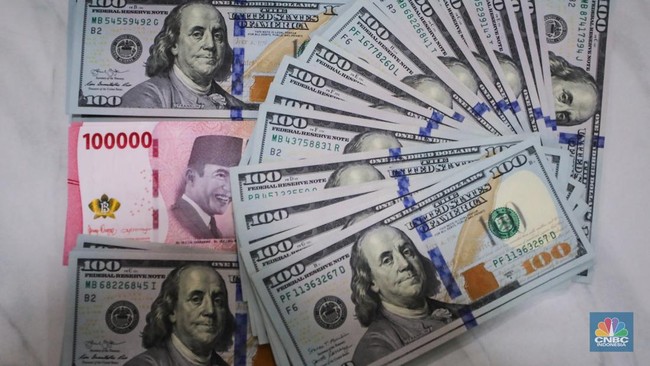
Jakarta, CNBC Indonesia - The rupiah exchange rate closed weaker against the US dollar on Thursday’s trading (30/4/2026). This was in response to global market reactions to the US Federal Reserve’s decision to hold interest rates steady once again.
According to Refinitiv, the rupiah ended trading at Rp17,305/US$, depreciating 0.17%. This position marks the rupiah’s new weakest closing level ever.
Pressure on the rupiah was evident from the start of trading. The Garuda currency opened weaker at Rp17,340/US, andthedepreciationcontinued, brieflytouchinganintradaylowofRp17, 385/US.
With this movement, the rupiah is now even closer to the psychological level of Rp17,400/US$.
On the other hand, the US dollar index (DXY) at 3:00 PM WIB was slightly weaker by 0.06% to 98.906. Nevertheless, in the previous trading session on Wednesday (29/4/2026), the DXY strengthened by 0.33%.
The rupiah’s weakening occurred amid persistent strong sentiment for the US dollar in global markets.
The US dollar briefly rose to its highest level in over two weeks after the Fed gave a more hawkish signal and oil prices surged to a four-year high.
Brent oil prices rose to their highest level since March 2022. This increase was triggered by concerns over supply disruptions following reports that the US is considering military action against Iran to break the deadlock in ceasefire negotiations.
This sentiment coincided with the Fed’s decision to maintain interest rates. Fed Chair Jerome Powell ended his eight-year tenure by holding rates steady amid renewed inflation concerns.
The Fed’s decision this time was also in the spotlight due to the highly divided voting outcome. The Fed decided to hold rates with an 8-4 vote, the most split decision since 1992.
Three officials even rejected the guidance that the central bank still leans towards easing policy.
The current sentiment has led global market participants to once again seek dollar-denominated assets, known as safe-haven or safe assets.
Ultimately, this condition adds pressure on emerging market currencies, including the rupiah. As demand for the US dollar increases, the rupiah’s room to manoeuvre becomes increasingly limited.