
Rupiah at Risk of Weakening to Rp17,000 Due to Iran-Israel Conflict and Oil
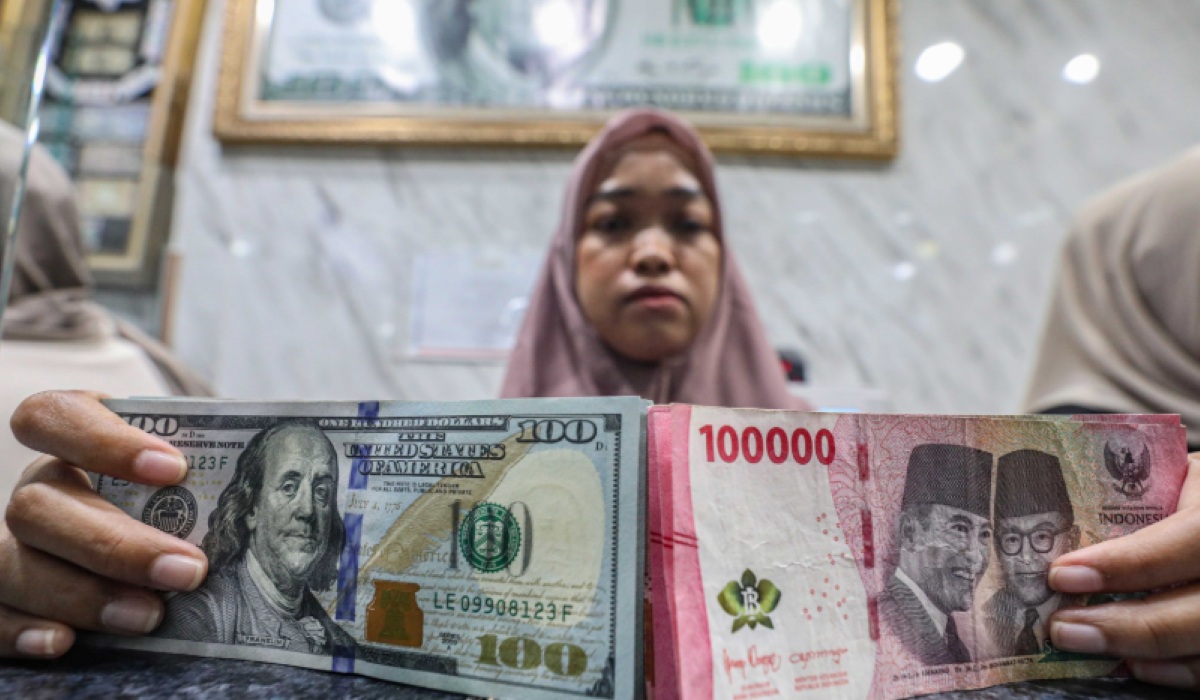
The Indonesian rupiah is currently under significant pressure and risks continued weakening if geopolitical tensions between Iran and the United States and Israel do not ease soon. During Monday trading (9 March 2026), the rupiah touched Rp16,990 per US dollar, coinciding with crude oil prices surging past the US$100 per barrel mark.
Josua Pardede, Chief Economist at Permata Bank, explained that the leadership succession process in Iran has become a crucial factor adding to global uncertainty. The change in leadership occurring amid ongoing conflict and divisions within Iran’s political elite has created negative sentiment in foreign exchange markets.
The figure of Mojtaba Khamenei, perceived as holding a hardline stance and close to Iran’s Revolutionary Guards, has caused markets to adopt a defensive posture. “In such circumstances, markets tend to maintain demand for US dollars and reduce fund placements in developing countries, making it difficult for the rupiah to recover quickly,” Josua stated when contacted in Jakarta on Monday (9 March).
Despite external pressures, Bank Indonesia continues stabilisation measures to prevent irregular rupiah depreciation. This step is considered important to curb market panic, though it remains insufficient to reverse the trend whilst geopolitical factors remain heated.
For context, in February, Bank Indonesia maintained its benchmark interest rate (BI Rate) at 4.75 per cent with primary focus on exchange rate stabilisation. Indonesia’s ammunition to maintain market stability is considered adequate with foreign exchange reserves reaching US$151.9 billion by end of February 2026, equivalent to 6.1 months of imports.
However, Josua cautioned that foreign exchange reserves should be deployed carefully. “Their function is to dampen volatility and ensure smooth foreign currency supply, not to maintain a specific exchange rate indefinitely when external pressures remain substantial,” he explained.
Rising global oil prices, which briefly tested the US$120 per barrel level due to shipping disruptions in the Strait of Hormuz, represent a genuine threat to national economic stability. For Indonesia, the short-term impact on inflation may remain contained owing to the government’s commitment to increase energy subsidies through the Lebaran 2026 period.
However, if the conflict persists for months, pressure will inevitably spread to the logistics sector, transportation costs, and food prices. “This risk warrants vigilance because domestic price pressures could increase and significantly weaken household purchasing power,” Pardede concluded.
Indef assessed that the rupiah remains vulnerable to pressure amid increasingly difficult global economic conditions, with the dollar-to-rupiah exchange rate already breaching the Rp17,000 psychological level on Monday, 9 March 2026, due to surging global oil prices and Middle Eastern tensions.