
Rupiah at Risk of Breaching Rp 18,000 per US Dollar, IHSG Faces Heavy Pressure
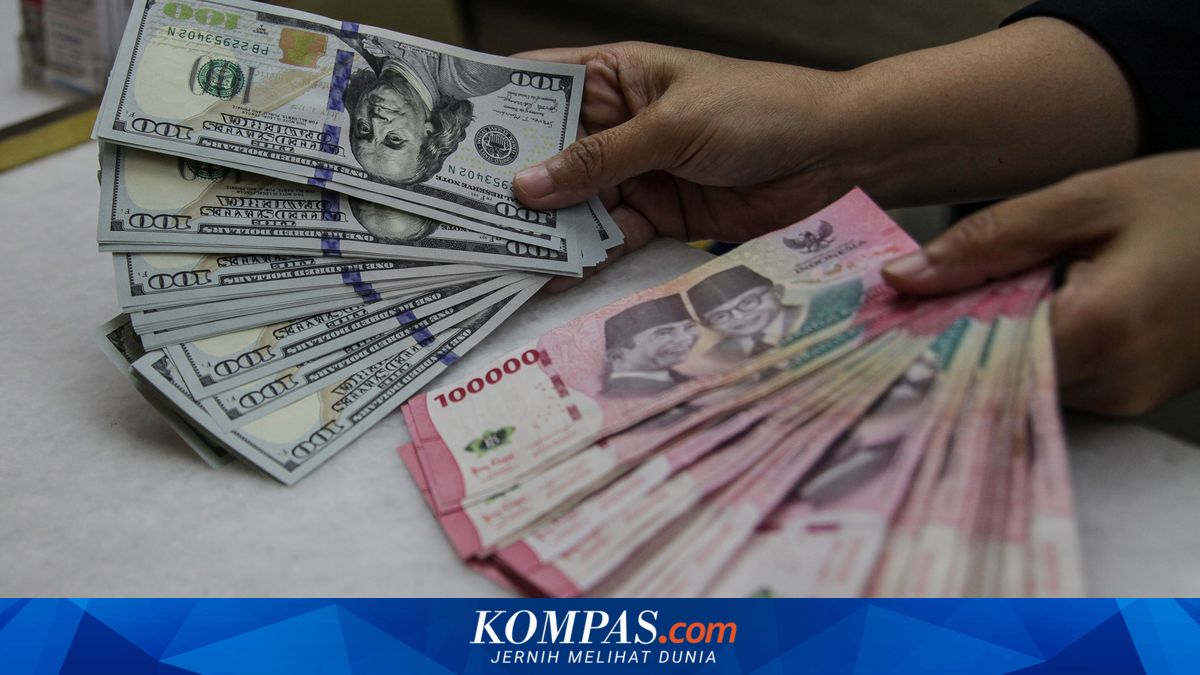
JAKARTA, KOMPAS.com - The rupiah has the potential to breach Rp 18,000 per US dollar, in line with the heating up of geopolitical tensions in the Middle East. This situation is seen as weighing on the movement of the Composite Stock Price Index (IHSG).
The IHSG experienced sharp pressure during trading on Friday (8/5/2026). The index closed down 2.86 percent at 6,969.40.
Market observer and Founder of Republik Investor, Hendra Wardana, said the weakening occurred amid renewed escalation of geopolitical tensions between the United States and Iran in the Strait of Hormuz.
The index correction also erased much of the previous gains, as the market was once again haunted by concerns over disruptions to global oil distribution, a surge in global inflation, and the potential for aggressive stance by the US central bank, the Fed.
“This correction also erased much of the previous gains after the market was once again haunted by concerns over disruptions to global oil distribution, a surge in global inflation, and the potential for an aggressive stance by the United States central bank,” Hendra told Kompas.com on Sunday night (10/5/2026).
Furthermore, the rupiah’s weakening to the Rp 17,382 per US dollar area has worsened market sentiment because it reflects high pressure from capital outflows in emerging markets, including Indonesia.
During Friday’s trading, foreign investors once again recorded a net sell of Rp 485 billion, indicating that global investors are still inclined to reduce exposure to risky assets amid global uncertainty.
From a global perspective, the market is now sensitive to developments in the conflict in the Strait of Hormuz because that route is one of the vital arteries for global oil distribution. The rebound in Brent oil prices holding above 100 US dollars per barrel has raised new concerns about fiscal pressures on Indonesia.
According to Hendra, this is important because the State Revenue and Expenditure Budget (APBN) in the first quarter of 2026 appears strong on the surface but actually has structural vulnerabilities.
The government is said to have already used around 34.8 percent of the annual deficit target in just the first three months of this year due to a surge in consumption spending such as the Holiday Allowance (THR) and the Free Nutritious Meals (MBG) programme.
“The government has already used around 34.8 percent of the annual deficit target in just the first three months of this year due to a surge in consumption spending such as THR and the Free Nutritious Meals programme,” he explained.
Pressure on the rupiah is also a factor that needs to be taken seriously. He noted that throughout the year so far, the rupiah has weakened by more than 3.5 percent even though Bank Indonesia (BI) has already deployed large amounts of foreign exchange reserves to maintain exchange rate stability.
This situation reflects that Indonesia is facing the classic challenges of emerging markets, namely difficulty in maintaining rupiah stability, inflation, and economic growth simultaneously. Hendra predicts that if the Fed turns hawkish again or the Middle East conflict worsens, the rupiah could move towards Rp 18,000 per US dollar.