
Rubbish to Gold: OASA Targets Waste-to-Energy Business Boom Supported by Presidential Regulation and Danantara
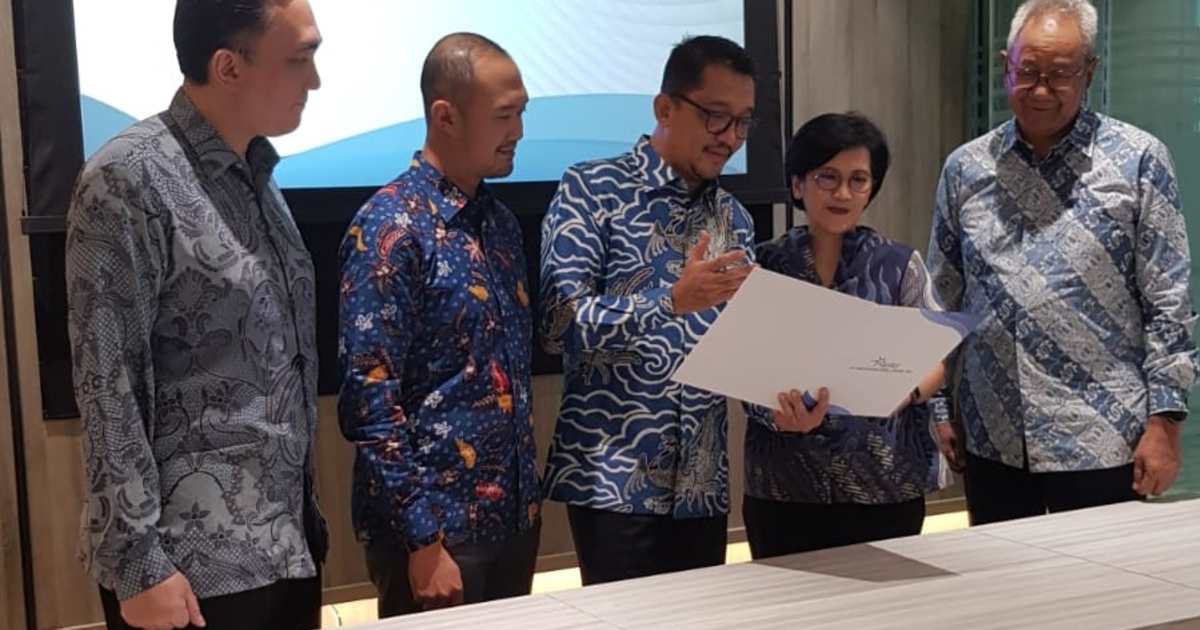
JAKARTA – Piles of rubbish, long a national environmental headache, are transforming into a promising new energy business opportunity. PT Maharaksa Biru Energi Tbk (OASA) is strategically positioned to seize the substantial opportunities in the waste-to-energy (WtE) sector, or converting waste into electricity, bolstered by robust government regulations and Danantara’s involvement in developing national green energy projects.
In a research report titled “Waste to Wealth” released by Samuel Sekuritas Indonesia (SSI Research) on Thursday (08/05/2026), OASA is assessed to experience significant growth in the renewable energy sector based on waste processing using incineration technology.
SSI Research analysts Juan Harahap and Ahnaf Yassar state that OASA’s strategic transformation towards green energy solutions positions the company at the right moment to capitalise on WtE opportunities in Indonesia.
According to the report, Indonesia faces intensifying environmental pressures and limitations in waste management capacity. National waste production is estimated at around 37.3 million tonnes per year, with approximately 67.8% of it still ending up in final disposal sites (TPA) without processing.
This situation opens vast growth potential for the waste-to-energy processing industry, particularly following the government’s issuance of Presidential Regulation (Perpres) No. 109 of 2025, which is seen as a pivotal turning point for the economics of national WtE projects.
SSI Research views this new regulation as enhancing investment appeal through the establishment of a fixed electricity tariff of US$0.20 per kWh, certainty in power purchase agreements (PPA) for 30 years, and clearer support from stakeholders such as PLN, local governments, and Danantara.
“OASA is well-positioned to capture WtE opportunities due to strong regulatory support and Indonesia’s urgent need for waste management,” SSI Research writes in its report.
To support this business expansion, OASA is estimated to require funding of around US$74 million. Of this total, approximately US$52 million will come from loans (debt financing), while US$22 million is planned to come from new share issuance or rights issue.
These funds will be used to accelerate the development of WtE projects in the Jabodetabek region, particularly in South Tangerang and West Jakarta.
In the South Tangerang Waste Processing into Electricity (PSEL) project, OASA holds a total participation of 76%, with a processing capacity of around 1,100 tonnes of waste per day and potential electricity production of about 25 megawatts (MW).
Additionally, OASA is involved in a larger-scale project in West Jakarta with approximately 28% ownership, which has a processing capacity of around 2,000 tonnes of waste per day.
Both projects are expected to commence operations by the end of 2028.
Market optimism towards OASA’s business transformation is reflected in the company’s share price, which has surged around 63.6% year to date (YTD) this year.
SSI Research assesses this spike as reflecting investor expectations of substantial future profits from the WtE business.
From a fundamental perspective, OASA is projected to generate additional EBITDA of around Rp250 billion or equivalent to US$14.4 million. If the South Tangerang project can operate at around 80% utilisation in 2029, the company has the potential to turn net losses into positive net profits.
Furthermore, OASA is said to be actively participating in the second wave of WtE project tenders driven by Danantara, following PT Binakarya Jaya Abadi Tbk (BIPI)’s acquisition of 20% shares in one of the company’s subsidiaries.
This development illustrates that the WtE sector is moving from merely an environmental issue to a new strategic investment theme in Indonesia.
Amid pressures on TPA capacity, ongoing urbanisation, and demands for green energy transition, rubbish is no longer viewed solely as an environmental burden but also as a source of energy and future economic potential.