
Rubbish Accumulates at Penjaringan Temporary Disposal Site Since Bantargebang Landslide
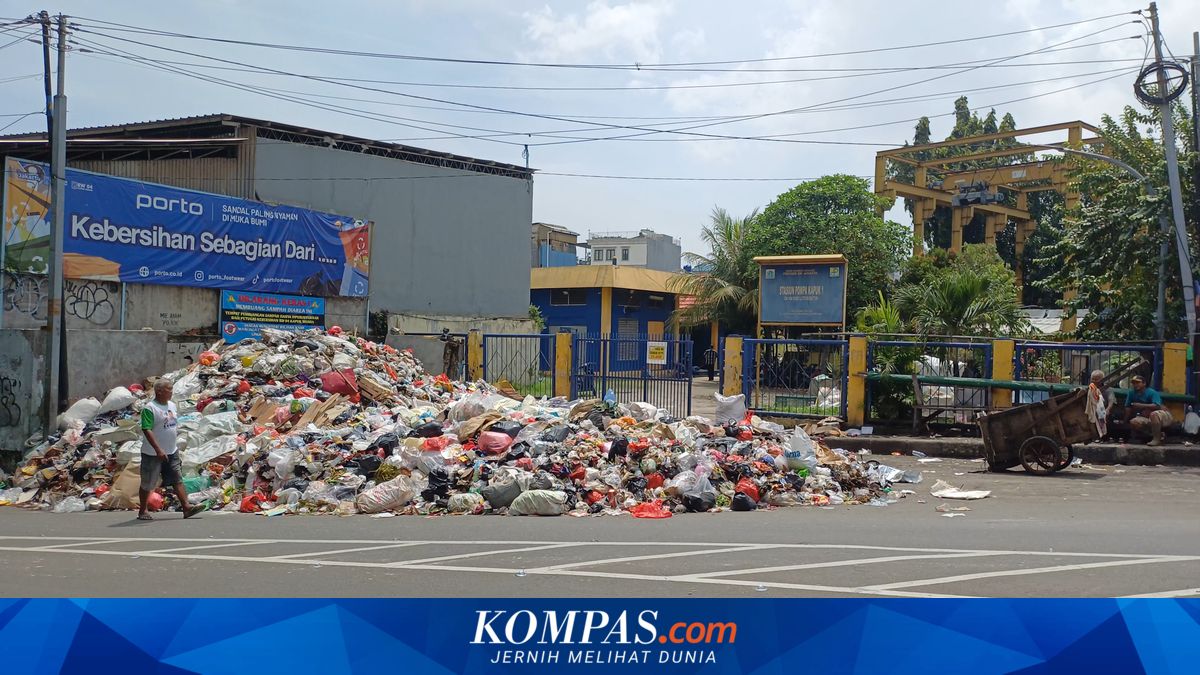
JAKARTA — Rubbish accumulation has occurred at the temporary disposal point (TPS) Duta Harapan Indah (DHI), Jalan Kapuk Muara, Penjaringan, North Jakarta, specifically in front of Kapuk 1 Pumping Station.
During a Kompas.com observation at the location on Wednesday, 11 March 2026, plastic, cardboard, food waste, wood and several other types of rubbish were scattered on the ground. Some of the waste at the site had piled up to heights of two metres. The rubbish also spilled over onto the road surface.
Among the piles, several people were visible in the surrounding area. They were sanitation workers from RW 04 Kapuk Muara. On the wall directly behind the rubbish pile was a banner reading “Strictly prohibited from dumping rubbish in this area. The dumping site is only intended for sanitation workers of RW 04 Kapuk Muara”.
On several occasions, motorcycle riders were observed stopping beside the rubbish pile and throwing plastic waste they were carrying into the heap.
Samsuri, 55, a sanitation worker, explained that the rubbish accumulation began after TPST Bantargebang collapsed on Sunday, 8 March 2026. “The last collection was Sunday. Trucks are rare,” he said when met by Kompas.com at the location on Wednesday.
According to him, the accumulation has also resulted from large quantities of rubbish coming from residents outside RW 04 Kapuk Muara. Rasmita, 40, another worker, similarly explained that the accumulation has been made worse by many residents illegally dumping at this point. “People sneak in to dump, sometimes when it’s quiet, sometimes using vehicles. From Poglar, from Kapuk Raya and also from Teluk Gong they come here,” she said when met by Kompas.com on Tuesday.
Parts of the disposal point were also damaged, forcing rubbish to be placed outside. This has also caused rubbish to accumulate because waste needs to be pushed up by excavator to prevent it from spilling onto the road. “If we don’t push it up (the rubbish) it usually reaches here (the road). This looks like where it was pushed,” she added.