
RTS Link fares may cost around S$5 to S$7 per trip, more 'cost-effective' than car travel: Loke
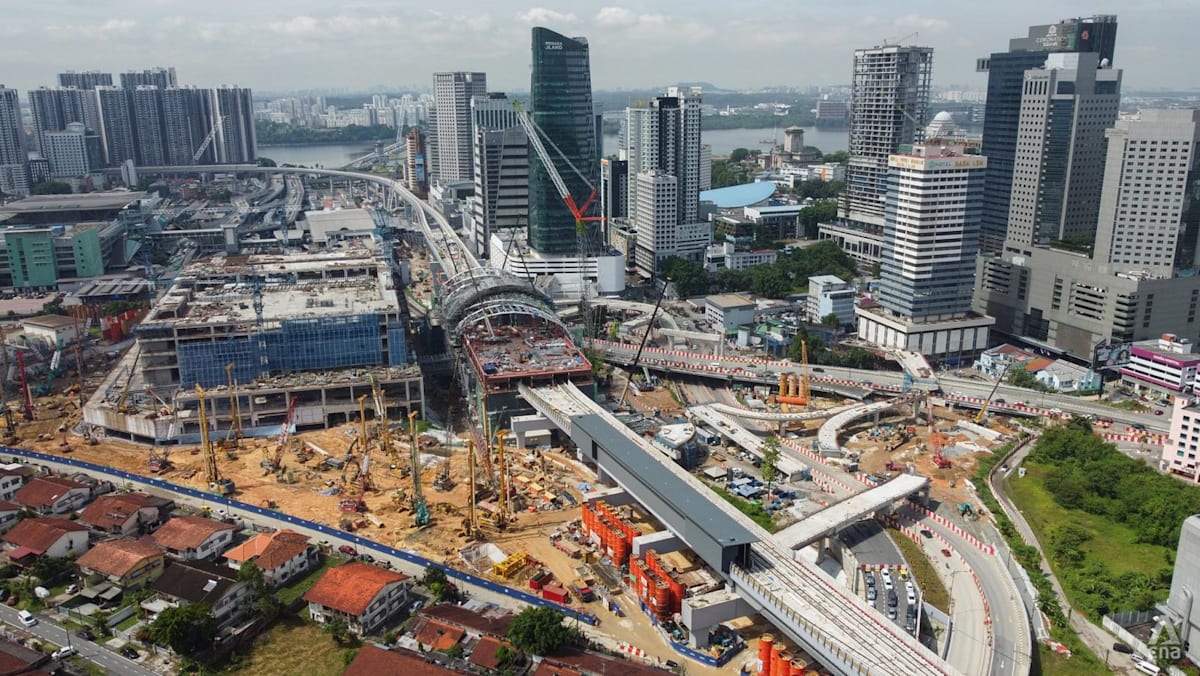
KUALA LUMPUR: Fares for the upcoming Johor Bahru-Singapore Rapid Transit System (RTS) Link are expected to cost around S$5 to S$7 (US$3.95 to US$5.50) for each one-way trip, said Malaysia Transport Minister Anthony Loke.
He said that fares for the cross-border rail service are unlikely to be as cheap as public transport in Kuala Lumpur but added that it would still be more cost-effective than travelling to Singapore by car.
Fares are expected to be announced in the second half of 2026, Loke said, echoing his earlier statements that the final pricing and fare mechanism would be made public closer to the service’s launch date.
The RTS Link is expected to start operations by the end of 2026. In Singapore, it will connect directly to Woodlands North MRT station on the Thomson-East Coast Line.
Loke said that the Malaysian government will not subsidise Singapore commuters, making schemes like monthly passes and discounts “difficult” to implement.
He added that fares are set by RTS Operations — a joint venture between Malaysia’s state-owned transport provider Prasarana Malaysia Bhd and Singapore’s SMRT Corporation.
“The Singapore government will not provide subsidies, so the operating model must ensure sustainable development,” Loke was quoted as saying by Sin Chew Daily.
In remarks made in the 13 February Sin Chew Daily article and picked up by Malaysia’s New Straits Times on 18 February, the minister added that providing monthly pass subsidies for Malaysians working in Singapore would require funding support from the Johor state government, though he did not elaborate on the details.
RTS Operations has declined comment when asked about Loke’s remarks on the purported fares for the RTS Link as well as details on concessionary fares for select groups, if any.
Currently, Singapore-registered vehicles entering Malaysia are required to pay a toll of RM20 (US$5.10), of which RM5 is funnelled to the Johor state government and RM15 goes to the federal government, Loke said.
Meanwhile, foreign-registered cars entering and leaving Tuas Checkpoint will have to pay S$2.10 each time, or S$0.80 if they leave via the Woodlands Checkpoint, according to Singapore Land Transport Authority’s (LTA) OneMotoring website. There is no toll fee for foreign-registered cars entering via the Woodlands Checkpoint. A reciprocal road charge of S$6.40 is also imposed per entry for foreign-registered cars into Singapore.
Through toll fees, Loke said that the Johor state government gathers approximately RM70 million in annual revenue.
Meanwhile, LTA announced earlier this month that the vehicle entry permit (VEP) fee for foreign-registered cars and motorcycles will be increased next year and made payable on all days except weekends and Singapore public holidays.
From 1 January 2027, the VEP fee will be raised to S$50 per day for cars and S$7 per day for motorcycles, up from the current S$35 and S$4 daily fees respectively. The annual 10 free VEP days and the free VEP hours on weekdays will also be removed.
Last Thursday, the Malaysian parliament passed the RTS Link Bill to ease congestion at the Causeway, including a single-clearance concept to reduce travel time to just five minutes.
The government will also provide 100 units of artificial intelligence-enabled gates at Woodlands and Bukit Chagar stations, allowing a clearance time of just seven seconds, said Deputy Home Minister Shamsul Anuar Nasarah on 12 February.
Shamsul added that Malaysian officers performing official duties in Singapore would enjoy legal immunity from prosecution in Singapore courts, while remaining liable to Malaysian law.
Under a cross-reciprocity mechanism, he said that Malaysia would withdraw corresponding immunities or privileges to Singaporean officers, if Singapore fails to provide equal protections to Malaysian officers.
On 4 February, the first RTS Link train arrived in Woodlands for demonstration. Each train can carry more than 600 passengers with a capacity of 10,000 passengers per hour for each direction.