
Rp574 Trillion Investment Commitments Secured from Prabowo's Visits to Japan and South Korea
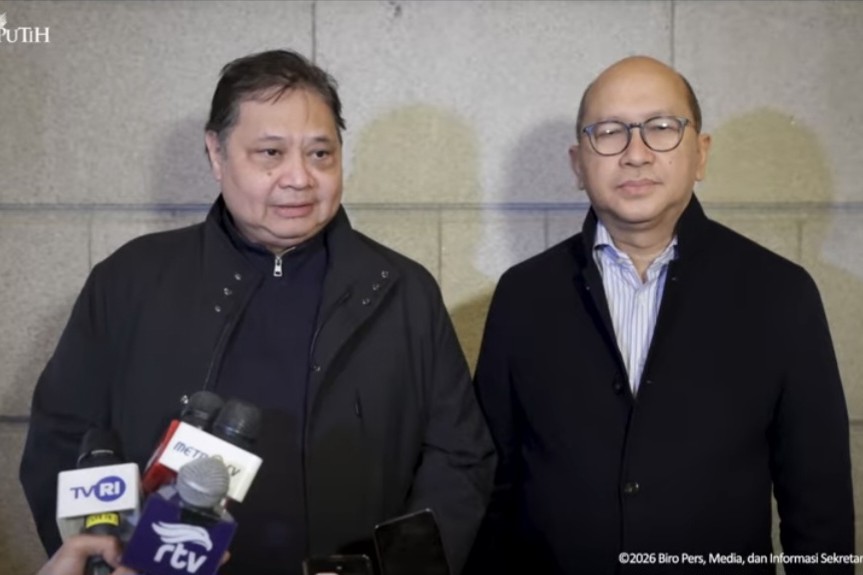
President Prabowo Subianto’s visits to Japan and South Korea have resulted in major investment commitments amounting to Rp574 trillion. Coordinating Minister for the Economy Airlangga Hartarto detailed that from South Korea, Indonesia signed 10 memoranda of understanding (MoUs) valued at Rp173 trillion. These agreements were reached at the Indonesia-Korea Partnership for Resilient Growth forum on Wednesday (1/4), attended by South Korea’s Minister of Trade, Yo Han Ko.
“In that meeting, 10 memoranda of understanding were signed with a value of US$10.2 billion or Rp173 trillion,” Airlangga said in an online press statement on Thursday (2/4).
The cooperation spans various strategic sectors, from energy and green transition such as solar power, carbon capture and storage, to renewable energy. It also includes the industrial and manufacturing sectors like steel, batteries, and eco-friendly transportation. Investments extend to the digital sector and artificial intelligence (AI), property and infrastructure including developments in Bumi Serpong Damai. Additionally, there is business cooperation between Kadin and the Korea Chamber of Commerce and Industry (KCCI) to strengthen the battery supply chain and technology investments.
“Among others, discussions included investments from Pohang Iron and Steel Company, known as Posco, which will be continued,” Airlangga said.
He also revealed an investment offer from Lotte inviting Danantara to participate as an investor.
Meanwhile, during the visit to Japan on Tuesday (31/3), the two countries agreed on nine MoUs with a total investment of Rp401 trillion. The cooperation covers the energy and energy transition sectors, oil and gas (particularly the Masela project), industry and downstreaming, finance and financial inclusion, as well as institutional investments through the Japan External Trade Organization (Jetro) and Kadin, including the creative industry and manufacturing sectors.
“The President’s visit to both countries has resulted in investment commitments of Rp574 trillion,” Airlangga explained.
According to him, this achievement is highly significant amid global geopolitical uncertainties. Indonesia remains an attractive destination for investors from Japan and South Korea, which rank third and seventh respectively in investments and trade with Indonesia. Looking ahead, both countries also hope Indonesia can play a role as a co-investor through its sovereign wealth fund.
Additionally, Airlangga explained that Prabowo discussed the continuation of the KF-21/IFX fighter jet project with South Korean President Lee Jae Myung. He said Prabowo will soon send a technical and engineering team to accelerate the completion of the project, which has been discussed since the era of President Susilo Bambang Yudhoyono and continued during President Joko Widodo’s tenure.
Furthermore, progress has been made on halal certification for the food and beverage industry, with five institutions in South Korea signing a Mutual Recognition Agreement (MRA) with Indonesia’s Halal Product Assurance Agency (BPJPH).
Another issue discussed was the protection of intellectual property rights (IPR). The Indonesian government assures equal treatment (level playing field) for South Korea, as given to other countries.
Subsequently, the two countries are also discussing the expansion of energy sector cooperation, namely the supply of liquefied natural gas (LNG) and coal. Airlangga said that around 70% of South Korea’s energy needs still depend on the Middle East region. Amid tensions in that area, South Korea sees opportunities for alternative energy supplies from Indonesia.
The potential cooperation primarily includes the supply of liquefied natural gas (LNG) and coal. However, Airlangga noted that this is a particular concern for Indonesia, given the increasing domestic demand for LNG.
“So, that is what we will discuss going forward,” he said.
On the same occasion, Chief Executive Officer (CEO) of the Daya Anagata Nusantara Investment Management Agency (Danantara Indonesia), Rosan Roeslani, added that the meeting in Japan was attended by around 300 major businesspeople. Additionally, limited meetings were held with 12 Japanese businesspeople and 11 South Korean businesspeople.
“If we look at it, investments are also increasing on average; Korea around 14% each year, Japan around 8-9% each year,” Rosan said.
According to him, Danantara’s presence has increased investor confidence to conduct joint investments, including planned cooperation with Lotte Chemical and Posco worth around US$6 billion.
Rosan emphasised that positive responses from the business world are evident from the growing interest in expanding to the second phase of investments by several companies, such as KCC Glass and Posco. This indicates that stability and return on investment in Indonesia are considered good by investors.
Nevertheless, several obstacles were conveyed by investors, particularly regarding cross-ministerial permitting processes that still take time. The government is striving to address this through the formation of a task force or debottlenecking unit, as well as strengthening coordination between ministries, including through the latest permitting policies that provide service time certainty.
“The President also conveyed that Indonesia is open as long as the incoming investments provide benefits to Indonesia and to the investments entering in the future,” Rosan stressed.
With these various commitments and policy improvements, the government is optimistic that the investment and industrial climate in Indonesia will become increasingly conducive amid global dynamics.