
Rosatom Offers Safe and Clean Nuclear Power Investment to West Kalimantan
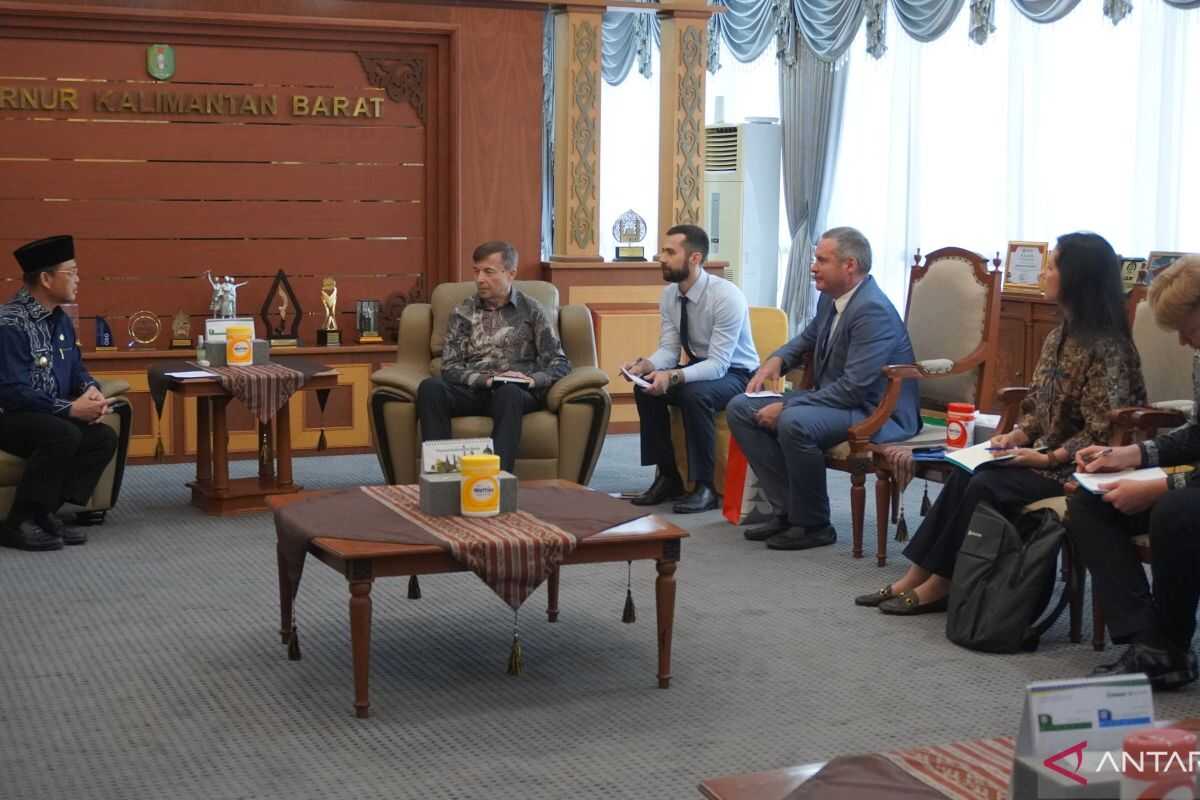
Pontianak — Russian nuclear energy company Rosatom has proposed two nuclear power plant (PLTN) technology options for investment in West Kalimantan, claiming both are safe and environmentally clean.
“We possess PLTN management technology that has proven safe. This technology is not only used in Russia, but also in several countries such as Turkey, China, Egypt, and India,” said Rosatom representative Anna Belokoneva during a meeting with the West Kalimantan provincial government in Pontianak on Friday.
Belokoneva stated that the company is prepared to invest in West Kalimantan by introducing cutting-edge technology that has been deployed across various nations.
Rosatom is offering two technology options: large modular reactors and small modular reactors (SMR).
For large-capacity reactors, the company can generate electricity of up to 1,200 megawatts. Meanwhile, small modular reactors can produce approximately 100 megawatts of electricity.
“We propose the development of PLTN with both small and large modular reactors, depending on the requirements and decisions of the Indonesian government,” she said.
Specifically for SMRs, Rosatom is also offering floating nuclear power plant technology, described as currently the only one of its kind globally, which has been operating in Russia for seven years.
According to Belokoneva, the floating PLTN technology is highly relevant for areas distant from central power generation facilities, including coastal and remote regions.
“This technology is extremely beneficial for meeting electricity needs in difficult-to-reach areas. Its safety system is also passive and robust, conforming to international standards,” she said.
Belokoneva stressed that Rosatom has studied various global nuclear incidents, including the reactor leak at Fukushima, Japan, and ensured that the technology offered has addressed similar risks.
“We understand public concerns regarding PLTN safety. However, our standards are very high. Russia itself has eleven PLTN and communities continue to live and carry out activities in their vicinity,” she said.
Beyond safety considerations, Rosatom also claims that electricity costs from PLTN are relatively cheaper over the long term due to production efficiency and transparent management principles.
Nevertheless, she emphasised that the decision to construct a PLTN rests entirely with the Indonesian government.
“We are merely offering. If the Indonesian government welcomes this positively, we are certainly ready to proceed with development according to applicable procedures and regulations,” she said.
Belokoneva added that the company is aware of plans for developing several PLTN sites in Indonesia, including in West Kalimantan, and is offering cooperation as a means of supporting national strategic energy plans.
At the same venue, Russian Ambassador to Indonesia Sergei Tolchenov stated that the visit to West Kalimantan is part of efforts to introduce Russian technology whilst exploring concrete cooperation with the regional government.
“We wish to offer the application of competent PLTN management technology whilst opening opportunities for cooperation in other sectors such as aluminium processing plant development and education,” said Tolchenov.
He noted that from meetings with the West Kalimantan Governor, the delegation observed a positive response as an initial step in exploring cooperation.
Nevertheless, the realisation of the PLTN project remains dependent on the readiness and official decision of the Indonesian Government and the West Kalimantan provincial government.
“We await an official response from the Indonesian and West Kalimantan governments. If there is scope for cooperation, we are ready to follow up,” he said.
This proposal adds to the list of energy development options for West Kalimantan, which has been encouraged to strengthen energy resilience whilst supporting downstream industrial processing based on natural resources in the region.