
Rosan: Structuring Natural Resource Exports to Enhance National Economic Value-Added
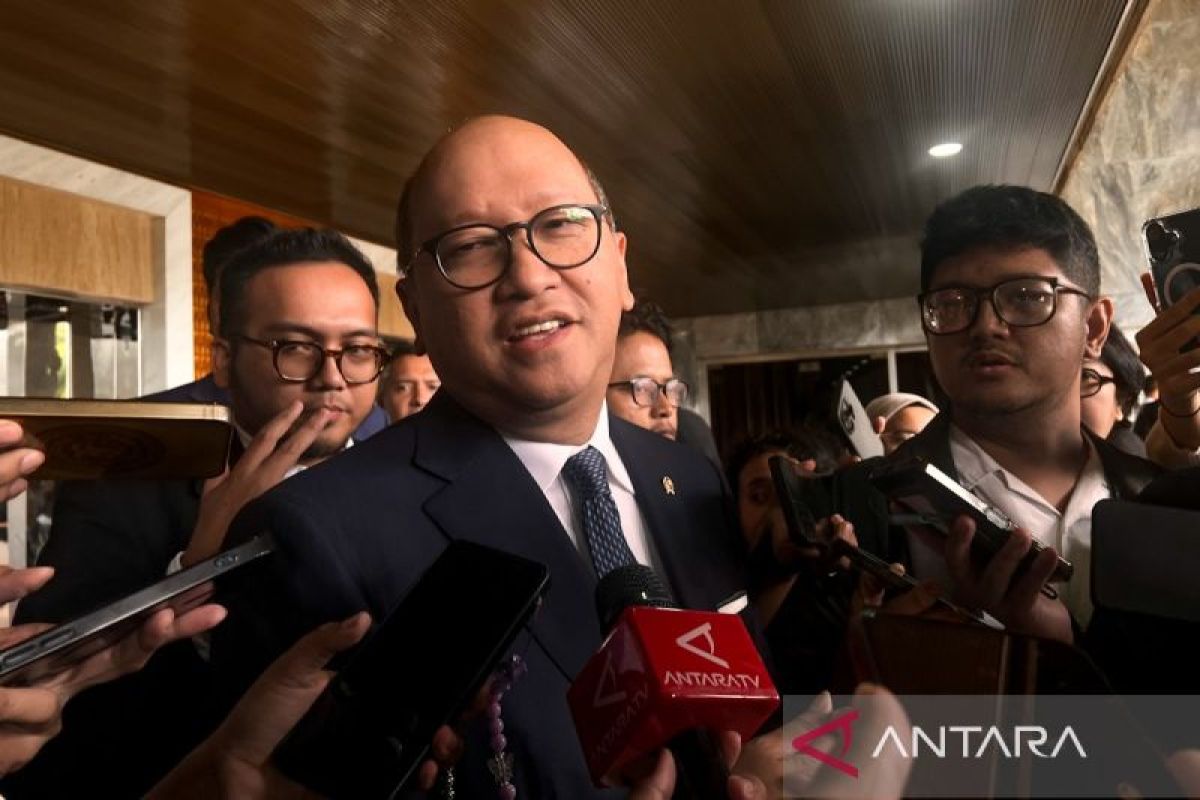
Jakarta — Rosan Roeslani, Chief Executive Officer of Danantara Indonesia, emphasised that the arrangement of natural resource exports will be undertaken through good and proper mechanisms in order to increase added value to the national economy through a more orderly and transparent trading framework.
He said at a press conference on the delivery of the Macroeconomic Framework (KEM) and the Key Fiscal Policy Principles (PPKF) for the 2027 fiscal year in Jakarta on Wednesday.
“The government has begun to shape the governance of natural resource exports to strengthen the contribution of national commodities to Indonesia’s economic growth,” the official said. The arrangement is being implemented through the formation of PT Danantara Sumber Daya Indonesia (DSI), which will support the export commodity trading mechanism to be more integrated and provide greater economic benefits.
Rosan explained that the step is a follow-up by the government to improve the national commodity trading system, which for years has not fully reflected the true economic value in the world market.
According to him, the export arrangement is needed because there are still practices of under-invoicing and transfer pricing that have meant potential state revenue from the commodity sector has not been optimal for years.
The government believes that reforming the export trade system can help raise state revenues from various sectors, including taxation, royalties, foreign exchange earnings, and the overall accuracy of national trade data.
During the transition period from June to December 2026, all export transactions of natural resource commodities must be comprehensively reported to Danantara for recording and adjustment of the system.
Through this process, the government will match the value of export transactions to global market prices so that Indonesia’s commodity trade more accurately reflects fair value that is competitive internationally.
From January 2027, export transactions for natural resource commodities are planned to use a government-prepared platform to support more efficient, modern, and higher value-added trade.
Rosan emphasised that the new mechanism is designed not only to strengthen governance of national commodity trading but also to increase the economic benefits of natural resources for the welfare of the Indonesian people in a sustainable manner.
He added that the government will formulate implementation procedures openly and gradually, so that business players have time to adapt before full implementation of the export trade system through the national platform.
President Prabowo Subianto, in a Plenary Session of the Indonesian Parliament at Nusantara Building, the MPR-DPR-DPD complex, Jakarta, on Wednesday, announced that the government has issued Government Regulation on the Governance of Export of Natural Resource Commodities. In the latest Government Regulation, Prabowo noted one of the provisions is that state-owned enterprises will become the sole exporters for palm oil, coal, and ferro alloy.
“To achieve the country’s objectives, today the Government of the Republic of Indonesia led by me issued Government Regulation on the Governance of Export of Natural Resource Commodities. The issuance of this government regulation is a strategic step to strengthen the governance of our natural resource commodity exports,” Prabowo said in a speech delivering the Macroeconomic Framework and Key Fiscal Policy Principles (KEM-PPKF) for the 2027 RAPBN at the plenary session of the DPR RI at Nusantara, Jakarta, on Wednesday.
“Sales of all our natural resource outputs, we begin with palm oil, coal, and ferro alloy; we are required to conduct sales through a state-owned enterprise designated by the Government of Indonesia as the sole exporter,” he added.
The President said the main objective of issuing the government regulation is to prevent and eradicate illegal practices that have long occurred in the governance of Indonesia’s natural resource exports.
“The main objective of the policy is to strengthen oversight and monitoring, as well as eradicate under-invoicing, transfer pricing, and foreign exchange leakage from exports. This policy will optimise tax revenue and government revenue from the management and sale of our natural resources,” Prabowo said.
With this policy, the President hopes Indonesia’s revenue can be on par with Mexico, the Philippines, and neighbouring countries.