
Rosan Discusses Follow-Up Plans for Purchase of 50 Boeing Aircraft
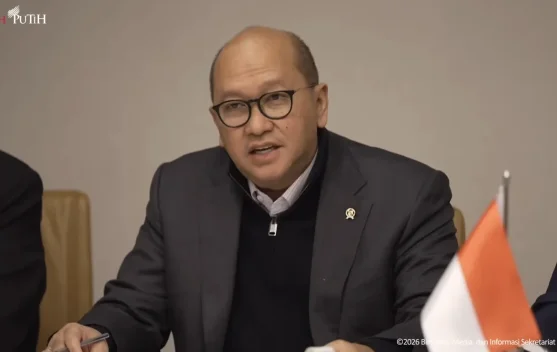
WASHINGTON, D.C. — Investment and Downstream Industries Minister and BKPM chief Rosan Roeslani is following up on plans to procure 50 Boeing aircraft. The plan forms part of the Agreement on Reciprocal Trade (ART) between President Prabowo Subianto and President Donald Trump.
The government is targeting the strengthening of national airline fleets to improve air connectivity and support economic growth. The international agreement serves as the primary basis for relevant ministries to advance various strategic investment agendas.
“Under this Agreement on Reciprocal Trade, there are several activities that involve the Ministry of Investment as well as Danantara. Among the agreements is the plan to purchase 50 Boeing aircraft,” Rosan said at a press conference in Washington, D.C., United States, on Friday, 20 February 2026.
In-depth discussions with Boeing are still ongoing, he said. He was therefore unable to provide details on the total transaction value or delivery schedule, as negotiations are still in progress.
“We will discuss this matter with Boeing. There have already been preliminary talks with them,” Rosan said.
BPI Danantara, he continued, also bears significant responsibility in fulfilling the commitment to purchase crude oil from the United States. The energy commodity transaction is projected to reach US$15 billion per year.
“This is likely related to two matters. The implementation falls within the scope of Danantara,” Rosan said.
Meanwhile, Coordinating Minister for Economic Affairs Airlangga Hartarto announced the elimination of import tariffs on 1,819 leading Indonesian products entering the United States. This cooperation is set out in the Agreement on Reciprocal Trade (ART) document signed by President Prabowo Subianto and President Donald Trump in Washington, D.C. on Thursday, 19 February 2026.
“In this ART, there are 1,819 tariff lines for Indonesian products, covering both agricultural and industrial goods,” Airlangga said.
“These products include palm oil, coffee, cocoa, spices, rubber, and electronic components including semiconductors, as well as aircraft components — all at zero per cent tariff,” he said.
The United States government is providing special facilities for Indonesian textile and garment commodities through a tariff quota system. This trade policy is projected to deliver major economic benefits for millions of workers domestically.
“This benefits four million workers in the sector. When their families are included, the impact can be felt by approximately 20 million Indonesian citizens,” Airlangga said.
Indonesia is reciprocating by offering zero per cent import duties on key American agricultural commodities. Wheat and soybeans are the primary focus of the import agreement, aimed at maintaining the stability of domestic food prices.
“This means Indonesian consumers pay zero per cent tariffs on goods produced from soybeans and wheat. These products include noodles, tofu, and tempeh,” Airlangga said.
Both parties also agreed not to impose import duties on all international electronic commerce transactions. This policy is aligned with Indonesia’s position in the World Trade Organisation forum, which supports the development of cross-border digital economies.
The government remains committed to ensuring the security of cross-border data transfers in accordance with prevailing data protection legislation. Indonesia has confirmed that US consumer protection standards are on par with domestic regulatory sovereignty.
“Indonesia is also committed to reducing tariff and non-tariff barriers. Indonesia is likewise providing regulatory certainty, particularly in the ICT, health, and pharmaceutical sectors,” Airlangga said.
Strategic trade management will be implemented to ensure that all business activities proceed safely without potential misuse. Indonesia is also streamlining import licensing processes and standardisation for both industrial goods and agricultural products from the United States.
The international agreement will take effect 90 days after all legal administrative processes in both countries are completed. The government will promptly hold intensive consultations with the House of Representatives (DPR) regarding the detailed implementation of this progressive trade agreement.
A Council Board will be established to discuss opportunities for further tariff reductions in the future. Both nations retain the right to amend the terms of the agreement through mutual written consent in line with global market developments.