
Role of State-Owned Enterprises in 5.61% Economic Growth: Here's the Evidence
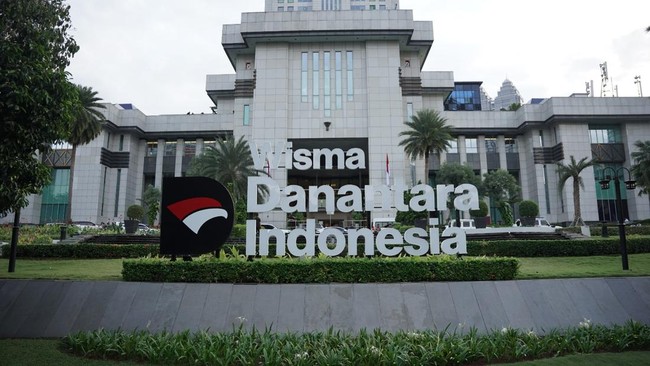
Transformation of state-owned enterprises (SOEs) is considered one of the key factors supporting Indonesia’s economic growth of 5.61% in the first quarter of 2026. Managing Partner of the SOE Research Group at LM FEB Universitas Indonesia (UI), Toto Pranoto, stated that this contribution primarily comes from large-capitalisation SOE groups or blue chips that still dominate national economic activities.
“I believe the majority of contributors to economic growth are still dominated by blue-chip SOEs such as the Himbara banks, which drive economic transactions to grow,” said Toto in Jakarta on Tuesday (12/5/2026).
Toto explained that Himbara banks play a role in maintaining liquidity and national economic financing, which is a key driver of consumption and investment growth. Toto continued that the majority of contributions to economic growth still come from several large SOEs with strategic roles in the energy, telecommunications, and mining sectors.
“MIND ID contributes significantly to exports and foreign exchange receipts, as well as fostering downstream business,” added Toto.
According to Toto, export contributions and foreign exchange earnings from the mining sector through MIND ID further strengthen Indonesia’s economic resilience amid global dynamics. In addition, Toto assesses the roles of PT Pertamina and PT Telkom Indonesia as highly significant in maintaining national economic activities.
In his view, these two red-plate companies are able to create multiplier effects through strengthening the energy sector and digital connectivity, which form the foundation of modern economic growth. Nevertheless, Toto assesses that the overall SOE contribution is still not optimal because growth still relies on groups of large companies alone.
“This illustrates that the roles of other SOEs outside the blue-chip group are not optimal,” Toto continued.
He added that SOEs’ contribution to national economic growth should be greater if investments in high value-added downstream sectors are accelerated. One example is the development of the electric vehicle battery industry through the Indonesia Battery Corporation (IBC) consortium.
“SOE contributions could be higher if they invest more in downstream areas with higher value added. For instance, accelerating the construction of EV battery factories by the IBC consortium, which is dominated by SOEs, would allow state companies’ contributions to be greater,” said Toto.
Toto also mentioned the role of the Investment Management Agency (BPI) Daya Anagata Nusantara (Danantara), which is currently focused on internal improvements and restructuring several SOEs. According to him, this condition means that the prominent SOEs are still from the old flagship sectors.
“After Danantara, the prominent SOEs are relatively in the blue-chip sectors alone. Danantara is also busy with restructuring in this period, such as Garuda or several Construction SOEs,” said Toto.