
River Carving Through Mountains: Geologists Explain the Unusual Phenomenon
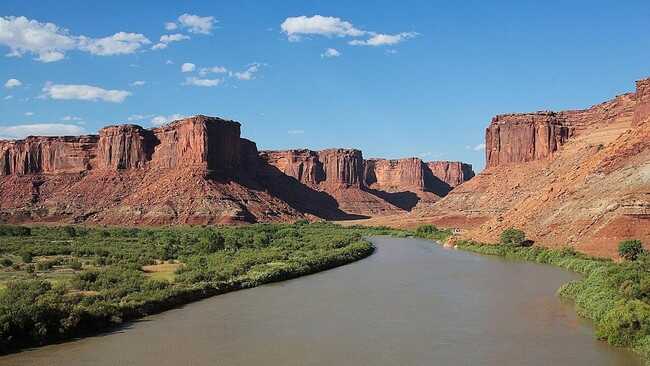
A river typically flows around mountains. However, a puzzling phenomenon has emerged in the United States. The Green River in the US does not flow around the Uinta Mountains in Utah, but instead cuts directly through them. A study conducted by geologists from the University of Glasgow revealed that this unusual path was likely influenced by changes in the Earth’s crust over millions of years.
Citing IFLScience, researchers describe the phenomenon as lithospheric dripping, a process in which the Earth’s crust bends downwards and then slowly rises again. According to the research, the Green River formed its path between 8 million and 1.5 million years ago, long after the Uinta Mountains were formed approximately 50 million years ago. At that time, the land beneath the mountains is believed to have experienced a decrease in elevation, allowing the river to flow through an area that now seems impossible. Through seismic imaging and advanced geological modelling, the research team found that the Earth’s crust beneath the Uinta Mountains is several kilometres thinner than the surrounding areas. This condition is consistent with the approximately 400-metre decrease in elevation required for the Green River to maintain its course. In other words, the land beneath the Uinta Mountains subsided when the Earth’s crust “dripped” into the mantle. This allowed the Green River to form its path across the mountains. As the land rose again, the Green River continued to flow along the same path, gradually eroding the mountains and forming a canyon approximately 700 metres deep between peaks 4 kilometres high. Dr. Adam Smith, the lead author of the study from the School of Geographical & Earth Sciences, University of Glasgow, stated that the impact of this geological event not only shaped the landscape but also influenced the natural history of North America. The confluence of the Green River and the Colorado River altered the continental divide and created new habitat boundaries for wildlife in the area. He added that this finding provides an answer to a long-standing debate of over a century regarding the origin of the Green River’s path, while also reinforcing the role of lithospheric drip in shaping the Earth’s surface.