
Risk or Reward? Economists Weigh Impact of US Reciprocal Tariffs on Indonesia
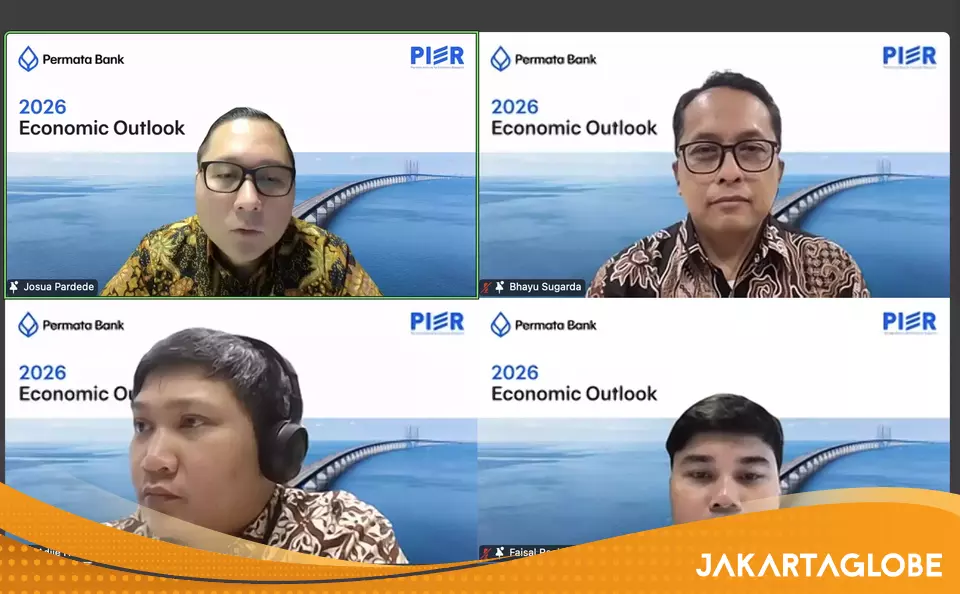
Jakarta. Indonesia’s reciprocal tariff policy with the United States still poses risks to economic growth in 2026, although it also opens opportunities for export diversification and foreign direct investment (FDI), economists at Permata Bank said during the Indonesia Economic Outlook 2026.
Chief Economist Permata Bank Josua Pardede said the tariff arrangement could restrain growth amid a global slowdown. The main transmission channels would come from weaker external demand, supply chain disruptions and heightened uncertainty, which could dampen investment realisation and trade flows.
“The biggest risks remain external demand and supply chain disruption. Rising uncertainty could hold back FDI realisation and trade flows,” Josua said.
However, he noted the policy could generate upside if used as a negotiation tool to expand market access. Indonesia has advanced trade agreements such as the EU-CEPA and Canada-CEPA, which may strengthen trade certainty, though their benefits remain limited to certain commodities and subsectors.
On potential US FDI into Indonesia’s manufacturing and logistics sectors, Josua highlighted that investment would remain conditional. Positive inflows would depend on broader reforms, including regulatory certainty, streamlined licensing, targeted incentives, adequate energy supply, competitive industrial estates and efficient logistics connectivity.
“Without those prerequisites, even with tariff negotiations, US investment will remain conditional,” he said.
Josua also highlighted the need to diversify export markets to reduce reliance on a single destination. Although the EU-CEPA takes effect in 2027, Indonesia can optimise other partnerships, including BRICS economies. Still, diversification must be backed by stronger competitiveness and higher value-added through industrialisation to avoid merely shifting markets without productivity gains.
Head of Industry and Regional Research Permata Bank Adjie Harisandi said the newly signed 19% US reciprocal tariff, alongside a $38.4 billion investment commitment in strategic sectors, requires closer scrutiny as it reportedly covers around 1,800 products.
For labour-intensive industries such as textiles, garments and footwear, Adjie pointed to indications of a 0% tariff under a tariff rate quota scheme. Exports within a set quota would face zero tariffs, while volumes above it would incur duties.
“If Indonesia receives special treatment compared to competitors such as Vietnam or Bangladesh, this could significantly boost export performance in manufacturing-based sectors,” he said.
Adjie noted that Indonesia’s export dependence on China has risen over the past two decades, exceeding 20% in 2024, while exports to the US have remained relatively flat. Preferential access to the US could therefore strengthen diversification. Exports to China are dominated by raw commodities such as coal, crude palm oil and nickel, whereas exports to the US largely consist of manufactured goods including electronics, footwear and textiles.
Head of Macroeconomic and Financial Market Research Permata Bank Faisal Rachman emphasised the need to compare Indonesia’s agreement with those of other countries.
“If it is not exclusive, the impact may not be significant. But if Indonesia receives preferential treatment compared to countries with similar export structures, the opportunity could be substantial,” Faisal said.
He added that Indonesia’s trade balance is likely to remain in surplus, though narrower. While the 19% tariff applies broadly, a 0% rate is granted for certain goods not produced domestically and key export products, with textile exports subject to quota limits.
Faisal also warned of potential fiscal implications and geopolitical risks, particularly in the Middle East, which could affect energy prices and exchange rates.