
Rising Street Money-Exchange Services Ahead of Lebaran: Is It Safe?
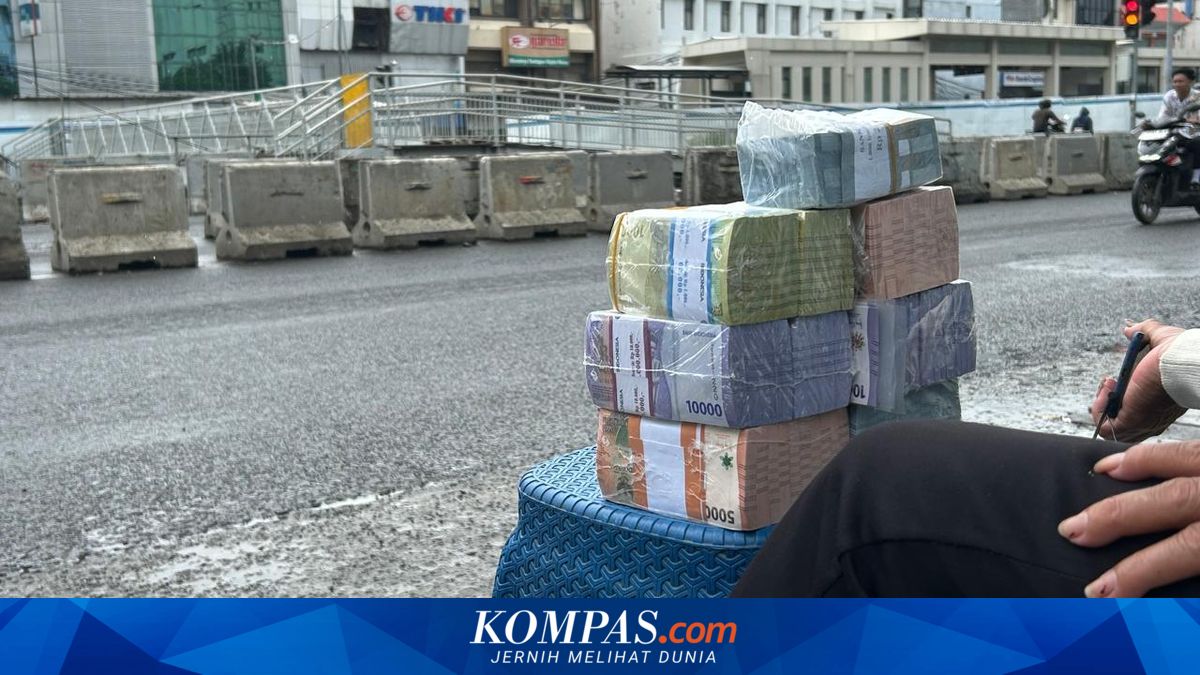
JAKARTA, KOMPAS.com - In the run-up to Hari Raya Idul Fitri, the public’s need for cash, particularly new notes, rises significantly.
The tradition of giving money to family, relatives and even children during Lebaran leads many people to seek small-denomination notes from the early days of Ramadhan.
In West Jakarta, for instance, the phenomenon of street-side money exchange services for new notes has emerged.
This practice has become a recurring sight almost every year ahead of Lebaran.
An economic watcher who is also Head of the Centre for Macroeconomics and Finance at the Institute for Development of Economics and Finance (Indef), Rizal Taufikurahman, says demand for these denominations often outstrips the capacity of official exchange services.
“The proliferation of street money-exchange services ahead of Lebaran reflects the high demand for small-denomination cash that is not fully served by official mechanisms,” Rizal said when contacted via WhatsApp on Thursday.
He noted that this situation opens space for an informal currency-exchange market that offers a more practical and faster process for the public.
“Bank Indonesia, every Ramadan–Idul Fitri, usually makes available around Rp180–Rp200 trillion of physical cash liquidity, but limitations in service points, exchange quotas, and distribution access push some people toward informal channels,” he said.
He assessed that processes at banks or Bank Indonesia often require long queues.
“If I personally prefer exchanging on the street because it’s faster. If you go to banks or BI, you have to queue for a long time, sometimes have to come early, and there are always requirements,” he said on Jalan Asemka, on Thursday.
According to Endra, at street-exchange venues he can directly select the denominations he needs without complicated procedures.
“Here you can immediately see the amount of money you need and take the notes in the denominations you want,” he said.
Beyond practicality, Endra also considers the risk of running out of new notes if he has to exchange at a bank or Bank Indonesia.