
Rising Prices and Neighbouring Demand: Indonesia Urged to Boost Coal Production
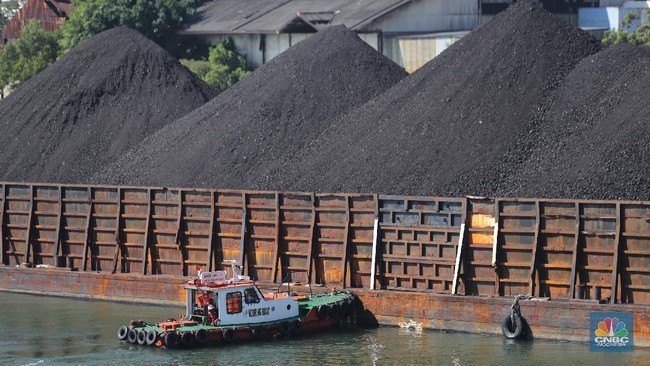
Rising Prices and Neighbouring Demand: Indonesia Urged to Boost Coal Production
Jakarta, CNBC Indonesia - The rise in global coal prices is seen as an opportunity for Indonesia to increase production. This is particularly relevant amid the growing need for alternative energy sources other than oil and natural gas in the Asian region.
Chairman of the Indonesian Mining Experts Association (Perhapi) Sudirman Widhy stated that current spot market coal prices are showing an upward trend in connection with the oil crisis triggered by the conflict in the Middle East.
It should be noted that, based on Refinitiv data, coal prices closed at US$140.5 per tonne on Monday (23/3/2026).
“As we all know, current coal prices in the spot market are showing an upward trend related to the oil crisis resulting from the conflict in the Middle East,” Widhy told CNBC Indonesia on Wednesday (25/3/2026).
In addition, this price increase is also influenced by national coal production restrictions. Considering that Indonesia is one of the major exporters supplying global coal needs, especially in East Asia, South Asia, and Southeast Asia.
He views this situation as something that should be utilised by the government to optimise state revenue potential. Widhy urges the government to reconsider the production restriction policy and open opportunities for increasing coal output.
“In line with the rise in coal prices, we from Perhapi encourage the government to make the most of this opportunity by reconsidering the production restriction plan and opening up possibilities for increasing coal production to gain from the rising global coal prices, especially to fill the market from countries in Southeast Asia such as the Philippines, Vietnam, and Malaysia, which are already facing difficulties in meeting their national energy needs due to the international oil crisis and require additional coal supplies to meet their national energy requirements,” he explained.
Nevertheless, according to him, Indonesia has the capability and capacity to produce coal exceeding 750 million tonnes per year, as evidenced by the national coal production realisation in 2025, which reached 790 million tonnes.
“Limiting national production this year to around 600 million tonnes will only give opportunities to other coal-producing countries like Australia, South Africa, and Colombia to take advantage by filling the gap left by Indonesia and optimally benefiting from the currently high global coal prices,” he explained.
“It is hoped that with the production increase amid the current high market prices, state revenues from coal exports can meet the 2026 PNBP target from the mining sector as previously planned by the Ministry of Energy and Mineral Resources at approximately Rp134 trillion,” he emphasised.
As is known, Coordinating Minister for Economic Affairs Airlangga Hartarto revealed that national coal production this year will be increased as a measure to anticipate the impact of the war in the Middle East that is triggering a surge in global energy prices.
He said the government is evaluating an increase in coal production volume in the 2026 Work Plan and Budget (RKAB). This step follows the directive from President Prabowo Subianto in the cabinet meeting on Thursday (19/3/2026).
The coal production increase is expected to help suppress the risk of spikes in Fuel Oil (BBM) prices and other energy commodities due to geopolitical turmoil.
“So, the President also asked for the coal production volume to be increased. That means there will be adjustments related to the RKAB,” Airlangga said at the State Palace.
In addition to the production increase, the government is also studying the coal export tax scheme as one effort to optimise state revenues. With the potential for rising commodity prices, the government hopes to gain additional income from windfall profits in the coal sector.
“The hope is that government revenues will also rise with the windfall profits; that will also lead to increased government income,” he stated.