
Rising from Disaster: IDR 12.5 Billion Allocated to Restore Rice Fields in Padang Pariaman
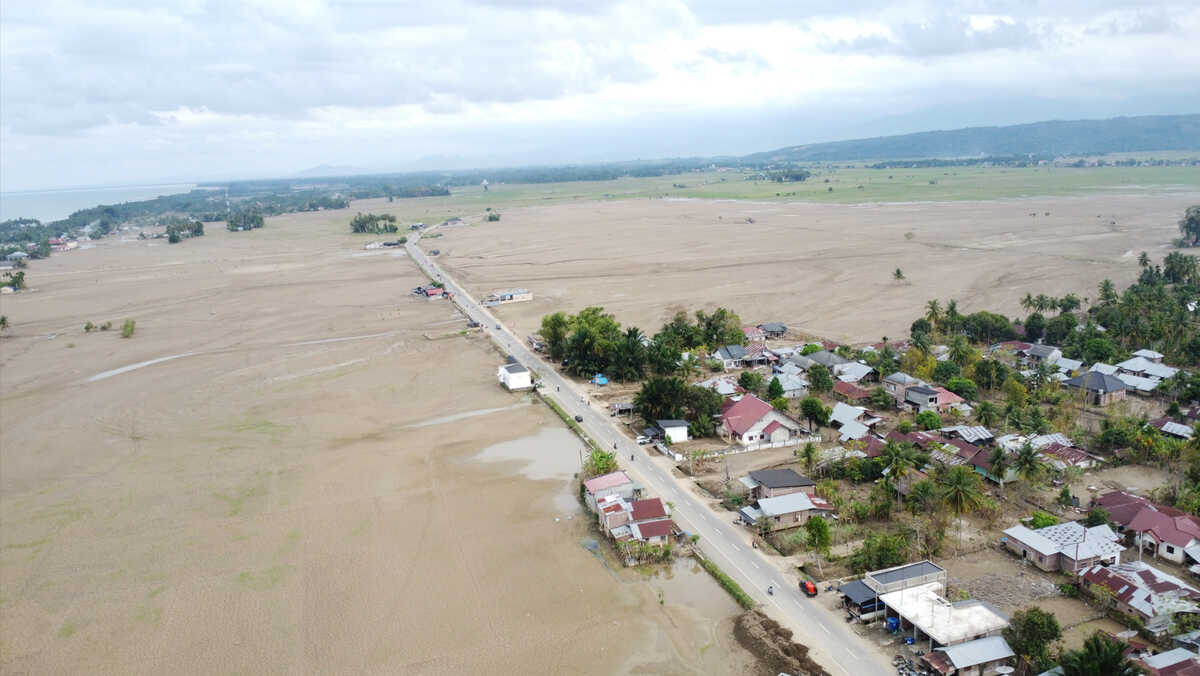
Amidst the rice fields that were once submerged in mud up to knee-height due to the hydrometeorological disaster, a glimmer of hope has begun to emerge. Through intensive lobbying with the Indonesian Ministry of Agriculture, the Padang Pariaman Regency Government has successfully secured IDR 12.5 billion to restore the affected agricultural land.
The funds will be disbursed through the task assignment scheme under the XIII Working Unit of West Sumatra Province. The focus is clear: post-disaster recovery. Six programs will be implemented simultaneously, starting with the repair of infrastructure to optimize rice fields in non-disaster-prone areas, rehabilitation of affected land, construction of dams and canals, piped irrigation, pumped irrigation, and repair of tertiary irrigation networks.
This program targets farmer groups in 17 sub-districts, both in disaster-prone and regular categories, in accordance with the technical guidelines (Juknis) of the Ministry of Agriculture.
One of the priority programs is the Optimization of Disaster-Affected Rice Fields (Oplah Bencana). Currently, 18 farmer groups in nine sub-districts have been designated as recipients, with a total area of 446 hectares. These lands were previously covered in sediment from floods ranging from 10 to 30 centimeters in height and experienced damage to the tertiary irrigation network.
In this phase, two main steps are taken: dredging sediment from rice fields and tertiary irrigation canals, and repairing damaged tertiary irrigation networks. The focus on tertiary irrigation is not without reason; this network is the responsibility of the Ministry of Agriculture in the agricultural land restoration program.
In addition, a land rehabilitation program is being prepared for rice fields with moderate to severe damage, characterized by sediment exceeding 30 to 100 centimeters, with a minimum affected area of five hectares, as stipulated in the Juknis. The designation phase has been completed for 17 farmer groups with a total area of 198 hectares.
The Acting Head of the Agriculture and Food Security Office of Padang Pariaman Regency, Hendri Satria, described this budget support as a “breath of fresh air” amidst fiscal constraints.
“The Regent’s continuous efforts to find opportunities amidst efficiency measures have spurred us in the technical department to welcome this with the same commitment,” he said on Thursday (February 26).
The land optimization program is scheduled to begin in early March. Meanwhile, land rehabilitation will begin after Eid al-Fitr. After Eid, other supporting activities such as the construction of pumped irrigation, piped irrigation, tertiary irrigation networks, and dams will also be accelerated to ensure a stable water supply.
The hope is that the land, which was once unproductive, can return to productivity. If, in the initial phase, it cannot be fully used as rice fields, farmers are encouraged to utilize it for alternative commodities such as corn, so that the village economy continues to run.
This step reaffirms the Regent John Kenedy Azis’ commitment to fighting for the interests of farmers. Amidst the mud and damage, Padang Pariaman chooses to rise, making rice fields not just a stretch of land, but a symbol of resilience and new hope after the disaster. (YH/E-4)