
Rising Energy Prices Push Indonesia's Manufacturing Activity into Contraction Zone
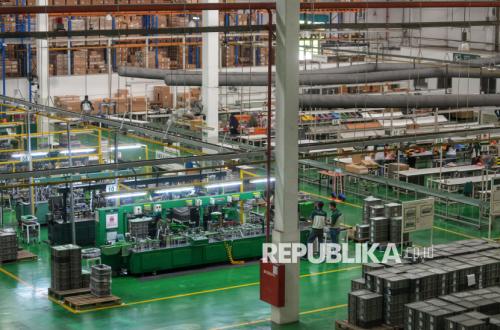
The Middle East conflict is beginning to pressure the national industrial sector. Rising energy prices and global supply chain disruptions are deemed to be burdening domestic manufacturing, particularly industries dependent on crude oil-based raw materials.
Permata Bank’s Chief Economist Josua Pardede stated that this pressure is becoming evident from Indonesia’s manufacturing activity entering a contraction phase in the early second quarter of 2026.
“Indonesia’s manufacturing industry is starting to be exposed to surges in energy prices and difficulties in obtaining raw materials, especially industries dependent on crude oil derivatives and petrochemicals,” said Josua during the Virtual Media Briefing for the PIER Economic Review of the First Quarter of 2026, on Tuesday (12/5/2026).
According to him, the current global conditions are not only impacting financial market sentiment but are also spilling over into the real sector through increases in logistics, energy, insurance, and even food and fertiliser distribution costs.
This pressure is reflected in the data for Indonesia’s Manufacturing Purchasing Managers’ Index (PMI) in April, which fell to 49.1, entering the contraction zone.
Permata Bank’s Head of Industry & Regional Research, Adjie Harisandi, said that the slowdown is beginning to be seen in several industries related to the automotive sector and petrochemical raw materials.
“Rubber and plastic products are also under pressure because that sector supports the automotive industry extensively,” said Adjie.
According to him, the basic chemicals sector is one of the industries most vulnerable to the rise in global oil prices. This is because crude oil remains the main raw material for various derivative industries such as plastics, pharmaceuticals, and automotive products.
“When prices in the upstream sector rise, it will eventually spread to the downstream sector,” said Adjie.
He explained that the impact of rising raw material costs does not immediately affect consumers because businesses are still trying to absorb the price increases.
However, historically, such cost pressures are usually passed on to goods prices within a range of two to four quarters.
Besides the chemicals sector, the transportation industry is also considered the most sensitive to energy price surges.
Adjie said that the air transportation sector has already begun to feel the impact of rising oil prices through increased ticket prices.
“Transportation is the most affected if oil prices rise and they do not receive subsidies,” he stated.
On the other hand, Permata also observes that global demand is starting to slow due to world economic uncertainty and China’s economic slowdown.
This situation leaves Indonesia’s manufacturing sector facing dual pressures: rising production costs and weakening export demand.
Josua said that this condition needs to be anticipated by the government to prevent impacts on industrial productivity declines and layoffs (PHK).
“This is a major challenge because on one side, global export demand is expected to slow, while production cost pressures are increasing due to raw material prices and currency depreciation,” said Josua.
Nevertheless, Permata assesses that some domestic manufacturing sectors that are non-cyclical remain quite strong, particularly food and beverages as well as industries related to domestic needs.