
Rise in Avtur Prices Could Impact Hajj Organisation Costs
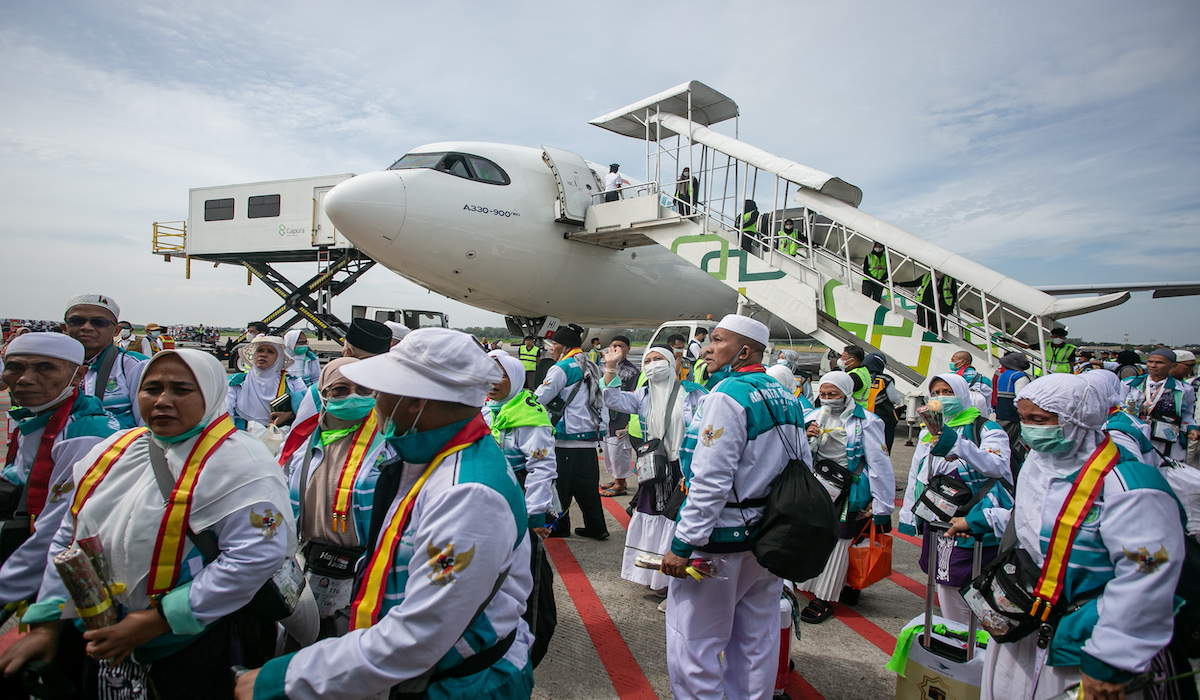
The government is confronted with a policy dilemma where no option is truly comfortable.
The rise in global avtur prices is beginning to impact the cost structure of organising the Hajj pilgrimage (BPIH) for 2026. The government acknowledges that the greatest pressure is on the aviation component, amid geopolitical turmoil, increases in war risk insurance premiums, and the weakening rupiah exchange rate.
Minister of Hajj and Umrah Mochamad Irfan Yusuf stated that this year’s Hajj organisation faces increasingly complex global pressures. Therefore, the government assesses that efficiency, cross-party coordination, and mitigation measures must be strengthened to maintain Hajj financing.
“This situation confirms that this year’s Hajj organisation is under pressure from increasingly complex global factors,” said Irfan Yusuf during a working meeting with Commission VIII of the DPR RI in Jakarta on Wednesday.
In determining the Hajj Organisation Cost (BPIH) for 2026, the average flight cost per pilgrim was initially around Rp33.5 million. However, this assumption is now pressured by the surge in avtur prices, rising war risk insurance premiums, and the weakening rupiah rate.
Not only that, geopolitical tensions are also seen as potentially forcing airlines to change flight routes to avoid conflict airspace. If that scenario occurs, flight times are estimated to increase by about four hours with additional avtur consumption of up to 11,000 tonnes.
From the cost proposal side, Garuda Indonesia is said to have proposed an additional Rp7.9 million per person. Meanwhile, Saudi Airlines proposed an increase of US$480 per person, assuming avtur prices reach 137.4 US cents per litre.
The government projects that, without route changes, the average Hajj flight cost could rise to Rp46.9 million per person, or a 39.85% jump. If route diversions are indeed implemented, the cost could exceed Rp50.8 million per pilgrim, or an increase of about 51.48%.
Irfan also explained that the contract between the Ministry of Hajj and Umrah and the airlines includes a force majeure clause that allows for cost adjustments through consultation if certain conditions arise. Nevertheless, to date, there has been no official statement regarding the force majeure status from Indonesian or Saudi Arabian authorities.
Amid the potential cost surge, the government emphasises that additional burdens must not be shifted to pilgrims. According to Irfan, the issue has been discussed in a limited meeting with President Prabowo Subianto.
“President Prabowo hopes that whatever increases occur, they should not be burdened on our Hajj pilgrims,” he said.
That directive, he added, now serves as the government’s basis for carefully calculating budget needs so that Hajj costs remain controlled without adding to the burden on prospective pilgrims.