
RI's Neighbour Falls Victim to US-Iran War, Immediately Cosies Up to Putin
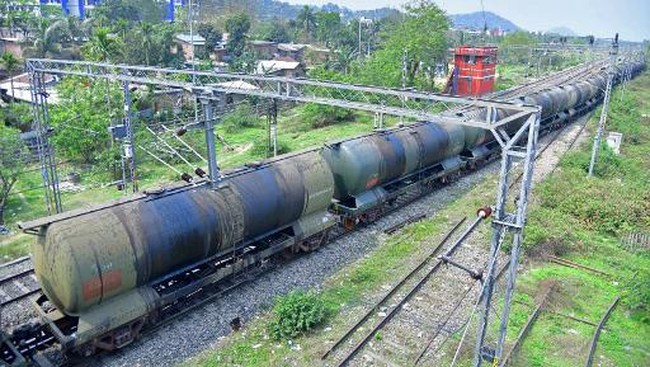
India is reportedly beginning to tighten its energy cooperation with Russia once again. This is in response to tensions in the Middle East due to attacks by the United States (US) and Israel on Iran.
This step marks a drastic policy shift for New Delhi. Previously, in January, India had cut back on purchases of Russian crude oil to soften the stance of President Donald Trump in order to ease import tariffs on Indian exports to the US. However, the military escalation in the Strait of Hormuz has forced India to draw closer to Moscow to secure its national energy supplies.
Two sources familiar with the matter revealed that India and Russia have agreed to prepare for the resumption of direct sales of liquefied natural gas (LNG) for the first time since the Ukraine war broke out. If this agreement proceeds, the negotiations risk violating Western sanctions but are expected to conclude within weeks.
This verbal agreement was reached during a meeting on Tuesday (19/03/2026) between Russia’s Deputy Minister of Energy Pavel Sorokin and India’s Minister of Petroleum and Natural Gas Hardeep Singh Puri in New Delhi. In addition to LNG, the two officials agreed to increase crude oil sales to India, projected to double from January levels and cover at least 40% of India’s total imports within the next month.
Last year, India spent nearly US$44 billion (approximately Rp748 trillion) on purchasing crude oil from Moscow. This massive amount has made India the primary buyer of discounted Russian oil and a pillar of the Kremlin’s economy during wartime, a position that continues to be a thorn in India’s relations with the Trump administration.
Although no official statement has been issued, spokesperson for India’s Ministry of External Affairs Randhir Jaiswal gave signals regarding this manoeuvre in a press conference last week.
“New Delhi is in talks with several countries to secure energy supplies, including LNG,” said Jaiswal.
Former Indian Ambassador to Moscow Ajai Malhotra views this step as a highly necessary pragmatic action for his country amid global uncertainties.
“India is choosing the path that best suits its national interests, which anchor on a long-term and trusted partnership with Russia,” said Malhotra.
Malhotra also added that New Delhi should not hesitate to face pressure from Washington regarding potential sanctions shadowing this cooperation.
“India must now demand exemptions or accommodations as a normal part of negotiations between strategic partners,” emphasised Malhotra.
India’s economic situation is currently under strain. After the US-Israel attack on Iran on 28 February, Tehran retaliated by targeting ships in the Strait of Hormuz. This route is the lifeline for half of India’s oil and LNG supplies. As a result, long queues have begun to appear at Indian petrol stations, and many restaurants are running out of cooking gas.
A government document seen by Reuters shows the frustration of policymakers in New Delhi, who had previously reduced imports from Russia just to please the US.
“India has reduced purchases of discounted Russian crude oil, which should have served as a buffer to some extent in this situation,” reads a brief note prepared for the cabinet secretariat on Wednesday (20/03/2026).
The document warns that prolonged disruptions in oil flows from the Middle East will trigger a series of economic challenges for India.
“This will cause higher inflation, a weakening currency, and rising foreign debt,” states the report.
Seeing this opportunity, Russia continues to press its advantage. The Kremlin’s top diplomat, Sergei Lavrov, stated that relations between the two countries are currently at a very solid point, especially in terms of financial transaction sovereignty.
“96% of trade between the two countries is now conducted in rupees and roubles,” revealed Lavrov at a conference this week.
Lavrov also praised this relationship model as a new standard in mutually beneficial international diplomacy without external pressure.
“The time-tested friendship between Russia and India serves as an example of how inter-state relations should and can be built—based on equality, mutual trust and respect, and consideration of each other’s interests,” concluded Lavrov.