
Rio Tinto Closes Diamond Business: The Story of Treasure in an Ant's Nest Comes to an End
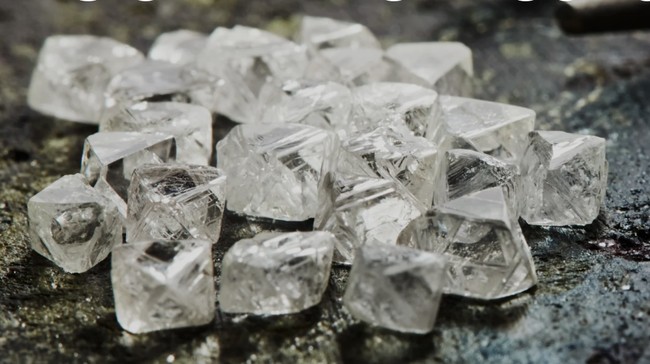
Global mining giant Rio Tinto has officially announced the closure of its last diamond mine, the Diavik Diamond Mine in Canada. The diamond business, which has been operated for more than half a century, will end in 2026.
This closure is not only due to the natural cycle of the mine reaching the end of its production life but also due to increasing pressures in the industry, from oversupply to the growing popularity of synthetic (lab-grown) diamonds.
Although diamond production has declined and operations will end this year, mine closure activities are scheduled to continue until full closure in 2029.
Before closing the Diavik mine, Rio Tinto had already shut down the Kimberley mine in Australia.
Giant Mine Reaching Peak Production
Located in the remote Northwest Territories, about 200 km from the Arctic Circle, the Diavik mine is known as one of the world’s most complex mining projects because it is situated beneath a frozen lake.
Operating since 2003, Diavik has recorded significant production and produced a number of spectacular diamonds, including rare yellow diamonds in very limited quantities.
The mine is also renowned for its advanced technology in holding back lake water to allow subsurface exploration.
Its mining practices are also claimed to be ethical and environmentally friendly. Through Diavik, Rio Tinto has partnered closely with indigenous communities, local governments, and various local businesses.
Oversupply and Invasion of Synthetic Diamonds
Despite a strong track record, Rio Tinto’s diamond business has faced heavy pressure in recent years. The global market is dealing with oversupply, while synthetic diamonds are increasingly favoured due to their lower prices and perceived environmental friendliness.
This has directly impacted the company’s financial performance, recording losses in its diamond unit of US$79 million in 2025. In addition to Rio Tinto, the world’s largest diamond producer, De Beers, is also struggling to sell its diamonds.
This situation indicates that the natural diamond industry is facing structural problems, not just ordinary cycles.
Similar issues have also been experienced by De Beers, whose business has declined due to imitation diamonds.
Lab Diamonds: Cheaper, Faster, and Environmentally Friendly
The weakening of the natural diamond industry is also supported by the proliferation of laboratory-grown (lab-grown) diamonds as the main competitor. These synthetic diamonds still fulfil their aesthetic function and are even more efficient and environmentally friendly.
Unlike natural diamonds that form over billions of years inside the Earth, lab diamonds can be produced in just weeks to months using technologies such as High Pressure High Temperature (HPHT) and Chemical Vapor Deposition (CVD).
Although made in laboratories, these diamonds have identical chemical, physical, and optical properties to natural diamonds. Their hardness and sparkle are also similar to natural diamonds.
The main advantage of lab diamonds lies in cost and environmental aspects. Without mining processes, their production tends to have a lower carbon footprint and does not damage ecosystems, making them a more attractive choice for modern consumers.
Additionally, more affordable prices allow buyers to obtain larger sizes or higher quality with the same budget. Globally, lab diamond production is now dominated by China, which holds 56% of the market share, followed by India and the United States.
This phenomenon signals a major shift in the diamond industry, from conventional mining exploitation to technology-based manufacturing. Looking ahead, this dynamic has the potential to change the structure of the global market, where efficiency, sustainability, and innovation become the main determinants of competitiveness.
From Ant’s Nest to Global Market: The Legendary Story of Rio Tinto’s Argyle Diamonds
Diamonds existed before human life on Earth, even before dinosaurs. Most diamonds formed in the Earth’s mantle depths between 1-3 billion years ago. These precious stones reached the surface through a series of volcanic eruptions that occurred 300-400 million years ago.
In 1979, Rio Tinto discovered the Kimberley diamond field in Western Australia when two of its geologists, Frank Hughes and Warren Atkinson, accidentally spotted a small diamond embedded in an ant’s nest.
Yes, ants. The diamond particle was brought to the surface by the small insect, unwittingly revealing one of the richest diamond deposits ever found.
After 10 years of tracing rivers and tributaries, following clues in the vast and remote Australian outback, Hughes and Atkinson finally stood atop the pipe that would become the Argyle Diamond Mine.
This discovery later became the foundation of the Argyle Diamond Mine, one of the richest diamond deposits in the world. The mine began operations in 1983 and produced small coloured diamonds, including rare pinks.
In November 2020, mining activities at Argyle were halted after 37 years of operation and produced more than 865 million carats of rough diamonds, including a small portion of very rare pink diamonds.
The Argyle mine is better known for small coloured diamonds, generally for the affordable fashion jewellery market, as well as a very small volume of pink diamonds sought after by high-end collectors, designers, and diamond connoisseurs worldwide.
Rio Tinto also has the Diavik mine, famous for high-quality white diamonds and a small number of rare yellow diamonds, which has reached a significant milestone by producing 150 million carats of rough diamonds since operations began in 2003.